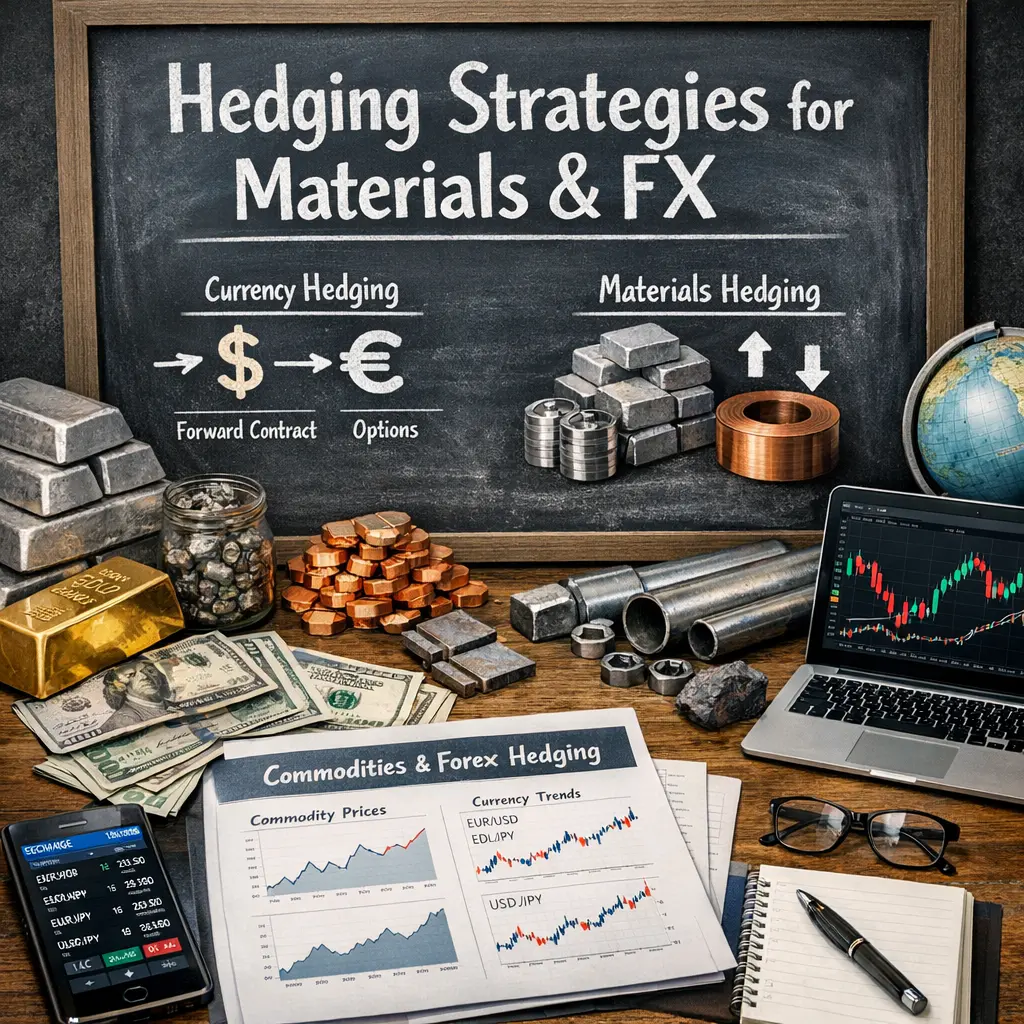
Hedging strategies for materials and foreign exchange (FX) involve using financial instruments or market tactics to protect a business from price volatility in raw materials and currency fluctuations. Common approaches include forward contracts, options, and swaps, which lock in prices or exchange rates. These strategies help companies stabilize costs, manage risks, and maintain predictable financial performance, ensuring smoother operations and safeguarding profit margins in a dynamic global market.
Hedging Strategies for Materials & FX
Hedging strategies for materials and foreign exchange (FX) involve using financial instruments or market tactics to protect a business from price volatility in raw materials and currency fluctuations. Common approaches include forward contracts, options, and swaps, which lock in prices or exchange rates. These strategies help companies stabilize costs, manage risks, and maintain predictable financial performance, ensuring smoother operations and safeguarding profit margins in a dynamic global market.
💡 Key Takeaways
- Identify key risks in materials procurement and FX that hedging aims to mitigate
- Compare hedging instruments (forwards, futures, options) and when to use each for materials costs and FX exposure
- Learn how to design a hedging strategy aligned with procurement and treasury goals and risk tolerance
- Understand how to measure hedging effectiveness and monitor performance over time
❓ Frequently Asked Questions
What is hedging in the context of materials and FX?
Hedging is a risk-management approach that uses financial instruments or sourcing terms to reduce exposure to price moves in materials and currency fluctuations, helping stabilize costs and margins.
What are common hedging instruments for materials and FX?
Materials hedges often use forwards, futures, options, or swaps on commodity prices; FX hedges use forwards, futures, options, and currency swaps. Natural hedges (matching currency of costs and revenues) can also help.
How does a forward contract work for materials or FX?
A forward locks in a price or exchange rate today for a specified future date, providing predictable costs or revenues with cash settlement or delivery at maturity.
What is hedging effectiveness and what risks should you consider?
Effectiveness measures how well a hedge offsets changes in value or cash flows (e.g., hedge ratio, basis risk). Consider basis risk, liquidity, credit risk, and the cost of hedging, plus potential loss of upside.