The Heysel Stadium Disaster in 1985, involving Liverpool F.C. fans, led to the deaths of 39 people before the European Cup final. This tragedy resulted in English clubs being banned from European competitions for five years, with Liverpool receiving an extra year. The disaster profoundly affected Liverpool’s reputation, prompted major safety reforms, and reshaped European football by highlighting the need for stricter crowd control and improved stadium infrastructure across the continent.
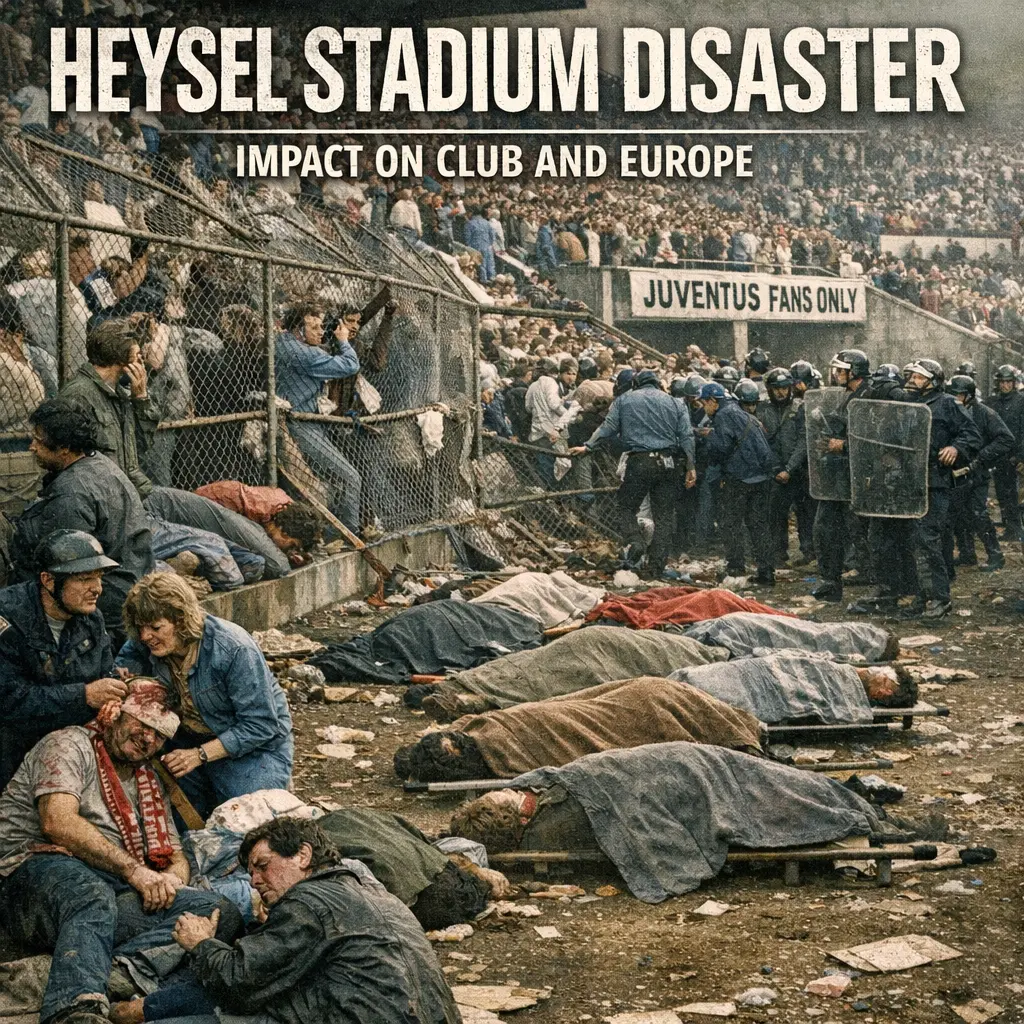
Heysel Stadium Disaster: Impact on Club and Europe
The Heysel Stadium Disaster in 1985, involving Liverpool F.C. fans, led to the deaths of 39 people before the European Cup final. This tragedy resulted in English clubs being banned from European competitions for five years, with Liverpool receiving an extra year. The disaster profoundly affected Liverpool’s reputation, prompted major safety reforms, and reshaped European football by highlighting the need for stricter crowd control and improved stadium infrastructure across the continent.
💡 Key Takeaways
- Understand what happened at the Heysel Stadium Disaster and its immediate impact on clubs, fans, and match results.
- Learn how the tragedy led to sweeping stadium safety reforms, crowd control measures, and the move toward all-seater stadiums in Europe.
- Explore the disciplinary and governance changes in European football, including bans and sanction policies for clubs and organizers.
- Assess the long-term effects on European competitions and football culture, including safety-first priorities for future events.
❓ Frequently Asked Questions
What happened at the Heysel Stadium Disaster and when did it occur?
On May 29, 1985, before the European Cup Final at Heysel Stadium in Brussels, a crowd crush caused by overcrowding and a barrier collapse led to 39 deaths and hundreds of injuries.
What were the main factors that caused the disaster?
Overcrowding in a tightly packed section, a barrier collapse under pressure, and panic in the crowd—exacerbated by crowd-control measures—highlighted unsafe stadium conditions.
What were the consequences for English clubs and European football?
English clubs were banned from European competition for five years, and UEFA introduced stricter stadium safety and crowd-control rules across Europe.
Were there legal consequences after the disaster?
Belgian authorities prosecuted some individuals; several Liverpool supporters were convicted of involuntary manslaughter (with suspended sentences). The outcomes were controversial and did not assign institutional blame to clubs.