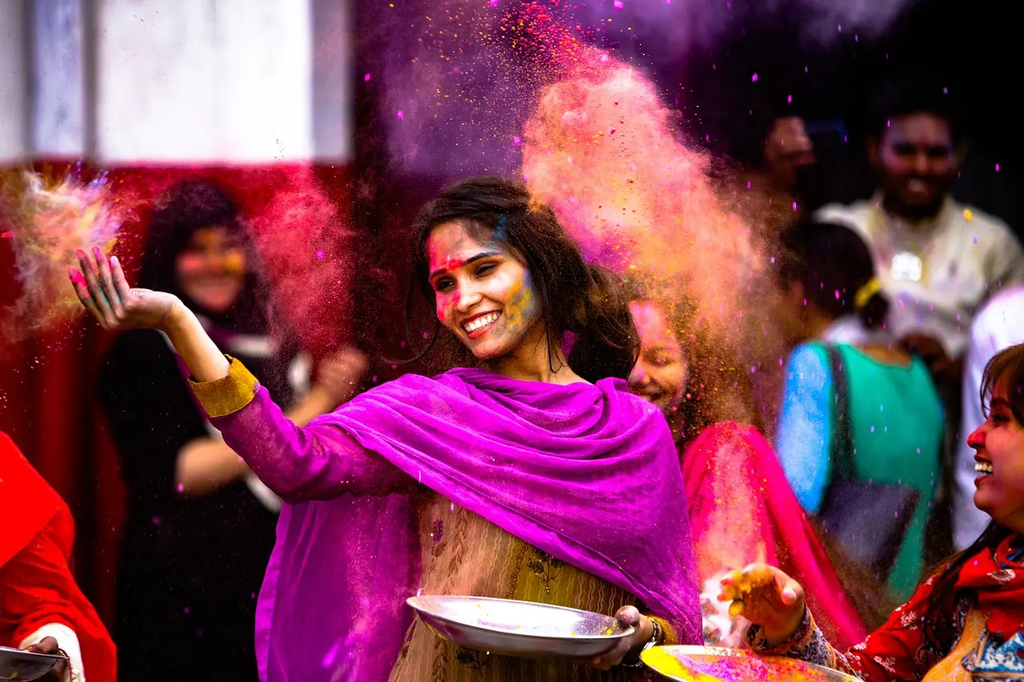
Holi, celebrated across India, is a vibrant festival marking the arrival of spring and the victory of good over evil. Known as the "festival of colors," people joyfully smear each other with colored powders, splash water, and dance to music. The festivities include traditional sweets, bonfires called Holika Dahan, and community gatherings, fostering unity and joy among participants regardless of age, caste, or creed.
Holi (India)
Holi, celebrated across India, is a vibrant festival marking the arrival of spring and the victory of good over evil. Known as the "festival of colors," people joyfully smear each other with colored powders, splash water, and dance to music. The festivities include traditional sweets, bonfires called Holika Dahan, and community gatherings, fostering unity and joy among participants regardless of age, caste, or creed.
💡 Key Takeaways
- Understand Holi's significance as a spring festival and the victory of good over evil.
- Identify common Holi customs such as colored powders, water play, music and dance, bonfires (Holika Dahan), and festive sweets.
- Recognize regional variations in Holi celebrations across India and how traditions may differ.
- Explain safety and inclusivity practices for participating in Holi, including choice of colors and respectful behavior.
❓ Frequently Asked Questions
What is Holi and what does it celebrate?
Holi is a Hindu festival celebrated across India that marks the arrival of spring and the victory of good over evil. It’s known as the festival of colors, with people applying colored powders, splashing water, dancing, and sharing sweets; bonfires called Holika Dahan are lit as part of the celebration.
When is Holi celebrated?
Holi is observed on the full moon day (Purnima) of the Hindu month Phalguna, usually in February or March. The exact date varies each year based on the lunar calendar.
What activities and foods are typical during Holi?
Common activities include color play with gulal, water games, and dancing to festive music. Traditional foods such as gujiya and beverages like thandai are commonly enjoyed.
What is Holika Dahan and its significance?
Holika Dahan is the bonfire lit on the eve of Holi that symbolizes the destruction of the demon Holika and the triumph of good over evil.