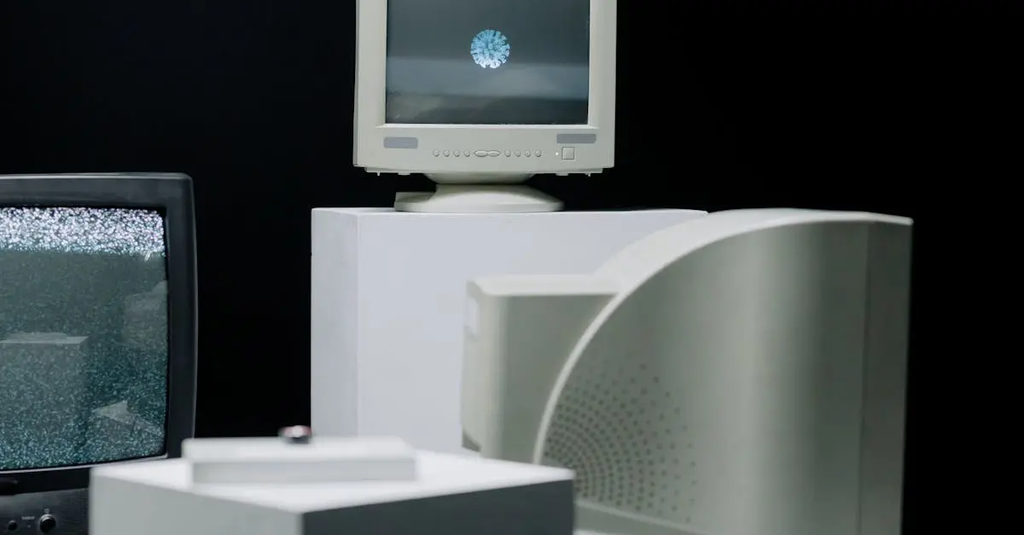
Home computers and CRT monitors refer to the personal computers popular from the late 1970s through the early 2000s, typically used in households for work, education, and entertainment. These computers were paired with CRT (cathode ray tube) monitors, which displayed images using electron beams and phosphorescent screens. CRT monitors were bulky and heavy, but they were the standard display technology before the advent of flat-panel LCD and LED screens.
Home Computers & CRT Monitors
Home computers and CRT monitors refer to the personal computers popular from the late 1970s through the early 2000s, typically used in households for work, education, and entertainment. These computers were paired with CRT (cathode ray tube) monitors, which displayed images using electron beams and phosphorescent screens. CRT monitors were bulky and heavy, but they were the standard display technology before the advent of flat-panel LCD and LED screens.
💡 Key Takeaways
- Trace the rise of home computers from the late 1970s to the early 2000s and identify iconic models and typical household uses.
- Explain how CRT monitors work with electron beams and phosphors, and how their technology shapes image quality and retro aesthetics.
- Compare the everyday experience of vintage systems—from input devices to storage and software ecosystems—with today’s computers.
- Discover ways to explore retro computing today, including safe hardware preservation, repair basics, and emulation or restoration approaches.
❓ Frequently Asked Questions
What were home computers and CRT monitors used for in their era?
They were household personal computers (late 1970s to early 2000s) used for work, education, and entertainment, paired with bulky CRT monitors for display.
How did CRT monitors display images?
A cathode ray tube emits electron beams that sweep across a phosphor-coated screen; when the beam hits the phosphor it glows to form an image. Color CRTs use red, green, and blue beams and a mask to blend colors.
What are some classic examples of home computers from this era?
Commodore 64, Apple II, IBM PC-compatible systems, ZX Spectrum, Amiga, Atari ST, and similar machines.
What distinguishes CRTs from modern displays and why did they fade away?
CRTs are bulky and heavy, use analog signals and electron beams, and require more power. Modern flat-panel LCD/LED screens are thin, lightweight, and use digital signals.