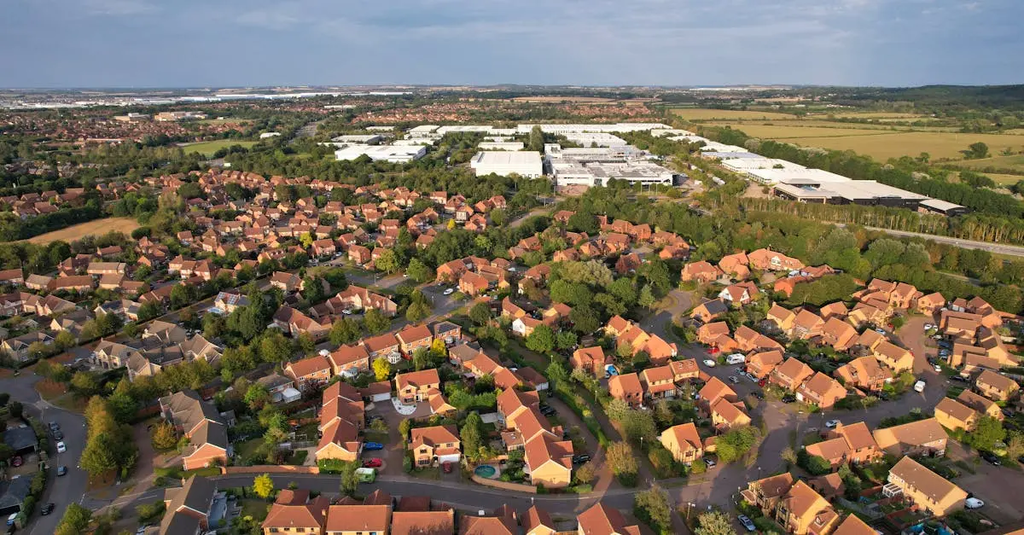
In the UK, housing demand often conflicts with the preservation of green belts—protected areas of open land around cities designed to prevent urban sprawl. Green belts restrict the outward expansion of urban areas, safeguarding countryside and limiting unchecked development. However, these restrictions can constrain housing supply, contributing to rising property prices and debates over whether to relax green belt policies to accommodate growing populations and address the housing shortage.
Housing, green belts, and urban sprawl in the UK
In the UK, housing demand often conflicts with the preservation of green belts—protected areas of open land around cities designed to prevent urban sprawl. Green belts restrict the outward expansion of urban areas, safeguarding countryside and limiting unchecked development. However, these restrictions can constrain housing supply, contributing to rising property prices and debates over whether to relax green belt policies to accommodate growing populations and address the housing shortage.
💡 Key Takeaways
- Define what a green belt is in the UK and its purpose (to prevent urban sprawl and protect the countryside).
- Explain how green belts influence housing supply and the pattern of urban growth around cities.
- Identify the policy tensions between housing demand and green belt protection and possible approaches (e.g., brownfield redevelopment, infill, and green belt reviews).
- Discuss criticisms of green belts and potential reforms, including land release strategies, higher-density development, and biodiversity considerations.
❓ Frequently Asked Questions
What is a green belt in the UK?
A legally or policy-protected belt of land around cities designed to prevent urban sprawl, protect the countryside, and encourage regeneration within towns.
Why are green belts important?
They help stop unchecked development, preserve landscapes and biodiversity, and provide space for recreation and sustainable transport.
How do green belts affect housing supply in the UK?
They limit outward expansion, pushing developers to reuse brownfield sites inside cities or increase inner-city density, which can constrain new homes unless land is released through planning policy.
Can green belt boundaries change?
Yes. Local plans can review and adjust boundaries, but changes require evidence, public consultation, and alignment with national policy.
What is urban sprawl?
The outward growth of cities into surrounding countryside; green belts are meant to curb sprawl by guiding growth inward.