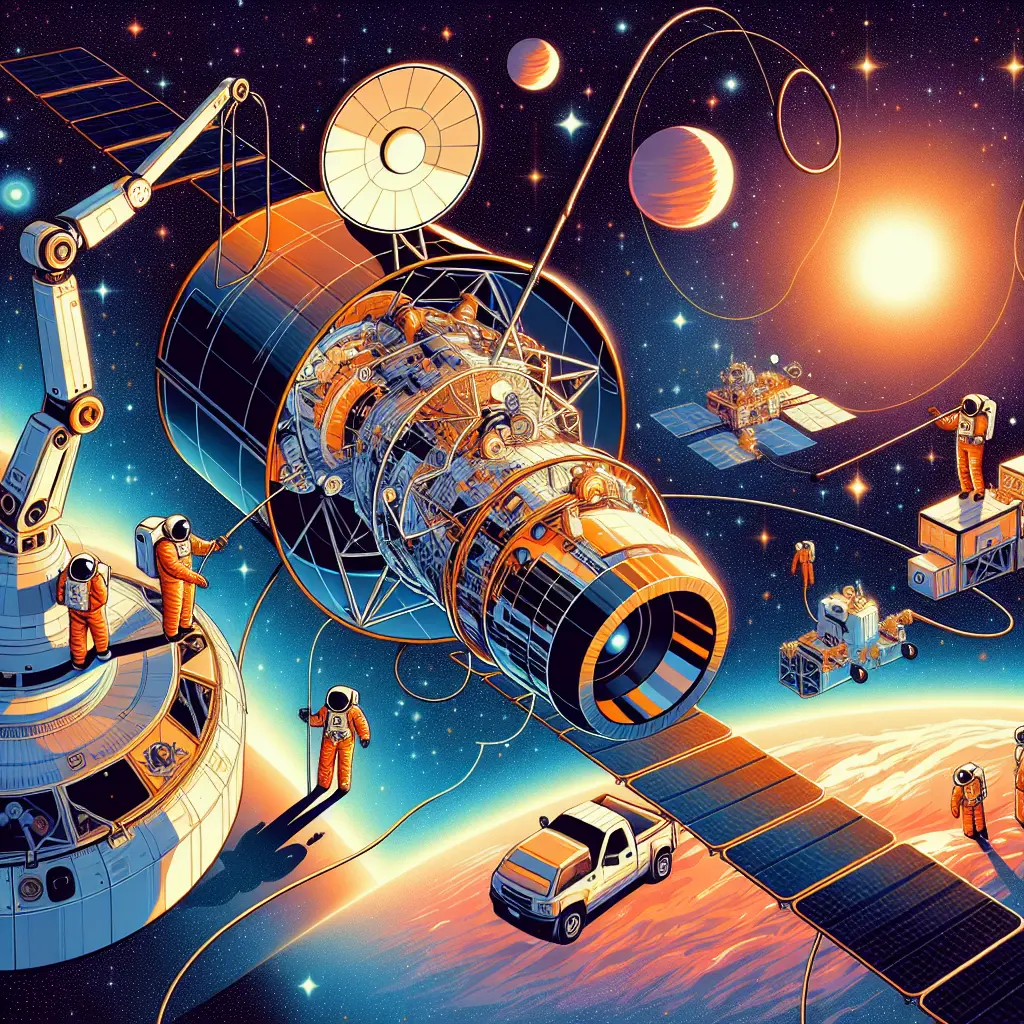
The Hubble Space Telescope is a large, space-based observatory launched in 1990, designed to capture high-resolution images of the universe free from Earth’s atmospheric distortion. Its modular design allowed for multiple servicing missions by astronauts, who repaired, upgraded, and replaced key instruments and components. These missions significantly extended Hubble’s operational life and improved its capabilities, enabling groundbreaking discoveries in astronomy and deepening our understanding of the cosmos.
Hubble Space Telescope: Design and Servicing Missions
The Hubble Space Telescope is a large, space-based observatory launched in 1990, designed to capture high-resolution images of the universe free from Earth’s atmospheric distortion. Its modular design allowed for multiple servicing missions by astronauts, who repaired, upgraded, and replaced key instruments and components. These missions significantly extended Hubble’s operational life and improved its capabilities, enabling groundbreaking discoveries in astronomy and deepening our understanding of the cosmos.
💡 Key Takeaways
- Understand why a space-based telescope can capture sharper images without Earth's atmospheric distortion.
- Learn how Hubble's modular design enabled multiple astronaut servicing missions to repair and upgrade instruments.
- Recognize how servicing missions extended Hubble's life by upgrading components and replacing key instruments.
- Identify the wavelengths Hubble observes (ultraviolet to near-infrared) and the types of discoveries these observations enable.
❓ Frequently Asked Questions
What is the Hubble Space Telescope and its purpose?
A large, space-based observatory launched in 1990 to capture high-resolution images and spectra of the universe free from Earth's atmospheric distortion.
What does a modular design enable for Hubble?
It allows astronauts to access, repair, upgrade, or replace components during in-space servicing missions.
Why were servicing missions needed for Hubble?
To fix hardware issues, upgrade instruments as technology advanced, and extend the telescope's operating life.
What major issue did Hubble face at launch, and how was it addressed?
Its main mirror had spherical aberration causing blurry images; corrective optics (COSTAR) and upgraded instruments corrected the vision.
What kinds of upgrades occurred during servicing missions?
Upgrading or replacing instruments (cameras, spectrographs), installing new systems, and refreshing processing or guidance components.