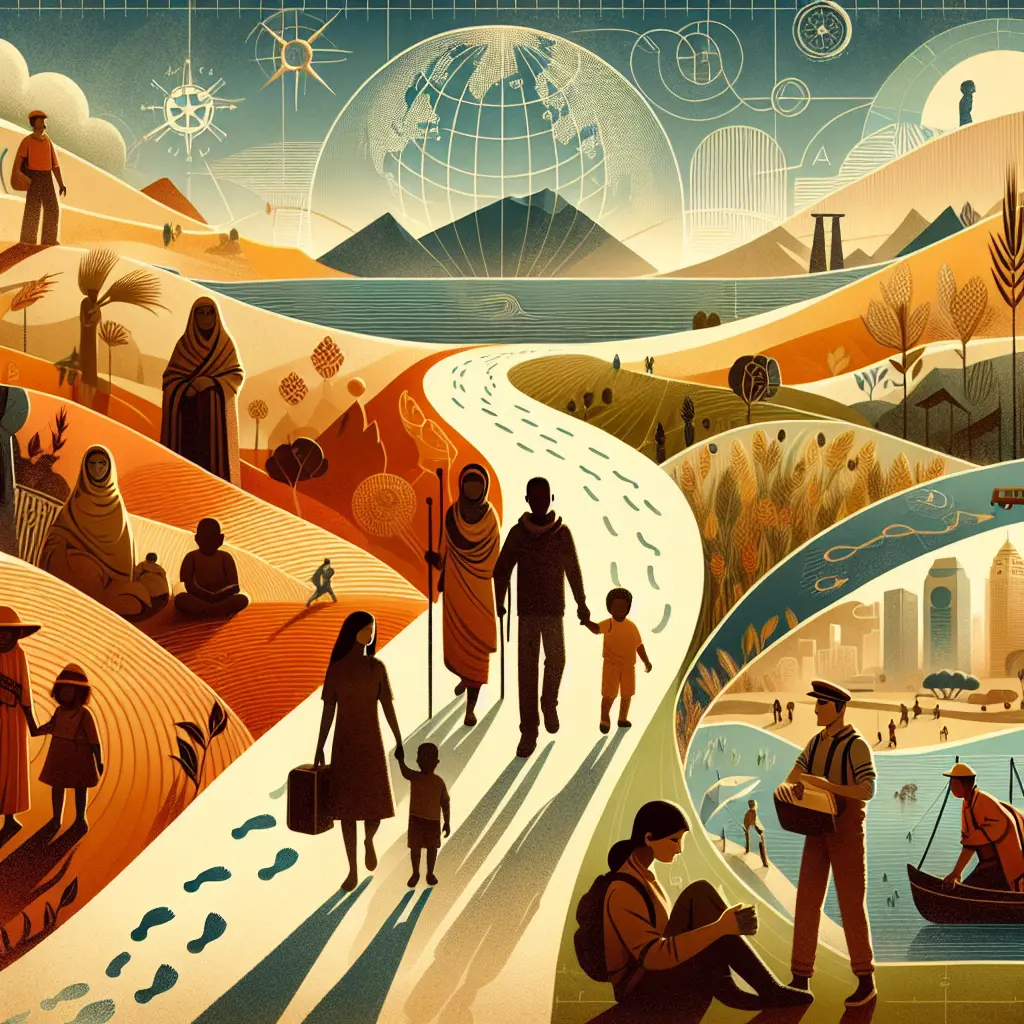
Human migration refers to the movement of people from one place to another, often across regions or countries. Key figures include migrants, refugees, and internally displaced persons. Features of migration involve push and pull factors such as economic opportunities, conflict, or environmental changes. Motifs commonly seen in migration stories are adaptation, cultural exchange, displacement, and the search for better living conditions, highlighting both challenges and contributions of migrants to society.
Human Migration: Key Figures, Features & Motifs
Human migration refers to the movement of people from one place to another, often across regions or countries. Key figures include migrants, refugees, and internally displaced persons. Features of migration involve push and pull factors such as economic opportunities, conflict, or environmental changes. Motifs commonly seen in migration stories are adaptation, cultural exchange, displacement, and the search for better living conditions, highlighting both challenges and contributions of migrants to society.
💡 Key Takeaways
- Identify major migration categories: migrants, refugees, and internally displaced persons, and explain how they differ.
- Explain push and pull factors driving migration, including economic opportunities, conflict, and environmental change.
- Recognize common migration patterns and motifs such as diasporas, transnational networks, and urbanization.
- Assess the social, economic, and political impacts of migration on origin and destination regions, and outline typical policy or humanitarian responses.
❓ Frequently Asked Questions
What is human migration?
The movement of people from one location to another, across regions or countries, for reasons like work, safety, or family.
Who are the key figures in migration?
Migrants, refugees, and internally displaced persons (IDPs), along with asylum seekers and diasporas.
What are push and pull factors in migration?
Push factors drive people away (conflict, poverty, disasters); pull factors attract them to a place (jobs, safety, education, family ties).
What is the difference between internal and international migration?
Internal migration occurs within a country; international migration crosses borders to another country.
What are common migration motifs or patterns?
Voluntary vs. forced migration, internal vs. international moves, seasonal or temporary moves, chain migration, and the development of transnational communities.