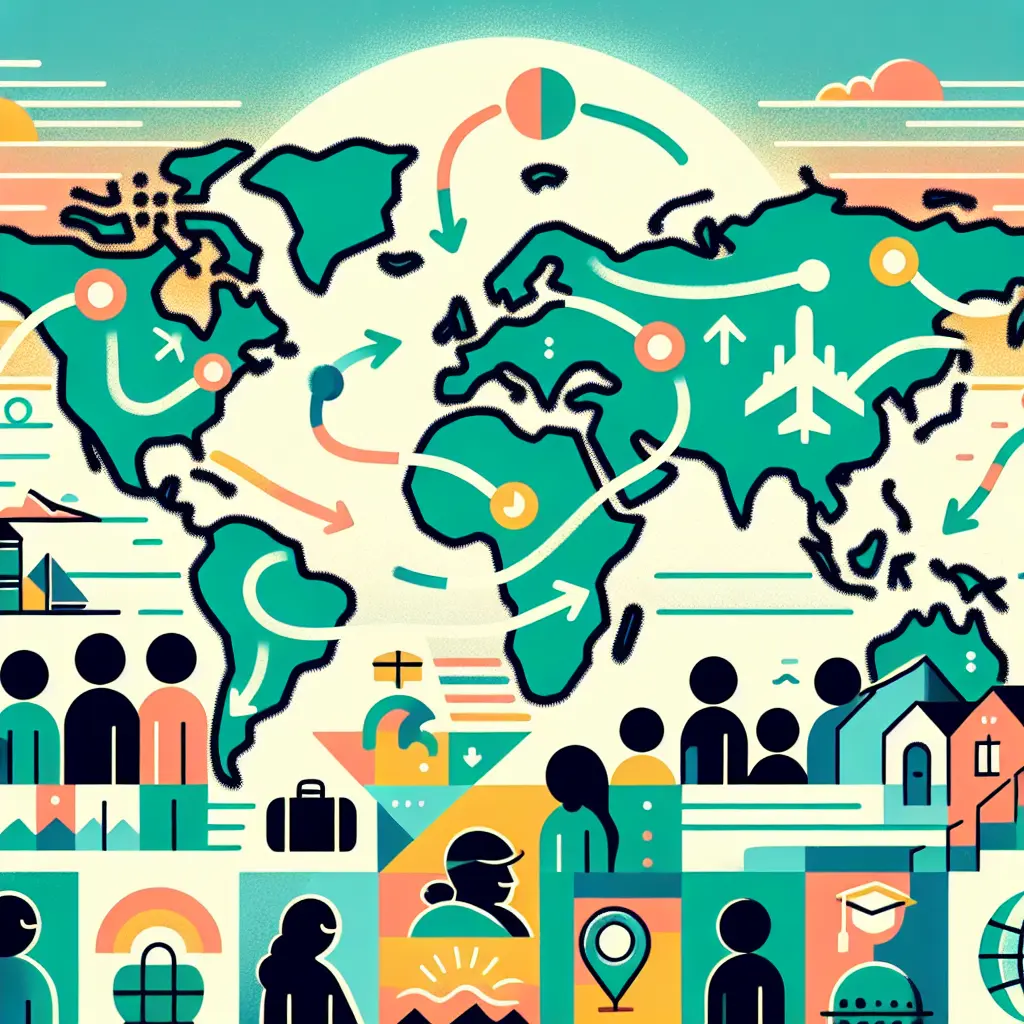
Human migration refers to the movement of people from one place to another, often across regions or countries, driven by factors such as economic opportunities, conflict, environmental changes, or social reasons. Core concepts include push and pull factors, voluntary and forced migration, internal versus international migration, and the impacts on both origin and destination areas. Migration shapes demographics, cultures, economies, and can influence policies and social structures globally.
Human Migration: Summaries & Core Concepts
Human migration refers to the movement of people from one place to another, often across regions or countries, driven by factors such as economic opportunities, conflict, environmental changes, or social reasons. Core concepts include push and pull factors, voluntary and forced migration, internal versus international migration, and the impacts on both origin and destination areas. Migration shapes demographics, cultures, economies, and can influence policies and social structures globally.
💡 Key Takeaways
- Define human migration and identify common push and pull factors (economic opportunities, conflict, environmental change, social reasons).
- Differentiate voluntary migration from forced migration and provide examples such as migrants, refugees, and asylum seekers.
- Explain the difference between internal and international migration and discuss their geographic and demographic impacts.
- Describe how migration shapes societies and landscapes, including settlement patterns, demographic changes, and policy considerations.
❓ Frequently Asked Questions
What is human migration?
The movement of people from one place to another, often across regions or countries, to seek better opportunities, safety, or living conditions.
What are push and pull factors?
Push factors drive people away from their home area (e.g., unemployment, conflict, natural hazards); pull factors attract people to a new place (e.g., jobs, safety, education, family ties).
What is voluntary vs forced migration?
Voluntary migration is a choice to move to improve living conditions; forced migration occurs when people must move due to conflict, persecution, disasters, or coercion.
What is internal vs international migration?
Internal migration occurs within a country (e.g., rural to urban). International migration crosses borders (immigration or emigration).