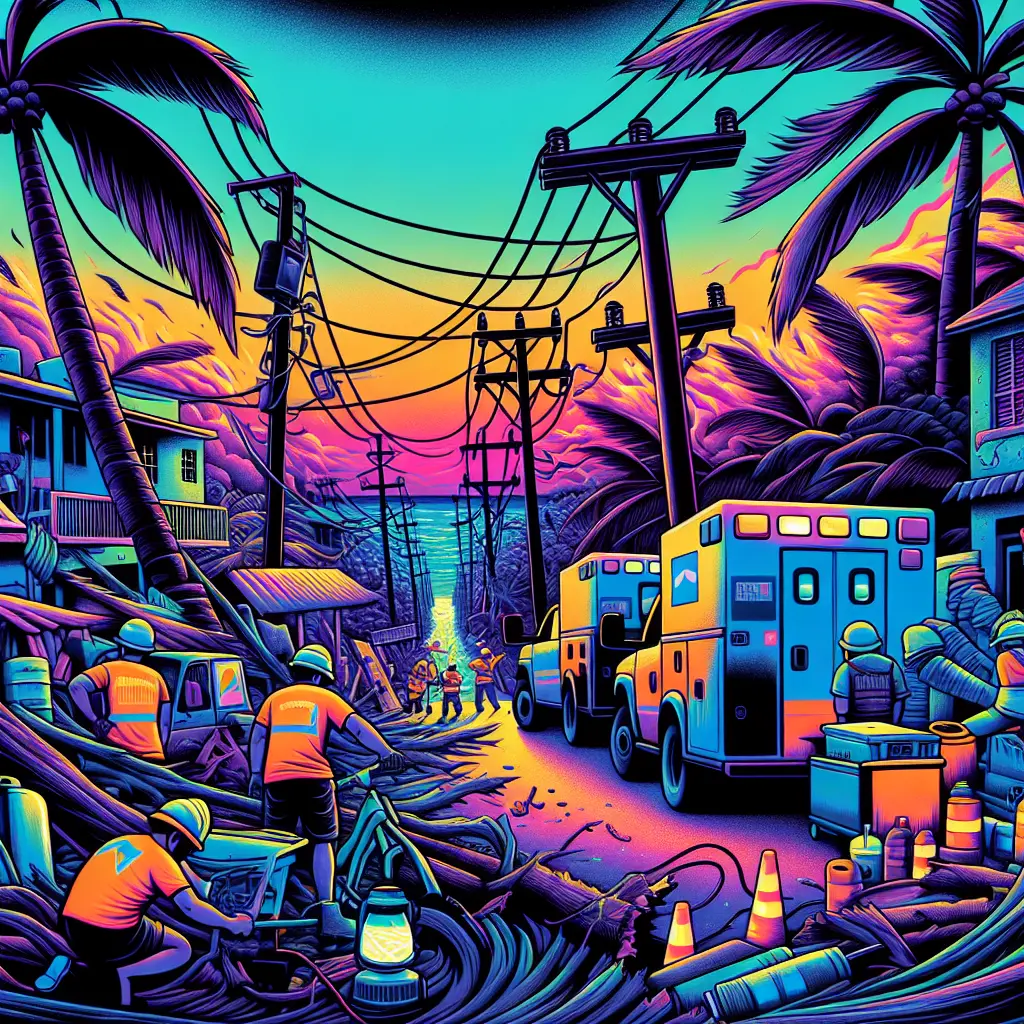
Hurricane Maria struck Puerto Rico in September 2017, devastating the island’s power grid and leaving nearly all residents without electricity. The storm caused the largest blackout in U.S. history, severely disrupting water, healthcare, and communications. Recovery efforts faced challenges due to damaged infrastructure, logistical hurdles, and limited resources. Restoring power took months, highlighting vulnerabilities in the grid and prompting discussions about modernizing Puerto Rico’s energy systems for greater resilience.
Hurricane Maria in Puerto Rico: Grid Failure and Recovery (2017)
Hurricane Maria struck Puerto Rico in September 2017, devastating the island’s power grid and leaving nearly all residents without electricity. The storm caused the largest blackout in U.S. history, severely disrupting water, healthcare, and communications. Recovery efforts faced challenges due to damaged infrastructure, logistical hurdles, and limited resources. Restoring power took months, highlighting vulnerabilities in the grid and prompting discussions about modernizing Puerto Rico’s energy systems for greater resilience.
💡 Key Takeaways
- Understand how a hurricane can trigger mass grid failure and prolonged power outages.
- Learn how a widespread outage cascades into water, healthcare, and communications disruptions.
- Appreciate the scale of Hurricane Maria’s blackout in Puerto Rico (the largest in U.S. history) and what it revealed about grid vulnerability.
- Recognize the main challenges and lessons from the recovery effort, including infrastructure damage, logistics, funding, and coordination.
❓ Frequently Asked Questions
What happened to Puerto Rico's power grid during Hurricane Maria?
The hurricane damaged a large portion of the island’s electrical infrastructure, causing a near-total blackout—the largest in U.S. history.
Which daily services were most disrupted by the outage?
Water, healthcare, and communications were severely affected as power outages disrupted pumps, hospitals, and phone/internet networks.
Why did it take so long to restore electricity?
Extensive damage to generation, transmission, and distribution, along with logistical challenges and fuel shortages, slowed the recovery and coordination among agencies.
What has recovery looked like since 2017?
Recovery has involved grid repairs, modernization, and resilience-building efforts to improve future disaster response and infrastructure durability.