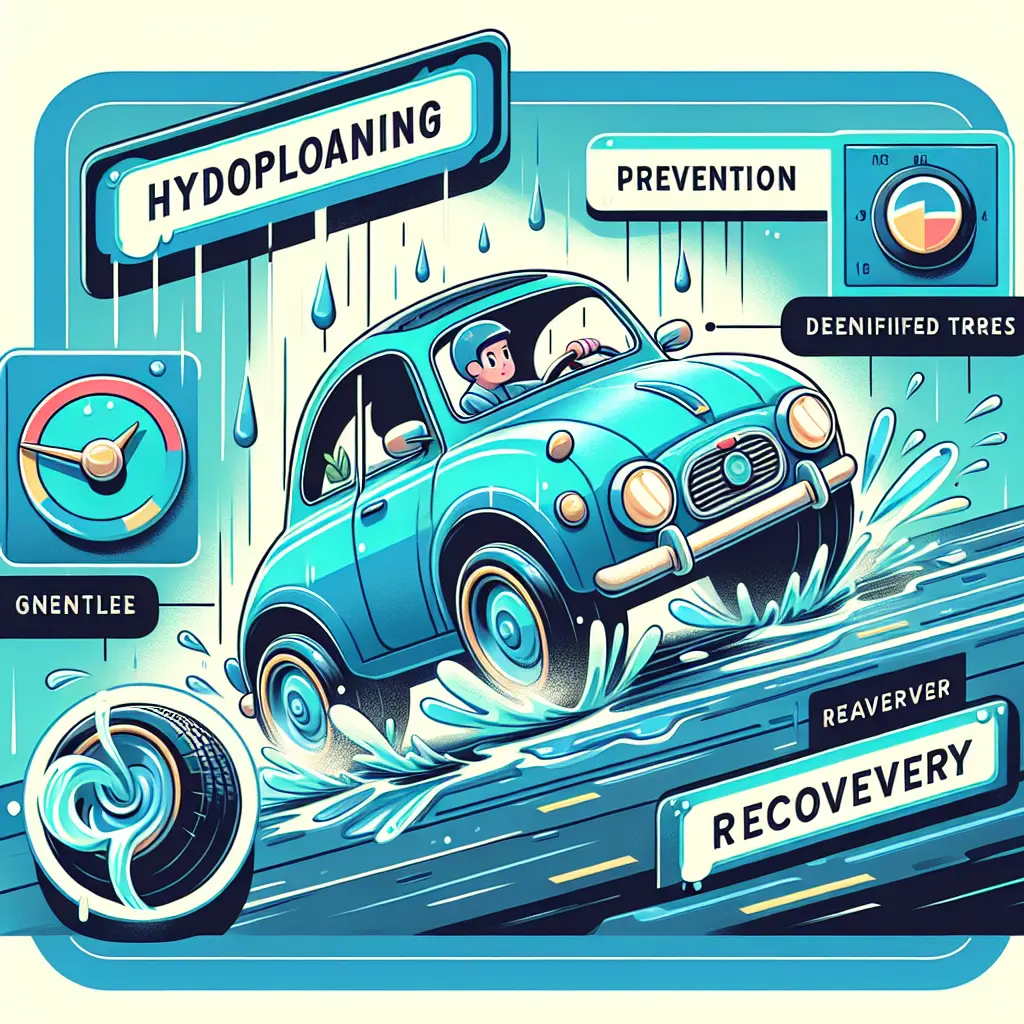
Hydroplaning prevention involves maintaining proper tire pressure, reducing speed during wet conditions, and avoiding sudden maneuvers or hard braking. Ensuring tires have adequate tread depth also helps channel water away. If hydroplaning occurs, recovery includes easing off the accelerator, steering gently in the direction you want to go, and avoiding abrupt braking or turning. Staying calm and allowing the tires to regain traction are key to safely regaining control of the vehicle.
Hydroplaning Prevention and Recovery
Hydroplaning prevention involves maintaining proper tire pressure, reducing speed during wet conditions, and avoiding sudden maneuvers or hard braking. Ensuring tires have adequate tread depth also helps channel water away. If hydroplaning occurs, recovery includes easing off the accelerator, steering gently in the direction you want to go, and avoiding abrupt braking or turning. Staying calm and allowing the tires to regain traction are key to safely regaining control of the vehicle.
💡 Key Takeaways
- Maintain proper tire pressure and adequate tread depth to improve water evacuation and reduce hydroplaning risk.
- Slow down in wet conditions and increase following distance to maintain control on wet roads.
- Avoid abrupt steering, acceleration, or hard braking; apply smooth inputs to maintain traction in wet driving.
- If hydroplaning occurs, ease off the accelerator, steer gently in the direction of the road, and avoid hard braking until traction is restored.
❓ Frequently Asked Questions
What is hydroplaning and why is it dangerous?
Hydroplaning happens when a layer of water separates the tires from the road, causing loss of traction. You may lose steering, braking, and control.
How can I prevent hydroplaning while driving in wet conditions?
Maintain proper tire pressure, ensure adequate tread depth, slow down, increase following distance, and avoid sudden braking or sharp steering in standing water.
What tire maintenance helps reduce hydroplaning risk?
Regularly check tire pressure, replace worn tires (tread depth around 4/32 inch or less reduces wet grip), and ensure proper alignment and rotation.
What should I do if hydroplaning occurs?
Ease off the accelerator gradually, avoid hard braking or sharp steering, keep the wheel straight or gently steer to regain traction, and resume normal driving when grip returns.
How can I check my tire tread depth at home?
Use a tread depth gauge or perform a penny test. Replace tires when tread is worn to about 4/32 inch or less; the legal minimum is 2/32 inch in many areas.