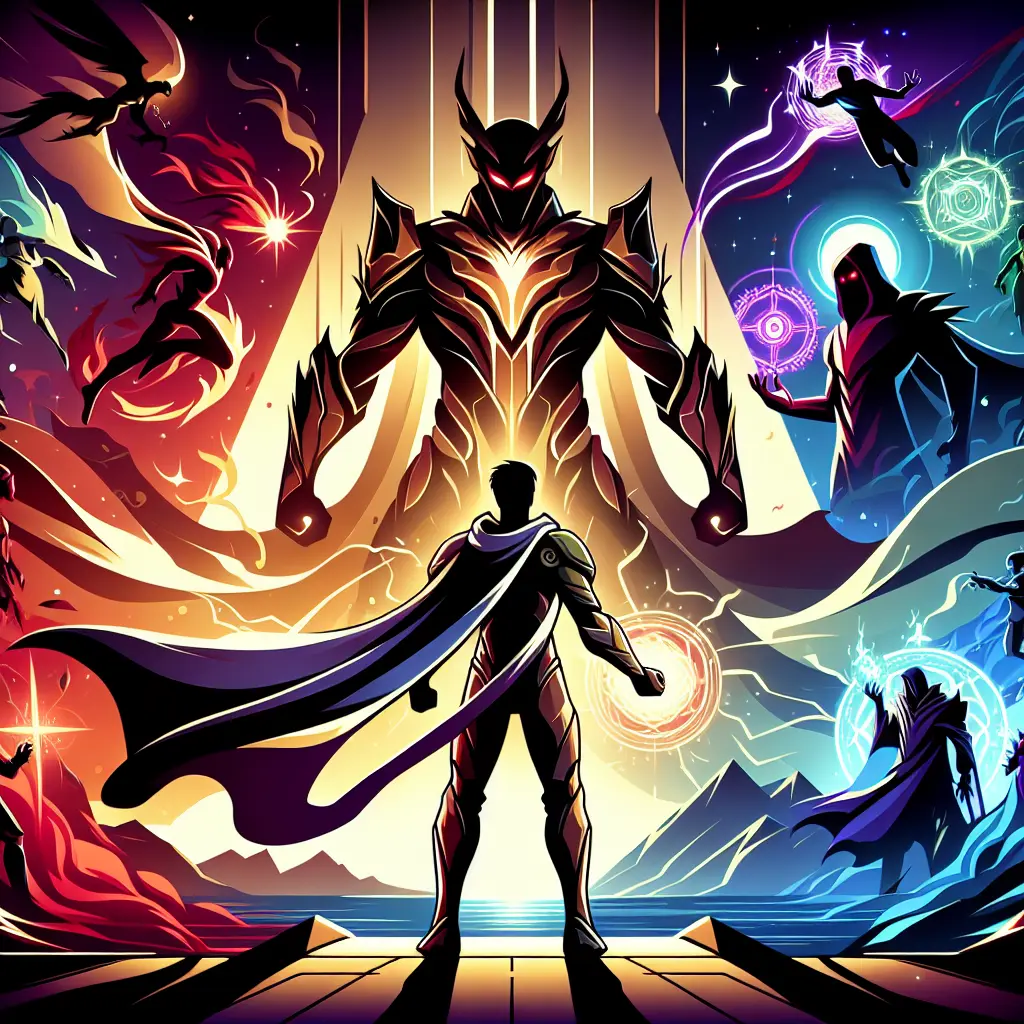
"Iconic Heroes & Villains" refers to legendary characters in stories, movies, comics, or history who embody the ultimate representations of good and evil. Heroes are admired for their courage, selflessness, and noble deeds, while villains are remembered for their cunning, ambition, or malevolence. These figures shape narratives, inspire audiences, and often become cultural symbols, leaving a lasting impact on how society views morality, bravery, and the struggle between right and wrong.
Iconic Heroes & Villains
"Iconic Heroes & Villains" refers to legendary characters in stories, movies, comics, or history who embody the ultimate representations of good and evil. Heroes are admired for their courage, selflessness, and noble deeds, while villains are remembered for their cunning, ambition, or malevolence. These figures shape narratives, inspire audiences, and often become cultural symbols, leaving a lasting impact on how society views morality, bravery, and the struggle between right and wrong.
💡 Key Takeaways
- Identify common hero and villain archetypes across franchises and universes.
- Understand the defining traits of heroes (courage, selflessness) and villains (cunning, ambition) and how they drive conflict.
- Compare portrayals of good and evil across different media and note how context shapes perception and moral nuance.
- Explore how iconic characters evolve over time within a franchise and across media to remain memorable.
❓ Frequently Asked Questions
What defines an iconic hero or villain?
An iconic hero or villain is memorable due to a clear moral stance, defining traits, and lasting impact across stories. Heroes embody courage and selflessness; villains reveal ambition or malevolence that drives the conflict.
How do franchises and universes shape these characters?
Franchises are linked series sharing characters; universes are broader settings where characters appear in multiple works. Iconic figures recur, evolve, and influence other stories within the same franchise or universe.
What traits commonly make heroes and villains iconic?
Heroes typically show courage, sacrifice, and selflessness. Villains often pursue power, use manipulation, or reveal moral ambiguity. Iconic figures also have distinctive looks or catchphrases and shape the story.
How can you tell if a hero or villain is iconic?
Look for longevity across media, a distinctive design or symbol, recognizable lines or quotes, and lasting influence on fans and other works.