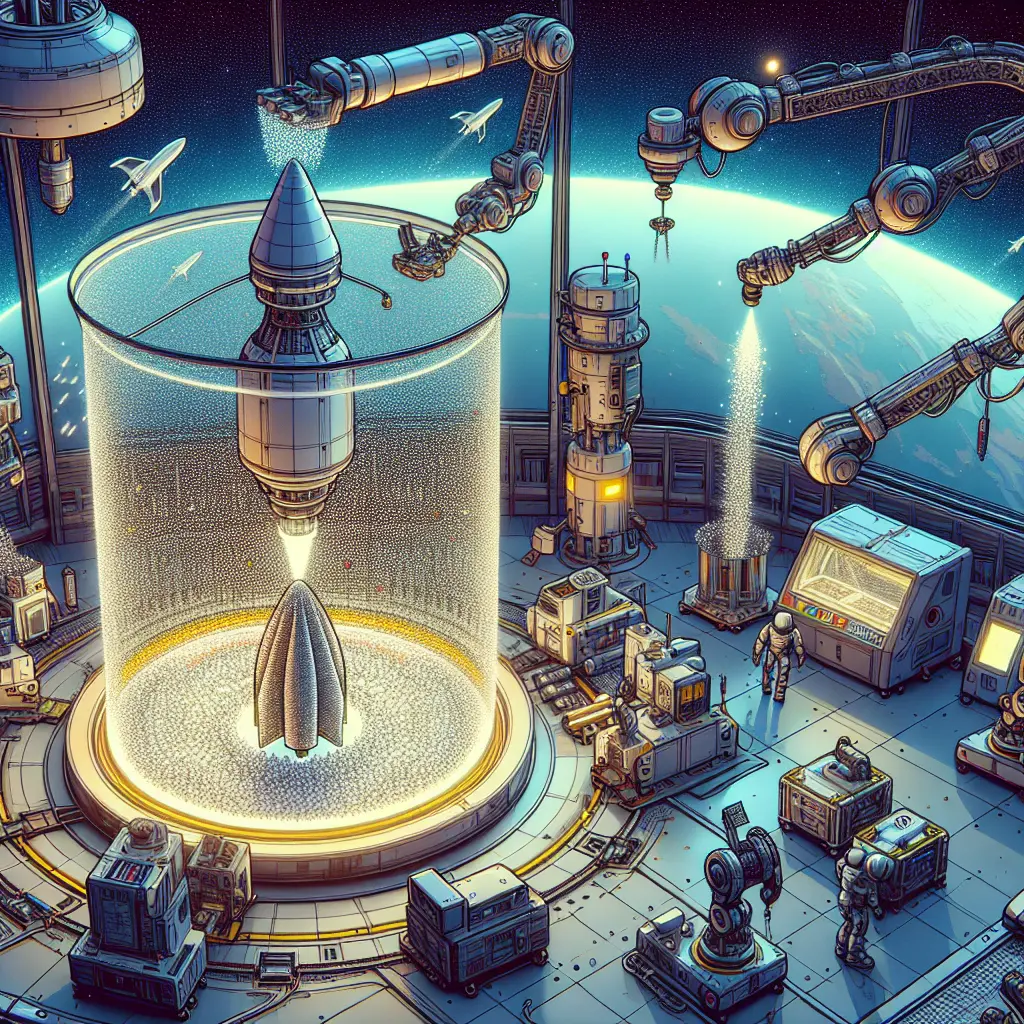
In-orbit assembly and construction methods refer to techniques and technologies used to build, connect, or expand spacecraft, satellites, or space structures while they are already in space. These methods involve robotic systems, astronauts, or autonomous vehicles to assemble components delivered separately from Earth. This approach enables the creation of larger, more complex structures—such as space stations, telescopes, or habitats—that cannot be launched fully assembled due to size or weight constraints.
In-Orbit Assembly and Construction Methods
In-orbit assembly and construction methods refer to techniques and technologies used to build, connect, or expand spacecraft, satellites, or space structures while they are already in space. These methods involve robotic systems, astronauts, or autonomous vehicles to assemble components delivered separately from Earth. This approach enables the creation of larger, more complex structures—such as space stations, telescopes, or habitats—that cannot be launched fully assembled due to size or weight constraints.

💡 Key Takeaways
- Identify the main in‑orbit assembly approaches (robotic arms/telerobotics, EVA by astronauts, and autonomous modules) and when they’re used.
- Explain how components are joined in microgravity, including docking interfaces, fasteners, clamps, and power/data interconnects.
- Describe common space-assembly challenges (microgravity, vacuum, temperature, contamination, debris) and typical mitigation strategies.
- Outline the typical on‑orbit assembly workflow from component delivery and planning to sequencing, verification, and integration.
❓ Frequently Asked Questions
What is in-orbit assembly and construction?
In-orbit assembly refers to building, joining, or expanding spacecraft while they are in space, using modular components delivered separately and connected in orbit.
What techniques are used to assemble structures in orbit?
Techniques include robotic arms and telerobotics, autonomous assembly vehicles, EVA (astronauts performing spacewalks) for manual connections, and docking of modules with standardized interfaces.
What are the main challenges of in-orbit assembly?
Challenges include precise alignment and docking in microgravity, deployment dynamics, vibration, thermal extremes, contamination control, and ensuring long-term reliability.
Why is in-orbit assembly important?
It enables the construction of much larger structures than fit in a launch, supports servicing and upgrades, and enables scalable architectures for habitats, telescopes, antennas, and other space infrastructure.
What are common applications of in-orbit assembly?
Applications include modular space stations, large communication or radar antennas, segmented space telescopes, and future habitats or power platforms assembled from multiple in-space Modules.