In-Situ Resource Utilization (ISRU) for the Moon and Mars refers to the practice of using local materials, such as lunar or Martian soil, water ice, and atmospheric gases, to support human exploration and settlement. ISRU technologies aim to produce essentials like oxygen, water, fuel, and building materials on-site, reducing the need to transport supplies from Earth and making long-term missions more sustainable and cost-effective.
In-Situ Resource Utilization (ISRU) for Moon and Mars
In-Situ Resource Utilization (ISRU) for the Moon and Mars refers to the practice of using local materials, such as lunar or Martian soil, water ice, and atmospheric gases, to support human exploration and settlement. ISRU technologies aim to produce essentials like oxygen, water, fuel, and building materials on-site, reducing the need to transport supplies from Earth and making long-term missions more sustainable and cost-effective.
💡 Key Takeaways
- Define ISRU and explain why using local Moon/Mars resources reduces reliance on Earth supplies.
- Identify common local resources targeted by ISRU (lunar regolith, water ice, CO2) and the products they enable (oxygen, water, fuel, building materials).
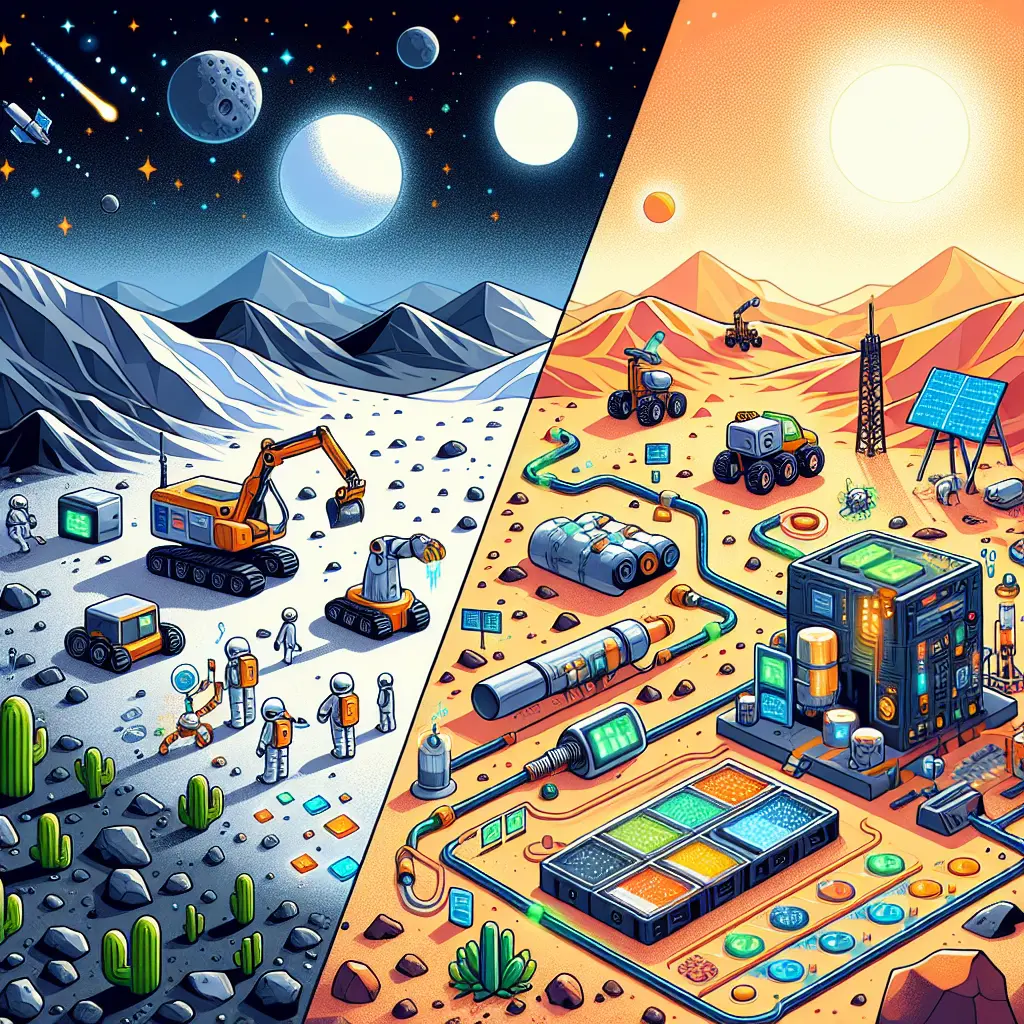
- Describe the basic ISRU workflow: extraction of resources, processing into usable materials, and deployment for life support, propulsion, or habitat construction.
- Compare ISRU on the Moon and Mars, highlighting key challenges such as resource distribution, energy needs, extreme environments, and technology readiness.
❓ Frequently Asked Questions
What is In-Situ Resource Utilization (ISRU)?
ISRU is using materials found on the Moon or Mars to support missions—producing essentials like oxygen, water, fuel, and building materials on site instead of bringing them from Earth.
Which local resources are targeted for ISRU on the Moon and Mars?
Moon: lunar soil (regolith), water ice, and oxygen-bearing minerals. Mars: atmospheric CO2 and subsurface water ice or hydrated minerals. These are processed to make oxygen, water, fuel, and construction materials.
How can ISRU produce oxygen and water?
By processing local materials: electrolysis of water to yield O2 (and H2) and extracting oxygen from minerals; on Mars, splitting CO2 with devices like MOXIE and using ice or humidity for water. Additional steps can produce fuel and recycle water.
Why is ISRU important for Moon and Mars missions?
It reduces launch mass and cost, enables longer and more self-sufficient missions, supports habitats and refueling, and improves resilience when resupply is limited.