Infographic layout and visual encoding refer to the strategic arrangement and presentation of information using visual elements such as icons, charts, colors, and typography. In visual arts and design, these skills involve organizing data in a clear, engaging manner that enhances comprehension and retention. Effective infographic design uses visual hierarchy, balance, and appropriate encoding methods to guide viewers’ attention, making complex information accessible and visually appealing.
Infographic Layout & Visual Encoding
Infographic layout and visual encoding refer to the strategic arrangement and presentation of information using visual elements such as icons, charts, colors, and typography. In visual arts and design, these skills involve organizing data in a clear, engaging manner that enhances comprehension and retention. Effective infographic design uses visual hierarchy, balance, and appropriate encoding methods to guide viewers’ attention, making complex information accessible and visually appealing.
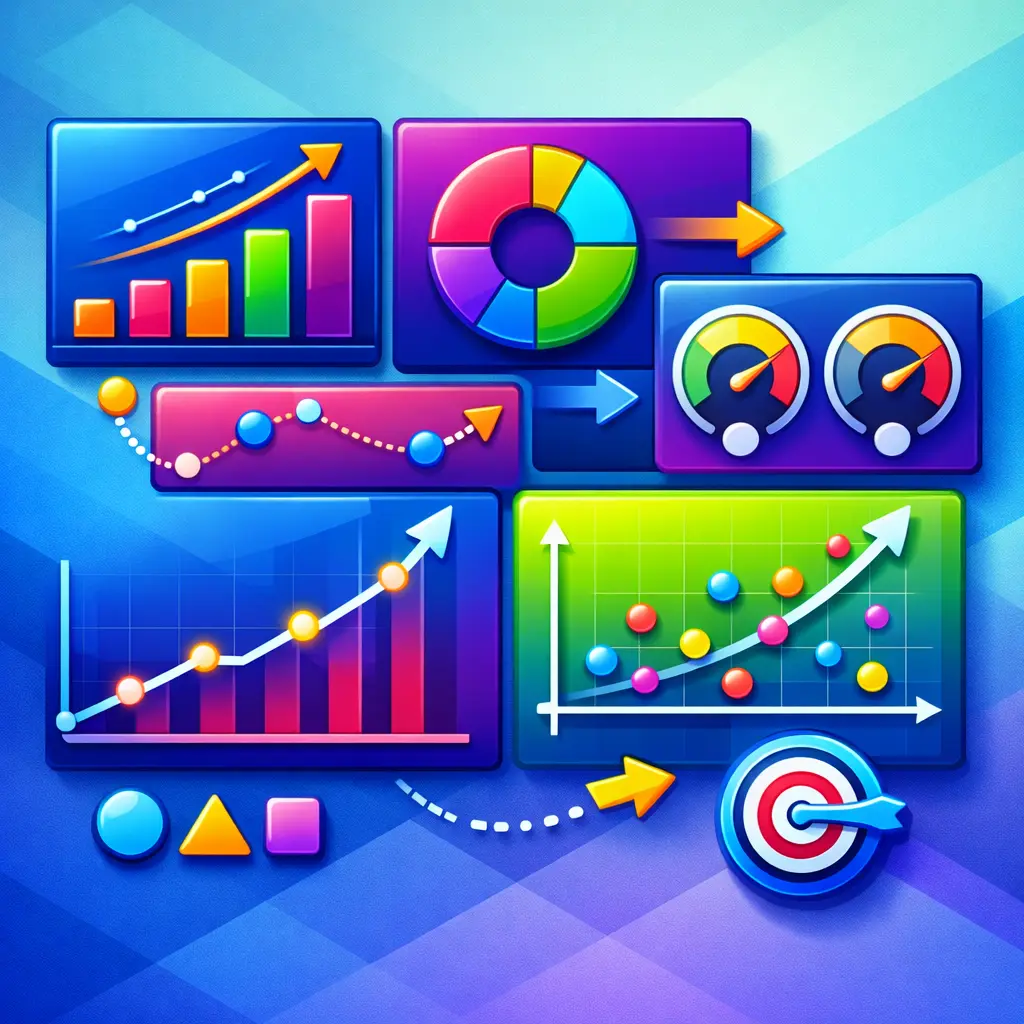
💡 Key Takeaways
- Learn the principles of infographic layout to guide the viewer from headline to conclusion.
- Explore visual encoding techniques (color, size, position, and shape) to represent data accurately.
- Select appropriate chart types and iconography to communicate comparisons and trends clearly.
- Apply typography, spacing, and alignment to create a readable, scannable infographic.
- Consider accessibility and clarity, using color contrast and simple visuals for inclusivity.
❓ Frequently Asked Questions
What is visual encoding in an infographic?
Visual encoding uses visual channels—such as position, size, shape, color, and texture—to represent data values and categories, enabling quick comparison and interpretation.
What makes an infographic layout effective?
A strong layout uses a clear visual hierarchy, grid-based alignment, consistent typography, and balanced whitespace to guide the viewer from the headline through the data.
How should color be used in infographics?
Color should differentiate categories, indicate magnitude, and maintain sufficient contrast for readability; keep a restrained palette to avoid confusion.
How do you map data to visual elements?
Choose encodings that suit the data: use position or length for quantitative values, color or shape for categories, and include labels/legends for clarity.