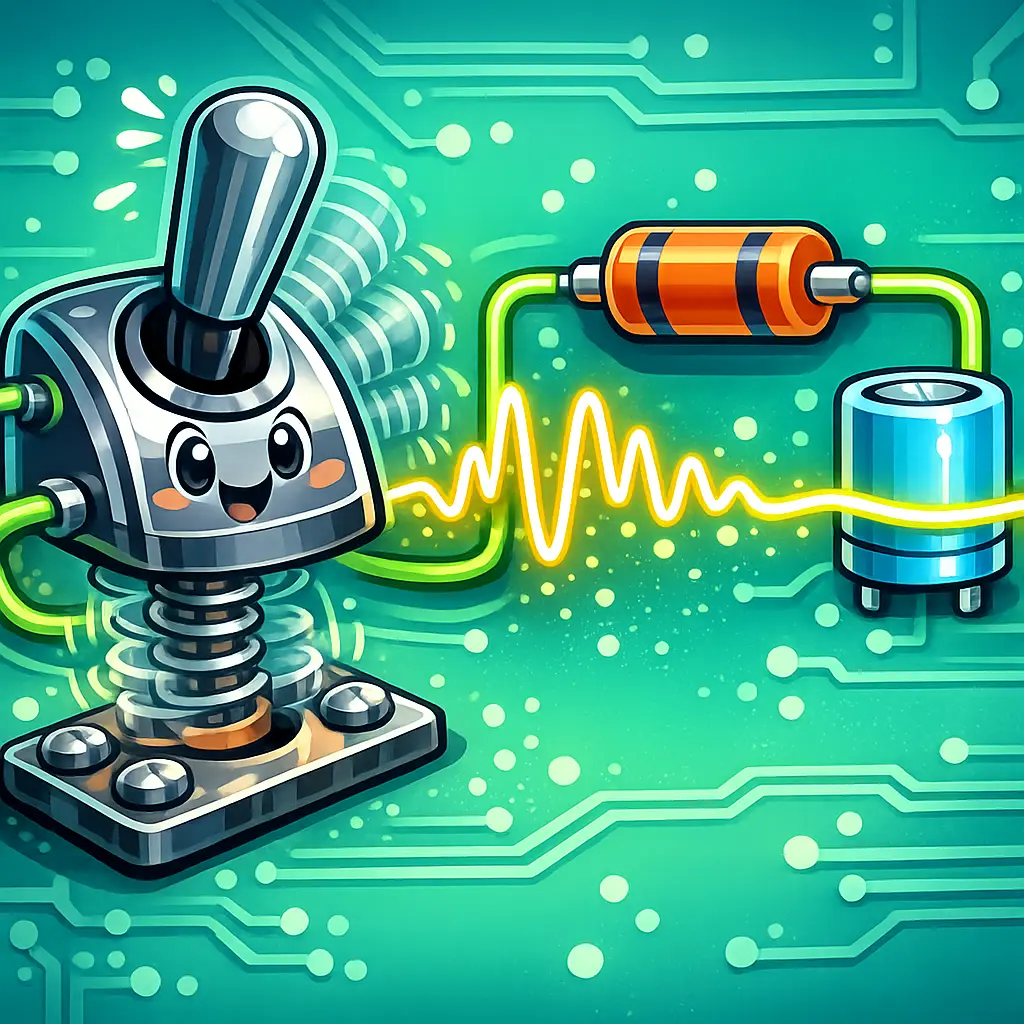
Inrush current is the initial surge of current when electrical equipment is first powered on, often much higher than normal operating current. NTC thermistors, which have resistance that decreases as temperature increases, are used in circuits to limit this inrush current. When the device is switched on, the thermistor resists current flow, protecting components. As it heats up, its resistance drops, allowing normal operation. This process is called a soft-start.
Inrush Current, NTC Thermistors & Soft-Start
Inrush current is the initial surge of current when electrical equipment is first powered on, often much higher than normal operating current. NTC thermistors, which have resistance that decreases as temperature increases, are used in circuits to limit this inrush current. When the device is switched on, the thermistor resists current flow, protecting components. As it heats up, its resistance drops, allowing normal operation. This process is called a soft-start.

💡 Key Takeaways
- Explain what inrush current is and why it occurs when electrical devices power up.
- Describe how NTC thermistors limit initial current by presenting high resistance that drops as they heat up.
- Define soft-start and how it reduces surge, voltage sag, and component stress during startup.
- Provide basic guidance on selecting and implementing NTC-based soft-start: key ratings (inrush current, resistance, B-value) and placement considerations.
❓ Frequently Asked Questions
What is inrush current and why is it important to control?
Inrush current is the initial surge of current when a power supply is connected, mainly from charging input capacitors and energizing transformers. It can be several times higher than steady-state current and can trip breakers, cause voltage dips, and stress components.
How does an NTC thermistor limit inrush current?
An NTC thermistor has high resistance when cold, which limits current at switch-on. As it heats during startup, its resistance drops, allowing normal current flow with much less peak surge. It's placed in series with the supply.
What is soft-start, and how does it reduce inrush current?
Soft-start gradually ramps the output voltage or current during power-up, instead of an abrupt jump. This can be done via controlled driver circuitry, PWM, or current-limiting stages, reducing or delaying the inrush.
When is an NTC thermistor a good choice, and what are its limitations?
NTC thermistors are a simple, passive way to limit inrush for moderate loads where some voltage drop and heat dissipation are acceptable. They may not be ideal for very high or frequent inrush, cold-start sensitivity, or precise control; in such cases, active soft-start or other current-limiting methods may be better.