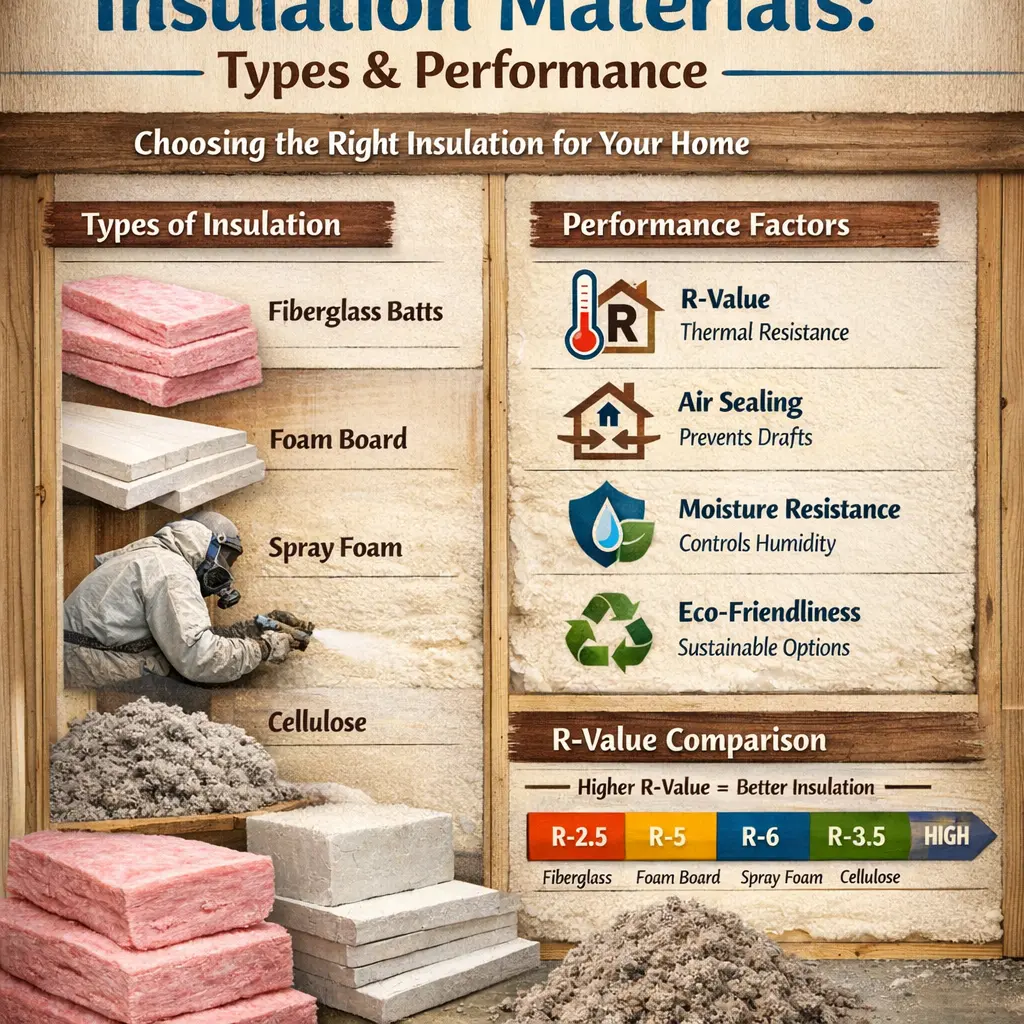
Insulation materials are substances used to reduce heat transfer, ensuring energy efficiency in buildings and appliances. Common types include fiberglass, mineral wool, cellulose, foam boards, and spray foam. Each material offers distinct properties such as thermal resistance (R-value), fire resistance, moisture tolerance, and environmental impact. Their performance depends on application, installation quality, and climate conditions. Selecting the right insulation enhances comfort, lowers energy costs, and supports sustainability in construction and manufacturing.
Insulation Materials: Types and Performance
Insulation materials are substances used to reduce heat transfer, ensuring energy efficiency in buildings and appliances. Common types include fiberglass, mineral wool, cellulose, foam boards, and spray foam. Each material offers distinct properties such as thermal resistance (R-value), fire resistance, moisture tolerance, and environmental impact. Their performance depends on application, installation quality, and climate conditions. Selecting the right insulation enhances comfort, lowers energy costs, and supports sustainability in construction and manufacturing.
💡 Key Takeaways
- Identify common insulation materials (fiberglass, mineral wool, cellulose, foam board, spray foams) and their typical applications.
- Explain how thermal performance is measured (R-value, U-factor) and how material thickness affects energy efficiency.
- Compare the pros and cons of major insulation types with regard to cost, fire resistance, moisture handling, and environmental impact.
- Identify installation considerations and suitability for different building parts (attics, walls, basements) and climate zones.
❓ Frequently Asked Questions
What does R-value mean in insulation and why is it important?
R-value measures resistance to heat flow; higher R means better insulation performance. The needed R depends on climate, location, and the area being insulated, and is influenced by material thickness and proper installation.
Which insulation materials provide the highest insulation per inch?
Foam-based options generally offer the highest R-value per inch—polyiso foam boards and closed‑cell spray foams typically around R6–R7 per inch. Fiberglass and cellulose are lower per inch (roughly R3–R3.5).
How do moisture and air sealing affect insulation performance?
Moisture can reduce insulation effectiveness and cause damage, while air leaks bypass the insulating material. Proper air sealing and moisture management improve overall performance.
What are common insulation materials and their typical use cases?
Fiberglass: affordable batt/blown-in for walls and attics. Mineral wool: fire resistance and sound. Cellulose: recycled content for attic fills. Foam boards (polyiso, EPS, XPS): high R per inch for exterior or foundation insulation. Spray foam: air sealing with high R per inch, in gaps and cavities. Natural options (wool, cork, cotton): eco-friendly with moisture-management benefits.