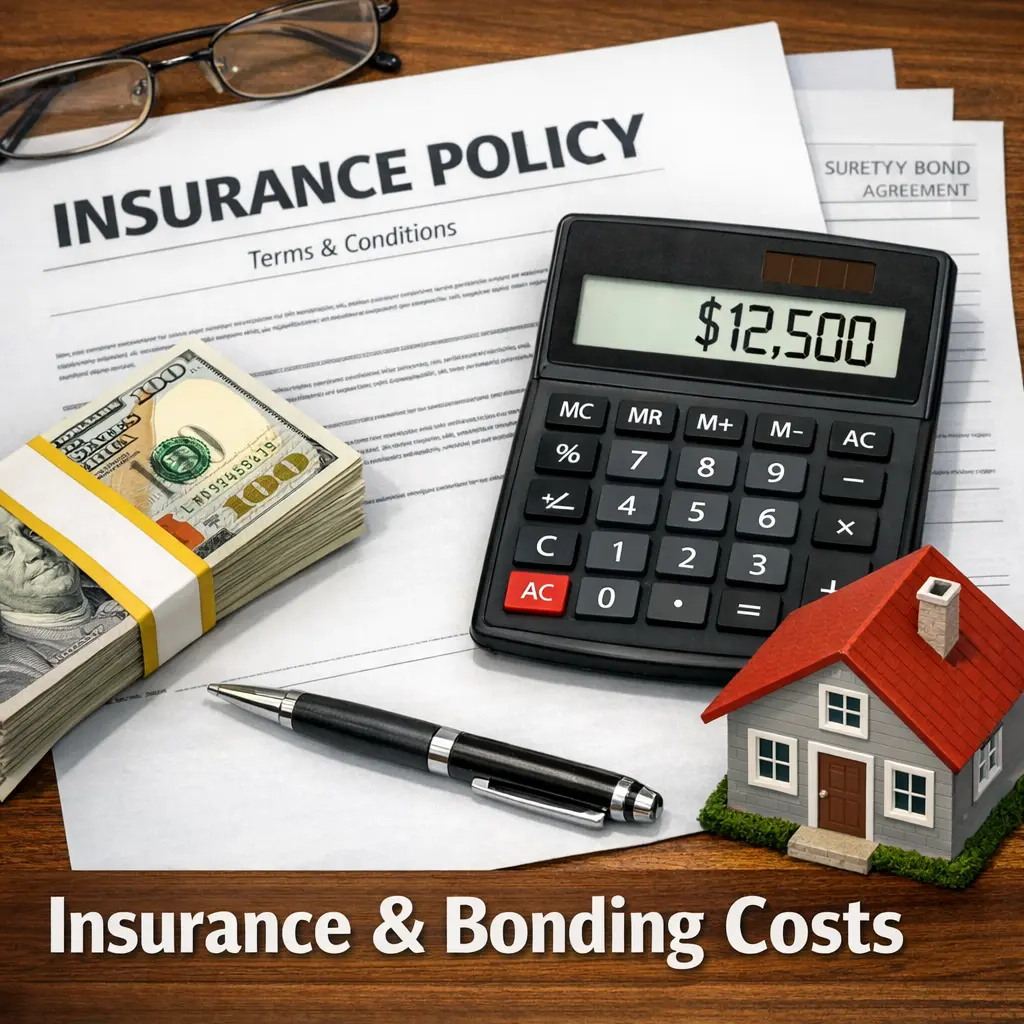
Insurance & Bonding Costs refer to the expenses a business incurs to protect itself from potential financial losses and to guarantee the fulfillment of contractual obligations. Insurance covers risks such as property damage, liability, or employee injuries, while bonding provides assurance to clients that the business will complete a project as agreed. Effective financial management involves budgeting for these costs to ensure business stability and compliance with industry standards.
Insurance & Bonding Costs
Insurance & Bonding Costs refer to the expenses a business incurs to protect itself from potential financial losses and to guarantee the fulfillment of contractual obligations. Insurance covers risks such as property damage, liability, or employee injuries, while bonding provides assurance to clients that the business will complete a project as agreed. Effective financial management involves budgeting for these costs to ensure business stability and compliance with industry standards.
💡 Key Takeaways
- Define insurance and bonding costs and explain their role in project pricing and budgeting.
- Differentiate common insurance types (general liability, workers' compensation, professional liability) and bond types (bid, performance, payment) and how they affect costs.
- Learn how premiums and bond rates are calculated, including factors like risk, limits, and project size.
- Identify practical strategies to manage and reduce these costs through risk controls, policy design, and proper bonding processes.
❓ Frequently Asked Questions
What is the difference between insurance costs and bonding costs?
Insurance costs cover risks like injuries or property damage, while bonding costs are premiums for surety bonds that guarantee contract performance or payment to the project owner.
What types of bonds might affect costs in construction or contracting?
Common bonds include bid bonds, performance bonds, and payment bonds; many contracts require all three, and costs rise with contract value and project risk.
How are bonding costs calculated?
Bond premiums are usually a small percentage of the contract value and are influenced by risk factors such as project type, size, duration, credit history, and bonding track record.
What insurance coverages are often paired with bonding?
General liability, workers’ compensation, and professional liability (where applicable) are commonly required alongside bonds to protect against project risks.
How can I reduce insurance and bonding costs?
Improve safety records and claims history, maintain strong financials, compare multiple quotes, and work with a broker to tailor coverage to the project’s risk.