Intellectual Property Law encompasses legal protections for creations of the mind, including copyrights, patents, and trademarks. Copyright safeguards original works like literature and art; patents protect inventions and technological innovations; trademarks defend brand names, logos, and slogans. These laws encourage creativity and innovation by granting creators exclusive rights, while also balancing public access and fair use. Governed by national and international regulations, they play a vital role in law, government, and public service.
Intellectual Property Law: Copyright, Patent, Trademark
Intellectual Property Law encompasses legal protections for creations of the mind, including copyrights, patents, and trademarks. Copyright safeguards original works like literature and art; patents protect inventions and technological innovations; trademarks defend brand names, logos, and slogans. These laws encourage creativity and innovation by granting creators exclusive rights, while also balancing public access and fair use. Governed by national and international regulations, they play a vital role in law, government, and public service.
💡 Key Takeaways
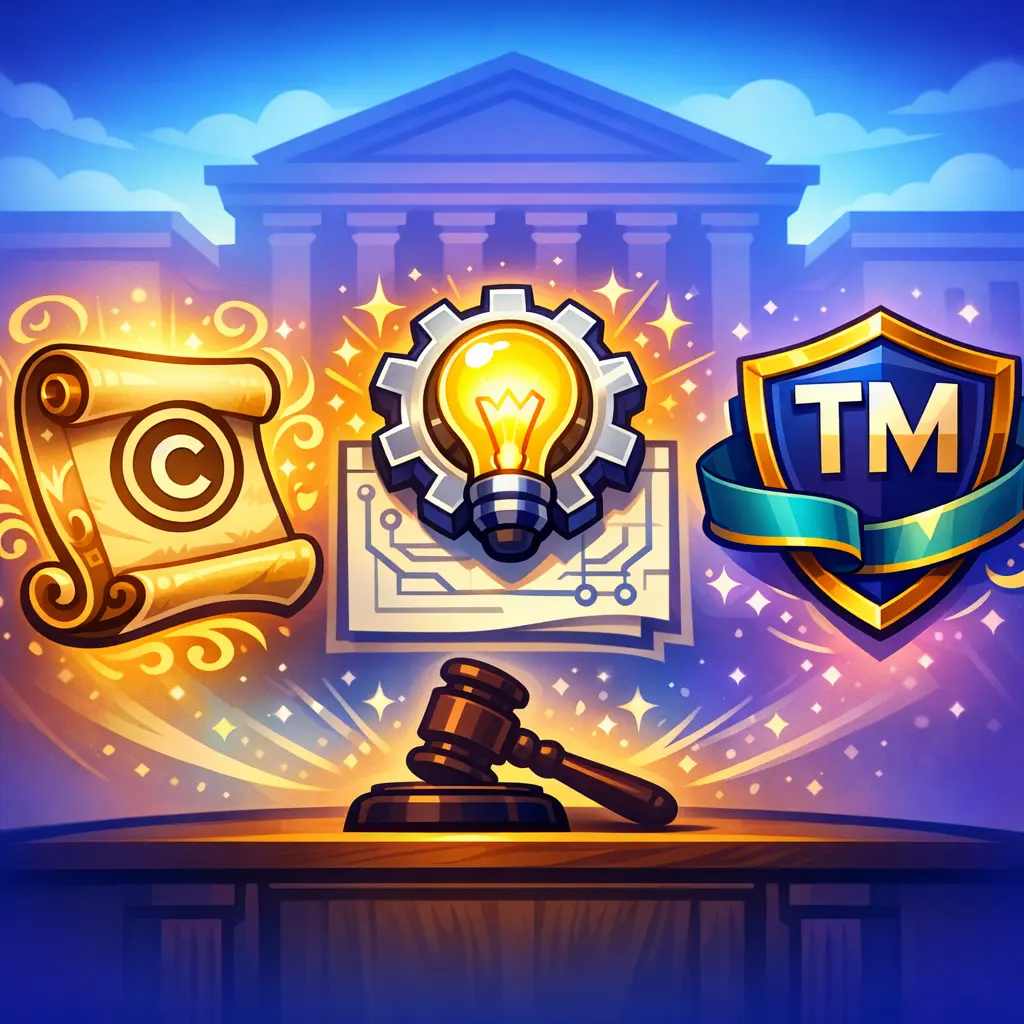
- Distinguish copyright, patent, and trademark: what each protects and how they differ.
- Learn the basics of qualifying for protection: original fixed works for copyright; novelty, non-obviousness, and utility for patents; distinctiveness in commerce for trademarks.
- Understand how protection is obtained and typical durations: copyright is automatic; patents and trademarks usually require registration; durations vary by type and jurisdiction.
- Identify common infringement scenarios and the basics of remedies, licensing, and enforcement.
- Consider how IP rights support innovation and branding in business strategy.
❓ Frequently Asked Questions
What is intellectual property, and how do copyright, patent, and trademark differ?
Intellectual property (IP) protects creations of the mind. Copyright shields original works of authorship (books, music, art); patents protect new inventions or processes; trademarks protect brands like names and logos. IP rights encourage innovation by granting exclusive control for a limited time (copyright/patents) or through registration and use (trademarks).
What does copyright protect, and how long does it last?
Copyright protects original works fixed in a tangible form (literary, artistic, musical, software). It doesn’t protect ideas themselves. Duration is typically the author’s lifetime plus 70 years (varies by country); corporate or multi-author works have different terms.
What is a patent, and who can obtain one?
A patent protects new, useful, and non-obvious inventions or processes. The inventor or an assignee applies; protection typically lasts about 20 years from filing, subject to maintenance and fees.
What is a trademark, and how is it different from copyright or patent?
A trademark protects brands—names, logos, and slogans used in commerce to identify goods or services. Trademarks can last indefinitely with proper use and renewal, unlike limited-term copyrights or patents.
What is infringement, and how can I avoid it?
Infringement is the unauthorized use of someone else’s IP rights. Avoid it by obtaining permissions or licenses, using rights-cleared materials, and consulting guidelines on fair use or exemptions when applicable.