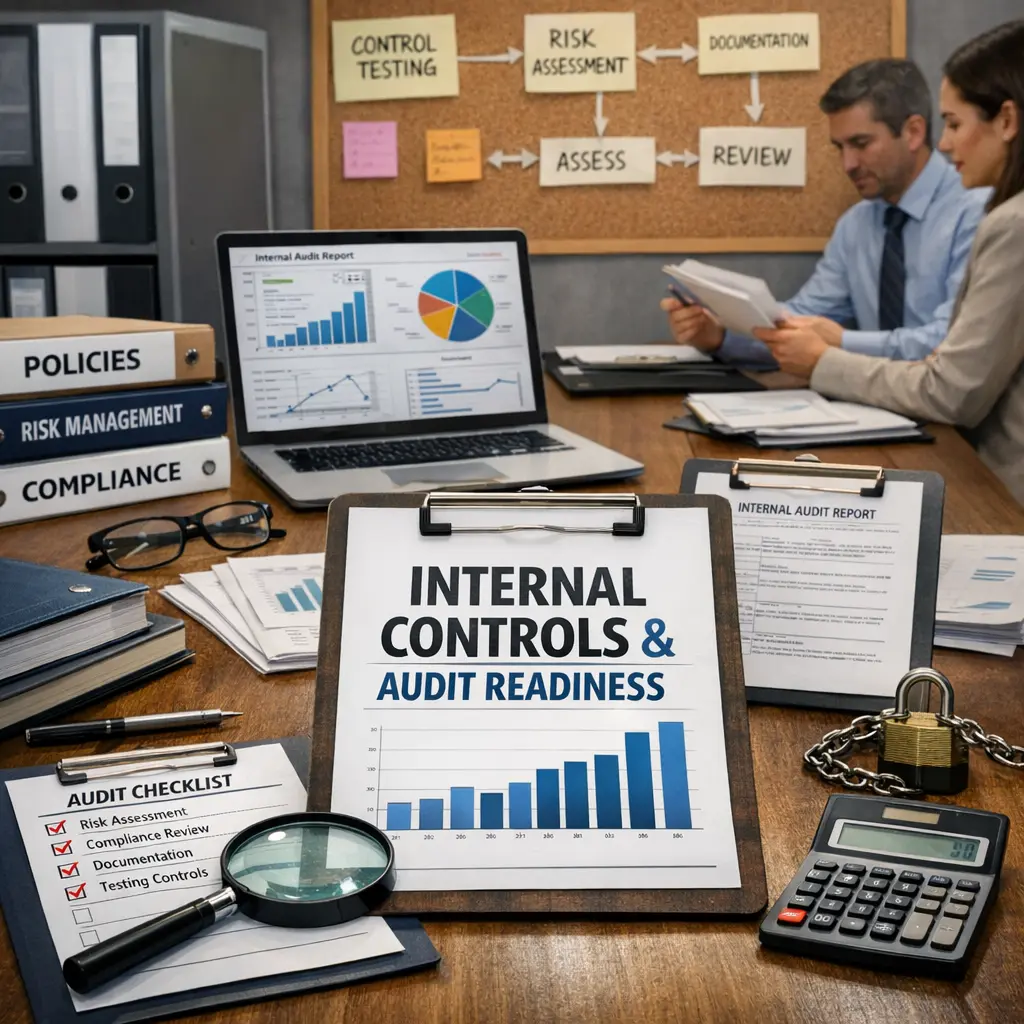
Internal Controls & Audit Readiness in Financial Management and Business Practices refers to the systematic processes and procedures organizations implement to safeguard assets, ensure accurate financial reporting, and promote compliance with laws and policies. Effective internal controls help identify and mitigate risks, prevent fraud, and support operational efficiency. Audit readiness means maintaining documentation, records, and transparent processes, enabling organizations to demonstrate their financial integrity and accountability during internal or external audits.
Internal Controls & Audit Readiness
Internal Controls & Audit Readiness in Financial Management and Business Practices refers to the systematic processes and procedures organizations implement to safeguard assets, ensure accurate financial reporting, and promote compliance with laws and policies. Effective internal controls help identify and mitigate risks, prevent fraud, and support operational efficiency. Audit readiness means maintaining documentation, records, and transparent processes, enabling organizations to demonstrate their financial integrity and accountability during internal or external audits.
💡 Key Takeaways
- Understand what internal controls are and how they protect assets and ensure reliable financial reporting.
- Learn the five components of a strong internal control framework (control environment, risk assessment, control activities, information and communication, monitoring).
- Identify common control activities (segregation of duties, approvals, reconciliations, access controls) and how they prevent errors and fraud.
- Discover how to prepare for audits: document controls, gather evidence, map controls to business processes, and remediate gaps to achieve audit readiness.
❓ Frequently Asked Questions
What are internal controls?
Internal controls are the policies and procedures a business uses to protect assets, ensure reliable financial reporting, and promote compliance, spanning environment, risk assessment, control activities, information/communication, and monitoring.
What are the five components of the COSO internal control framework?
Control Environment, Risk Assessment, Control Activities, Information and Communication, and Monitoring.
What is segregation of duties and why is it important?
Segregation of duties divides key responsibilities (authorization, recording, and custody) among different people to prevent errors and fraud and improve accuracy.
What does audit readiness mean and how can you achieve it?
Audit readiness means having up-to-date documentation, tested controls, and organized evidence so audits can be performed efficiently; maintain reconciliations, access controls, and change logs.
What counts as audit evidence and how should you prepare it?
Audit evidence includes records, documents, and logs (e.g., approvals, reconciliations) that support assertions; keep them complete, accurate, organized, and easily accessible.