International Health Regulations (IHR) are global legal frameworks established by the World Health Organization to prevent and respond to public health risks that cross borders. Careers in pandemic response within healthcare and medicine focus on managing outbreaks, implementing health policies, coordinating emergency responses, and ensuring compliance with IHR. Professionals in this field work in roles such as epidemiologists, public health advisors, and healthcare administrators to protect populations and control infectious disease spread worldwide.
International Health Regulations & Pandemic Response Careers
International Health Regulations (IHR) are global legal frameworks established by the World Health Organization to prevent and respond to public health risks that cross borders. Careers in pandemic response within healthcare and medicine focus on managing outbreaks, implementing health policies, coordinating emergency responses, and ensuring compliance with IHR. Professionals in this field work in roles such as epidemiologists, public health advisors, and healthcare administrators to protect populations and control infectious disease spread worldwide.
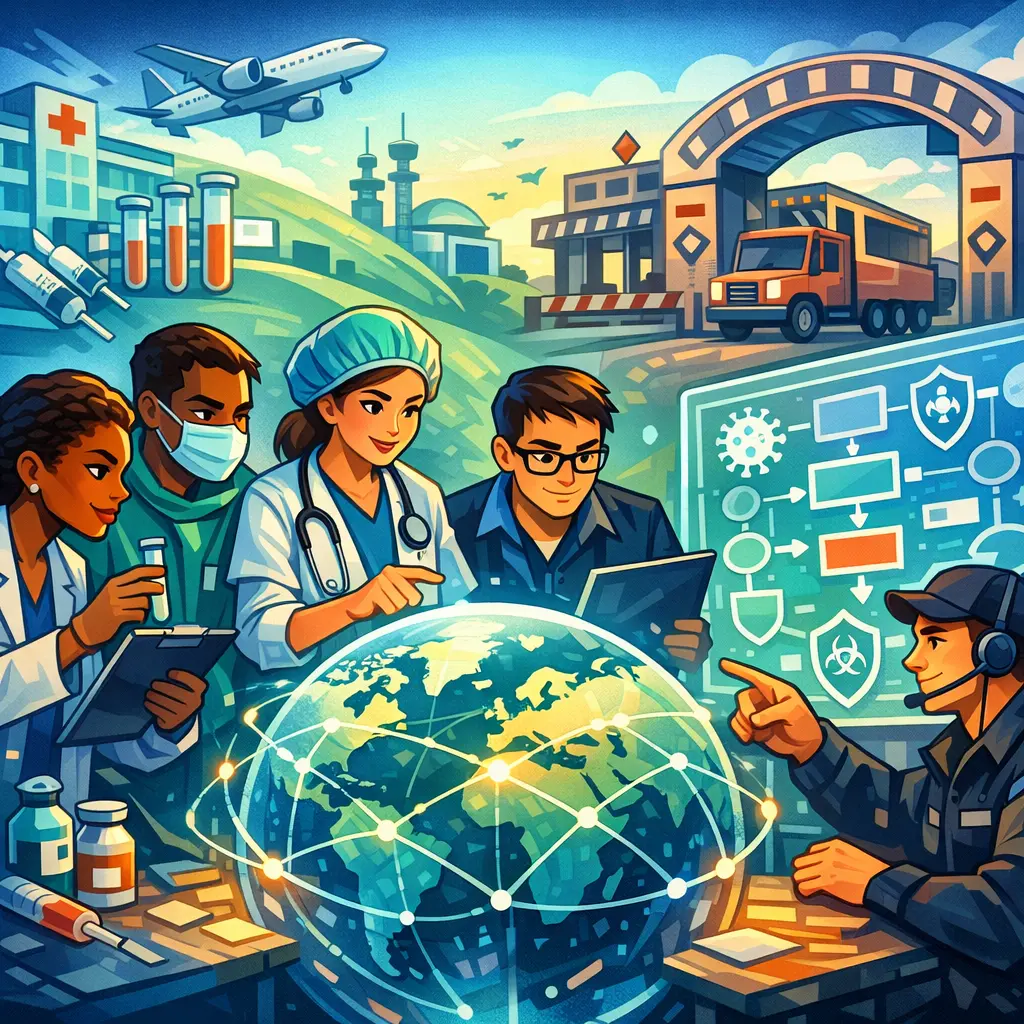
💡 Key Takeaways
- Understand the purpose of the International Health Regulations (IHR) in detecting and responding to global health emergencies.
- Explore career paths in international health and pandemic response, including epidemiology, policy, field operations, and health diplomacy.
- Learn how IHR core capacities strengthen surveillance, reporting, and health systems for early outbreak detection.
- Describe the key steps in a pandemic response under IHR, such as risk assessment, notification, coordination, and partner collaboration.
- Identify essential skills and qualifications for global health careers in emergencies (data analysis, crisis management, cross-cultural communication).
❓ Frequently Asked Questions
What are the International Health Regulations (IHR) and their main goal?
The IHR (2005) are a legally binding WHO framework to prevent the international spread of disease while minimizing travel and trade disruption, requiring countries to build core public health capacities and to report certain events to WHO.
What is a Public Health Emergency of International Concern (PHEIC) and how is it declared?
A PHEIC is a designation by the WHO Director-General when an extraordinary event risks international spread and may require a coordinated international response, often accompanied by temporary recommendations.
What core capacities must countries have under the IHR?
Surveillance and reporting, risk assessment, rapid public health response, laboratory capacity, and trained personnel at health facilities and points of entry (airports/ports).
What career paths align with IHR and pandemic response?
Roles include epidemiologists, outbreak investigators, emergency planners, public health communicators, lab scientists, and field logisticians; opportunities exist in national health agencies, WHO, CDC, and NGOs.