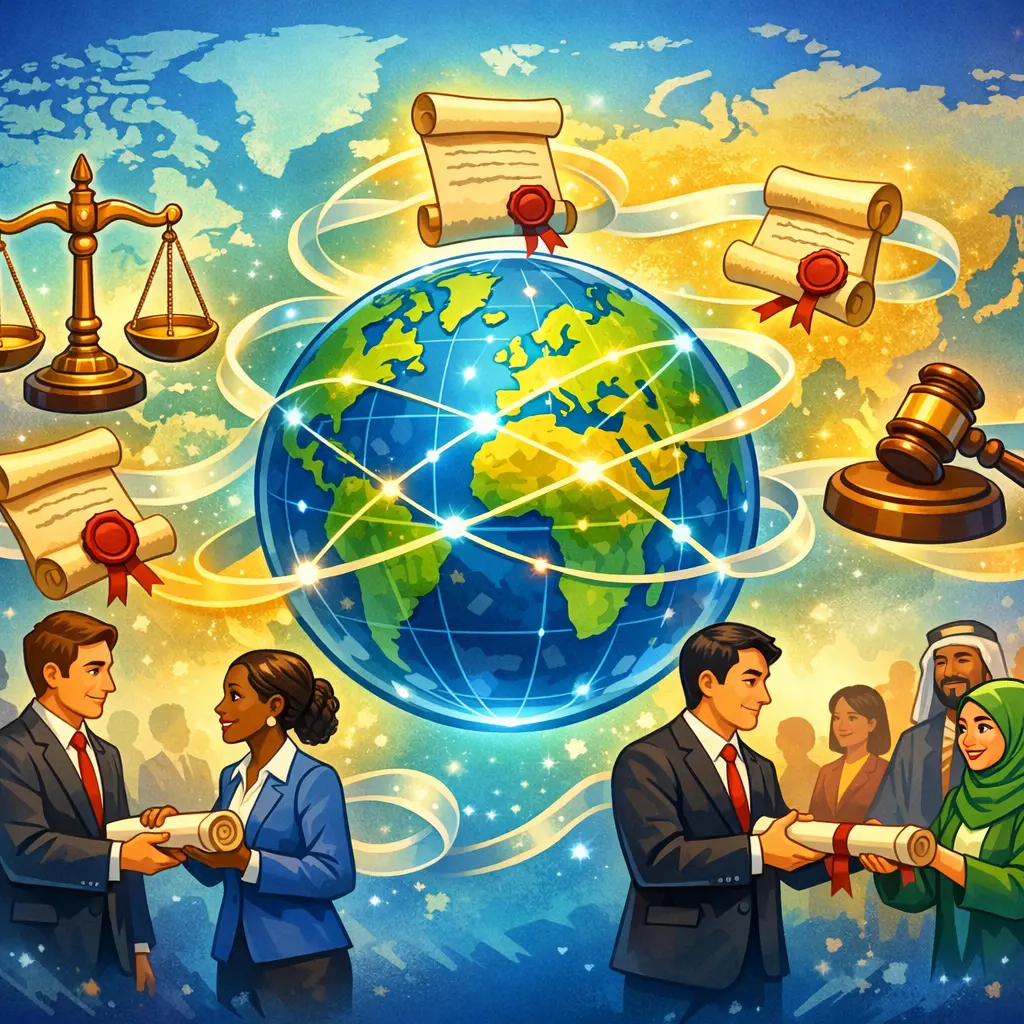
International law and treaties govern relations between nations, establishing rules and standards for conduct in areas such as diplomacy, trade, human rights, and conflict resolution. Treaties are formal agreements between countries, binding them to specific obligations. These legal frameworks promote cooperation, peace, and stability in the global community, guiding governments and public service entities in their international interactions and ensuring accountability under shared principles and norms.
International Law & Treaties+50
International law and treaties govern relations between nations, establishing rules and standards for conduct in areas such as diplomacy, trade, human rights, and conflict resolution. Treaties are formal agreements between countries, binding them to specific obligations. These legal frameworks promote cooperation, peace, and stability in the global community, guiding governments and public service entities in their international interactions and ensuring accountability under shared principles and norms.
💡 Key Takeaways
- Understand the main sources of international law (treaties, customary law, general principles).
- Define what a treaty is and explain its lifecycle: negotiation, signature, ratification, and entry into force.
- Learn how treaties are interpreted and applied, including key rules for interpreting treaty text.
- Recognize common treaty provisions and concepts such as reservations, amendments, withdrawal, and termination.
- Identify how international disputes are resolved and how compliance and enforcement work for treaties.
❓ Frequently Asked Questions
What is international law?
International law is a set of rules and norms that govern how states and other international actors interact, drawn from treaties, customary practices, general principles, and court decisions.
What are the main sources of international law?
Treaties and conventions; customary international law; general principles recognized by nations; and judicial decisions and scholarly writings (as subsidiary means).
What is a treaty and how does it become binding?
A treaty is a written agreement between states or international organizations. It becomes binding on its parties after signature and ratification (and entry into force) according to the treaty's terms.
What is customary international law?
Customary international law arises from widespread state practice accompanied by the belief that the practice is legally required (opinio juris) and binds states even without a written treaty.