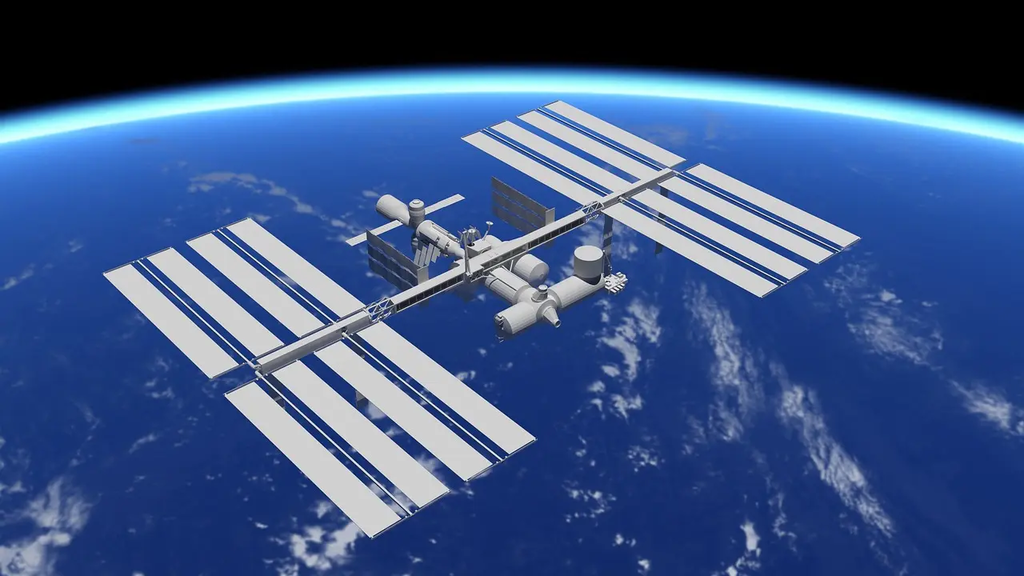
The International Space Station (ISS) is a large, habitable spacecraft that orbits Earth, serving as a unique laboratory for scientific research in microgravity. Built through the collaboration of multiple countries, including the United States, Russia, Japan, Canada, and European nations, the ISS enables astronauts to conduct experiments in biology, physics, astronomy, and more. It symbolizes international cooperation and advances our understanding of living and working in space.
International Space Station
The International Space Station (ISS) is a large, habitable spacecraft that orbits Earth, serving as a unique laboratory for scientific research in microgravity. Built through the collaboration of multiple countries, including the United States, Russia, Japan, Canada, and European nations, the ISS enables astronauts to conduct experiments in biology, physics, astronomy, and more. It symbolizes international cooperation and advances our understanding of living and working in space.
💡 Key Takeaways
- Learn what the International Space Station is and why it serves as a floating laboratory in microgravity
- Discover the international collaboration behind the ISS and which partner nations are involved
- Understand how living and working in microgravity enables unique scientific experiments
- Identify key ISS technologies (life support, power, docking, and data systems) and how they inform future space missions
❓ Frequently Asked Questions
What is the International Space Station (ISS)?
A large, habitable spacecraft that orbits Earth and serves as a unique laboratory for experiments conducted in microgravity.
Which countries collaborate on the ISS?
The United States, Russia, Japan, Canada, and European nations participate through the European Space Agency (ESA).
How do astronauts get to the ISS?
Crew members travel aboard spacecraft launched by partner agencies, such as SpaceX's Crew Dragon or Russia's Soyuz, as part of international rotations.
What kinds of research are done on the ISS?
Experiments span life sciences, physical and materials sciences, and Earth observation, all enabled by the microgravity environment.