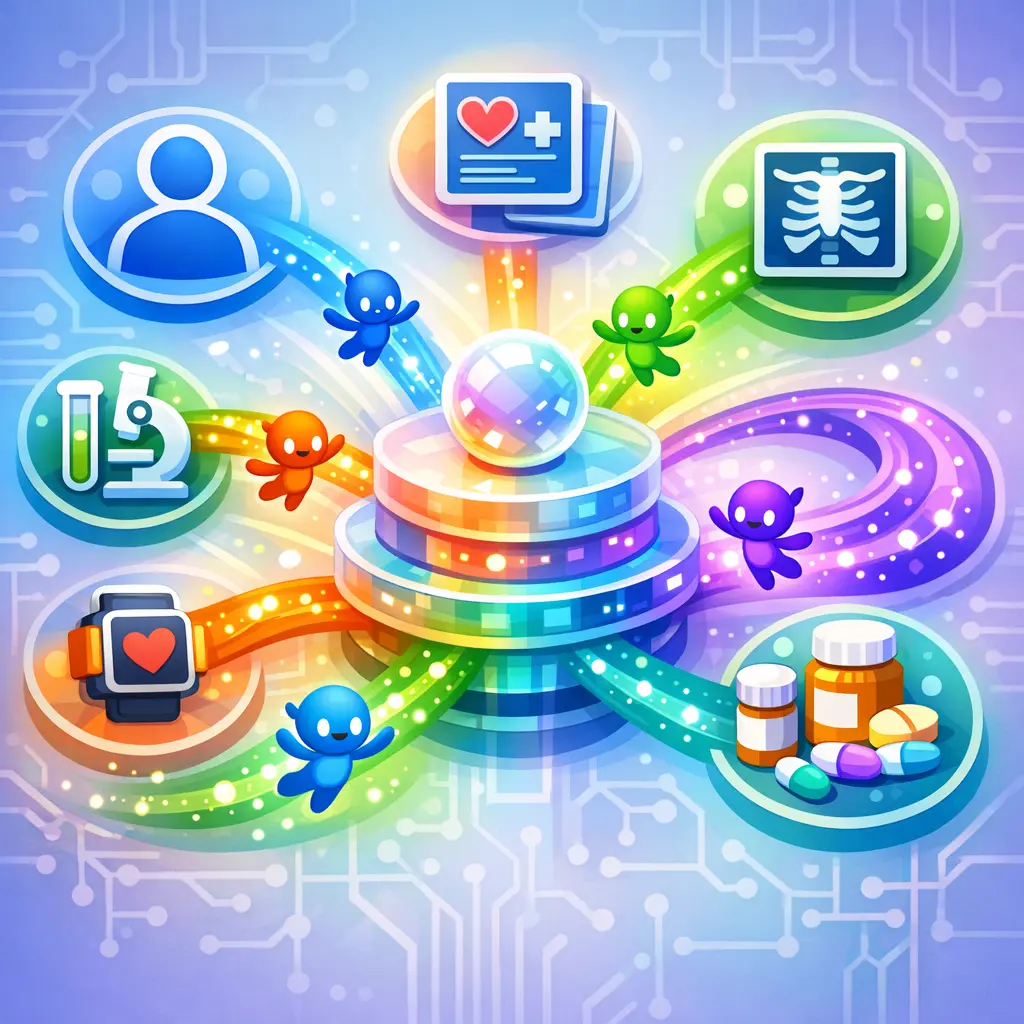
Interoperability standards and health data exchange refer to the guidelines and protocols that enable different healthcare systems, devices, and applications to share and interpret patient information seamlessly. In healthcare and medicine careers, these standards ensure accurate, secure, and efficient communication among providers, improving patient care coordination, reducing errors, and supporting public health initiatives. Professionals in this field work to implement and maintain systems that facilitate reliable data exchange across diverse healthcare environments.
Interoperability Standards & Health Data Exchange
Interoperability standards and health data exchange refer to the guidelines and protocols that enable different healthcare systems, devices, and applications to share and interpret patient information seamlessly. In healthcare and medicine careers, these standards ensure accurate, secure, and efficient communication among providers, improving patient care coordination, reducing errors, and supporting public health initiatives. Professionals in this field work to implement and maintain systems that facilitate reliable data exchange across diverse healthcare environments.
💡 Key Takeaways
- Understand the role of interoperability standards in enabling seamless health data exchange.
- Identify common standards such as HL7 FHIR, HL7 v2, HL7 CDA, and DICOM and their typical use cases.
- Explain how data is structured, exchanged, and integrated across systems using APIs, messages, and document formats.
- Recognize key security, privacy, and governance considerations when sharing patient information.
- Appreciate real-world challenges and benefits of implementing interoperable health information exchange.
❓ Frequently Asked Questions
What does interoperability mean in health data exchange?
Interoperability is the ability of different health IT systems to connect, exchange data, and interpret that data so it can be used to support patient care across settings.
What are common health data interoperability standards?
Standards include HL7 FHIR, HL7 v2/v3 messages, CDA/CCD documents, DICOM for imaging, and terminology codes like LOINC, SNOMED CT, and ICD-10 to ensure consistent data meaning.
What is HL7 FHIR and why is it important?
FHIR is a modern standard using modular resources and RESTful APIs to simplify exchanging health information between systems (e.g., EHRs and apps) in JSON or XML.
How does health data exchange benefit patients and providers?
It enables smoother care transitions, reduces duplicate tests, supports better decision making, and gives patients easier access to their records.
What privacy and security considerations apply to health data exchange?
Compliance with laws like HIPAA, implementing least-privilege access, consent management, and auditing to protect patient information during sharing.