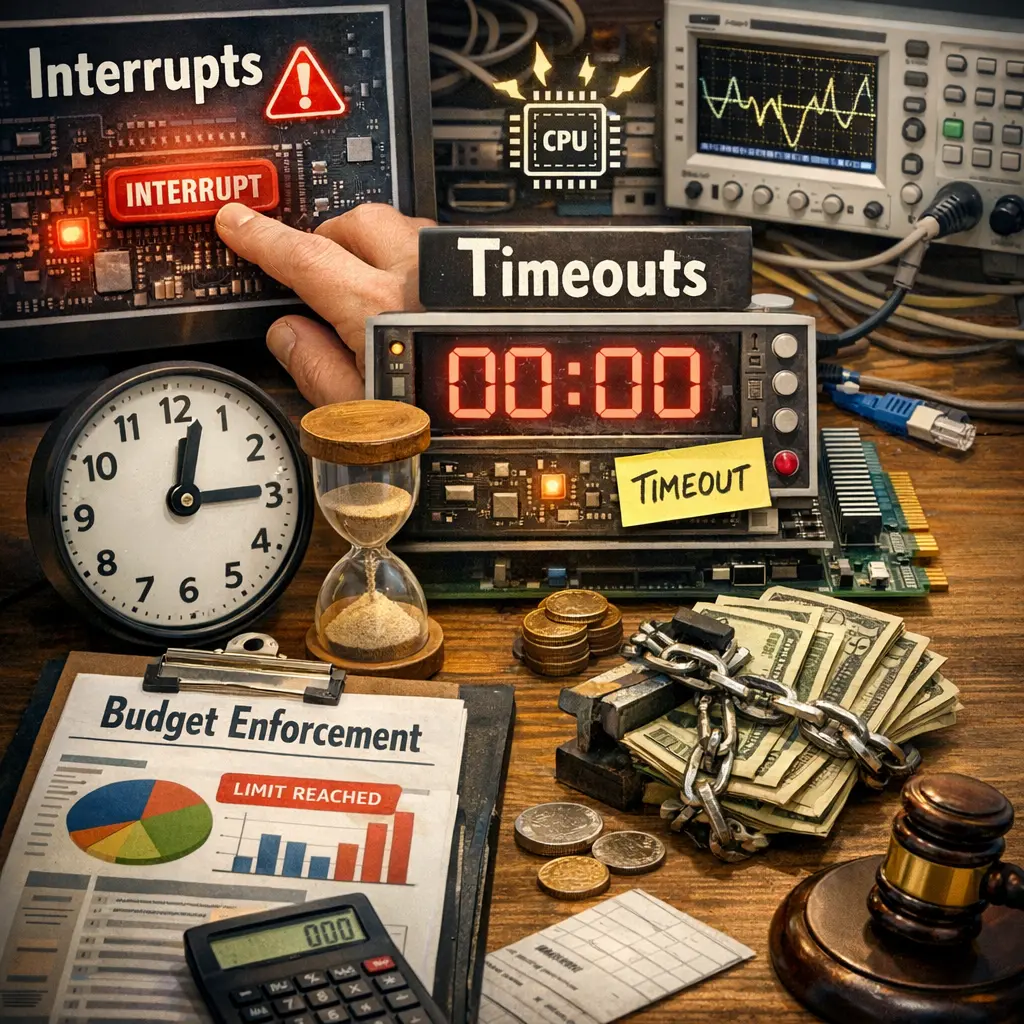
Interrupts, Timeouts, and Budget Enforcement in agent architecture refer to mechanisms that manage an agent's operations and resource usage. Interrupts allow the system to pause or stop an agent's task for urgent events. Timeouts ensure tasks do not run indefinitely by setting maximum execution times. Budget enforcement allocates limited computational or resource budgets to agents, ensuring fair resource distribution and preventing any single agent from monopolizing system resources.
Interrupts, Timeouts & Budget Enforcement
Interrupts, Timeouts, and Budget Enforcement in agent architecture refer to mechanisms that manage an agent's operations and resource usage. Interrupts allow the system to pause or stop an agent's task for urgent events. Timeouts ensure tasks do not run indefinitely by setting maximum execution times. Budget enforcement allocates limited computational or resource budgets to agents, ensuring fair resource distribution and preventing any single agent from monopolizing system resources.
💡 Key Takeaways
- Understand what interrupts are and how they pause a task to handle events.
- Learn how timeouts prevent hangs and how to choose sensible timeout values.
- Grasp how budget enforcement limits resources to keep systems predictable and fair.
- Explore practical patterns for coordinating interrupts, timeouts, and budgets (e.g., cancellation, retries, rate limiting).
❓ Frequently Asked Questions
What is an interrupt?
An interrupt is a signal from hardware or software that temporarily pauses the current execution to run a handler (ISR) for a nearby event, then resumes normal work.
What is a timeout?
A timeout is a limit on how long an operation may run or wait. If the limit expires, the operation is canceled or fails, helping avoid hangs and latency.
How do interrupts differ from polling?
Interrupts notify the CPU when an event occurs, allowing immediate handling, while polling repeatedly checks for events, wasting cycles and increasing latency.
What is budget enforcement in computing?
Budget enforcement means keeping resource usage within allocated limits (CPU, memory, I/O) using quotas, throttling, or admission controls to protect system performance.
How do timeouts relate to interrupts?
Time-outs can cancel or abort operations and trigger cleanup; they may interact with interrupt handlers by signaling that a previously started action should stop.