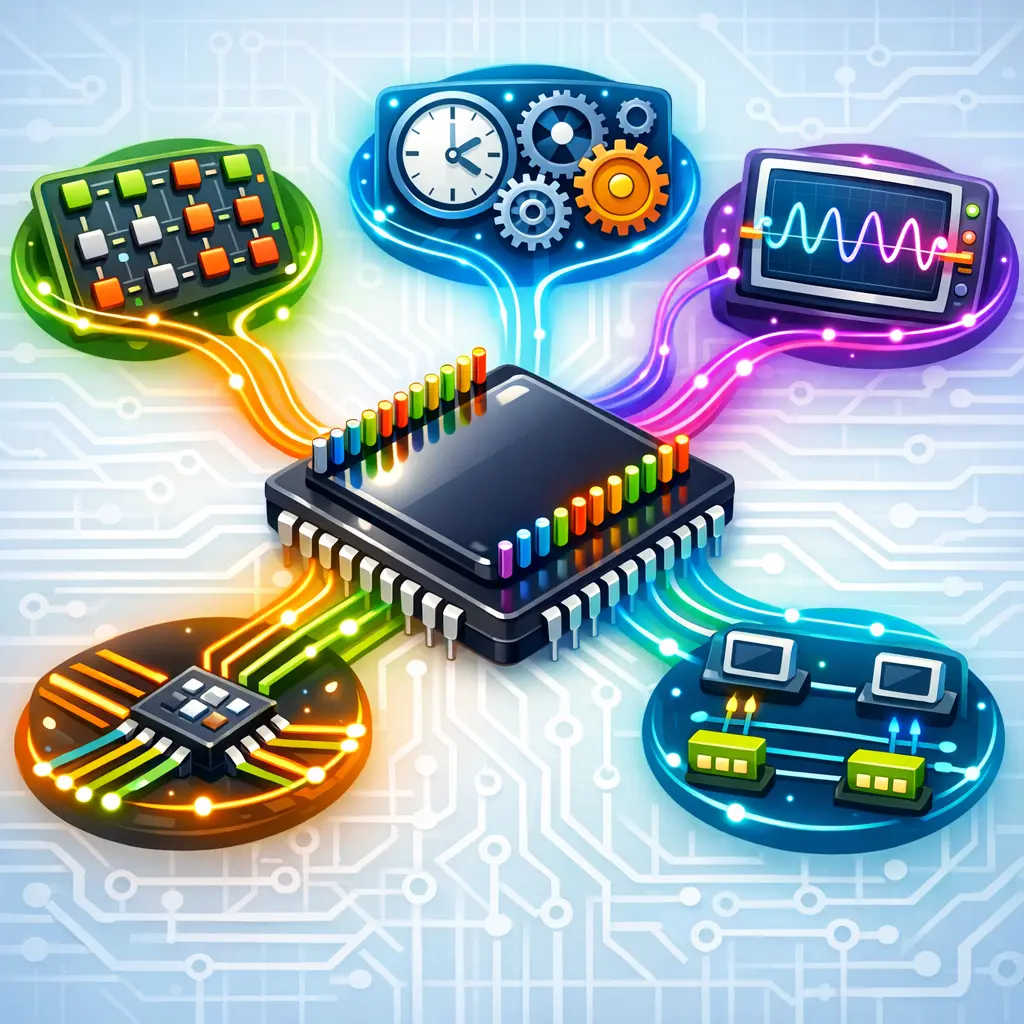
"Intro to IoT Devices (Digital Electronics & Computing)" refers to the foundational study of Internet of Things (IoT) devices, focusing on their electronic components and computational capabilities. It explores how digital electronics, such as sensors and microcontrollers, interact with computing systems to collect, process, and transmit data. This introduction covers basic device architecture, connectivity, and the integration of hardware and software, enabling smart, interconnected solutions in various applications.
Intro to IoT Devices+50
"Intro to IoT Devices (Digital Electronics & Computing)" refers to the foundational study of Internet of Things (IoT) devices, focusing on their electronic components and computational capabilities. It explores how digital electronics, such as sensors and microcontrollers, interact with computing systems to collect, process, and transmit data. This introduction covers basic device architecture, connectivity, and the integration of hardware and software, enabling smart, interconnected solutions in various applications.

💡 Key Takeaways
- Understand what IoT devices are and how they connect to the internet
- Identify common types of IoT devices (sensors, actuators, wearables, and smart home devices)
- Explain basic IoT communication protocols (Wi-Fi, Bluetooth, Zigbee, MQTT)
- Describe how data moves from devices to apps/services and consider security and privacy in IoT
❓ Frequently Asked Questions
What is an IoT device?
A physical device that connects to the internet or other devices to collect data, send it, and be controlled remotely.
What are common categories of IoT devices?
Sensors (data collection), Actuators (take actions), Smart home devices, Wearables, and Industrial IoT devices.
Which wireless protocols are commonly used by IoT devices?
Wi‑Fi, Bluetooth Low Energy (BLE), Zigbee, Z-Wave, LoRaWAN, and MQTT over IP are popular options.
What is the role of a gateway or hub in an IoT setup?
It connects local devices to the internet and often handles protocol translation and security.
What is a key security best practice for IoT devices?
Change default passwords, keep firmware updated, and use network segmentation and encrypted communication.