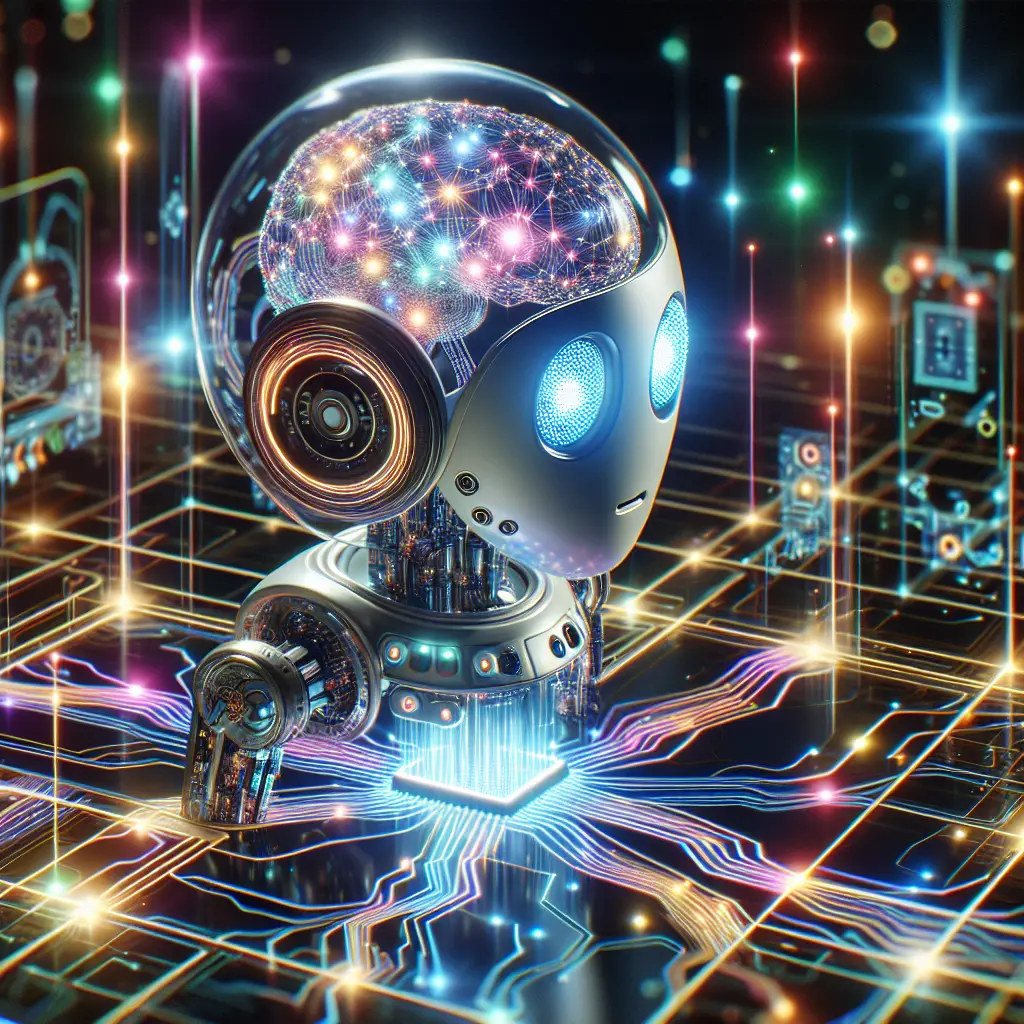
An introduction to neural networks for quantum computing explores how artificial neural networks, inspired by the human brain, can be adapted to run on quantum computers. This field combines principles of quantum mechanics with machine learning, aiming to develop quantum-enhanced algorithms that solve complex problems more efficiently than classical methods. It covers fundamental concepts, architectures, and potential applications, offering insights into the future of intelligent quantum technologies.
Introduction to Neural Network for Quantum Computing
An introduction to neural networks for quantum computing explores how artificial neural networks, inspired by the human brain, can be adapted to run on quantum computers. This field combines principles of quantum mechanics with machine learning, aiming to develop quantum-enhanced algorithms that solve complex problems more efficiently than classical methods. It covers fundamental concepts, architectures, and potential applications, offering insights into the future of intelligent quantum technologies.
💡 Key Takeaways
- Understand the basic idea of running neural networks on quantum hardware and why this fusion is studied.
- Learn how variational quantum circuits enable quantum neural networks and how they are trained in a hybrid quantum-classical loop.
- Explore how quantum phenomena such as superposition and entanglement can influence network architectures and learning dynamics.
- Identify potential applications and the key challenges of quantum neural networks, including noise, decoherence, and scalability.
❓ Frequently Asked Questions
What is a neural network for quantum computing?
A model that uses quantum states and operations to perform learning tasks, typically via parameterized quantum circuits on quantum hardware or through quantum-inspired techniques on classical hardware.
How do quantum neural networks differ from classical neural networks?
QNNs use qubits, quantum gates, and phenomena like superposition and entanglement. Many implementations are hybrid, combining quantum processing for feature handling with classical optimization for training.
What is a variational quantum circuit (VQC) and its role in QNNs?
A parameterized quantum circuit whose gate parameters are adjusted by a classical optimizer to minimize a cost function; it serves as a common building block for quantum neural networks.
What are the main challenges of implementing neural networks on quantum hardware?
Noise and decoherence, limited qubits, circuit depth requirements, training difficulties like barren plateaus, data encoding issues, and integrating with classical ML tools.
What are potential applications of quantum neural networks?
Quantum chemistry and materials modeling, optimization and sampling, pattern recognition on quantum data, and accelerating certain linear algebra or machine learning subroutines.