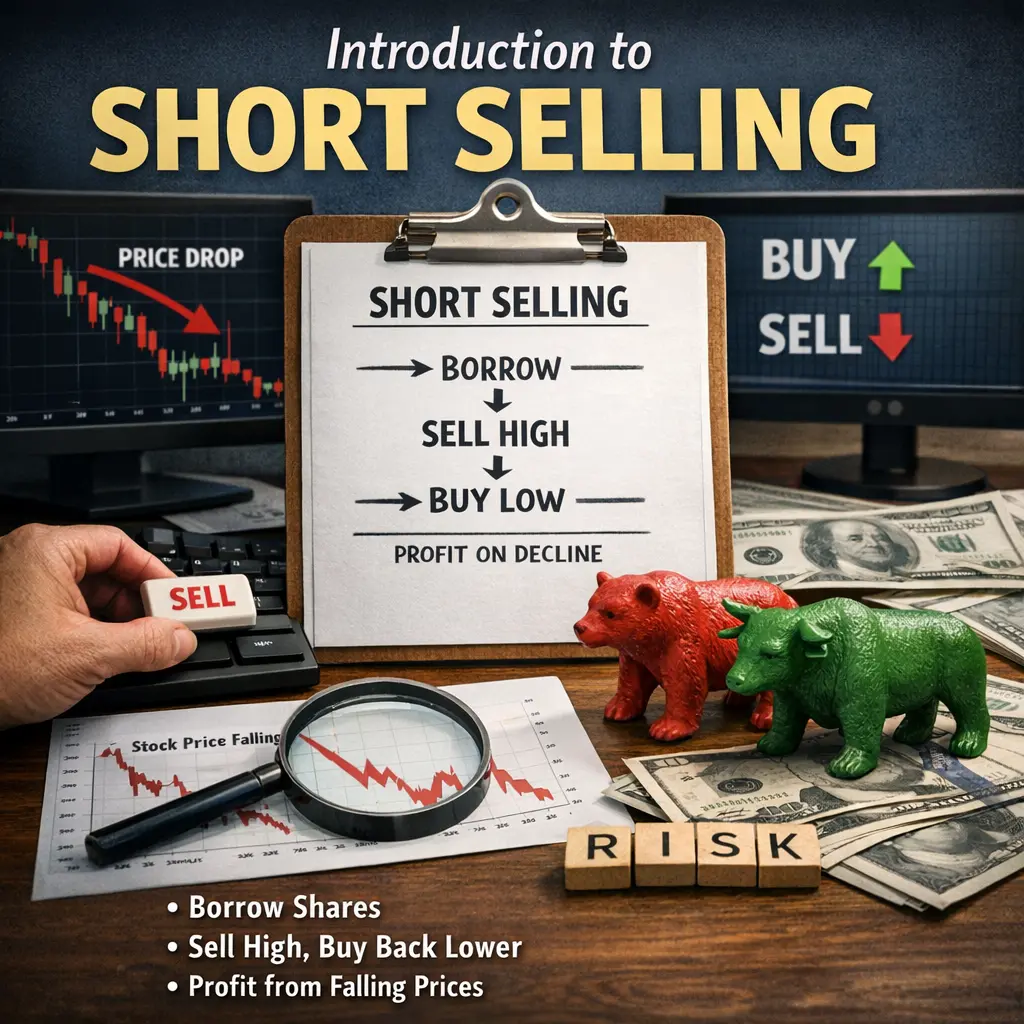
Short selling in US stock markets is a trading strategy where an investor borrows shares of a stock and sells them, aiming to buy them back later at a lower price to profit from the difference. This approach bets on the stock’s price declining. Short selling involves significant risk, as potential losses are unlimited if the stock price rises. It’s commonly used for speculation or hedging against potential losses in other investments.
Introduction to Short Selling
Short selling in US stock markets is a trading strategy where an investor borrows shares of a stock and sells them, aiming to buy them back later at a lower price to profit from the difference. This approach bets on the stock’s price declining. Short selling involves significant risk, as potential losses are unlimited if the stock price rises. It’s commonly used for speculation or hedging against potential losses in other investments.
💡 Key Takeaways
- Understand what short selling is and how it aims to profit from falling prices.
- Learn the mechanics: borrow shares, sell them now, and buy them back later to return the stock (covering).
- Recognize the risks and costs involved, including unlimited downside, margin requirements, and borrowing fees.
- Explore typical use cases, potential outcomes like short squeezes, and basic regulatory considerations.
❓ Frequently Asked Questions
What is short selling?
Short selling is selling shares you don’t own by borrowing them, with the plan to buy them back later. You aim to profit if the price falls, but it requires a margin account and borrowing shares.
How does a short sale work in practice?
You borrow shares from a broker, sell them on the market, and later buy them back to return to the lender. If the price drops, you buy back cheaper and keep the difference; if it rises, you incur losses, plus borrow fees and margin requirements.
What is a short squeeze?
A short squeeze occurs when many traders are short a stock and the price rises, forcing them to buy back shares at higher prices, which can push the price up further and increase losses.
What are the main risks of short selling?
Potential for unlimited losses, margin calls, borrow costs, recall of borrowed shares, and regulatory or liquidity risks that can force early covering.