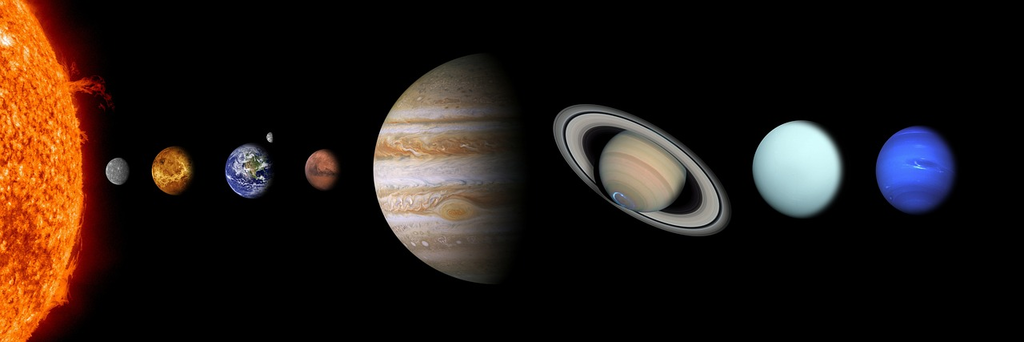
The Solar System is a vast collection of celestial bodies, including the Sun at its center, eight major planets, their moons, dwarf planets, asteroids, and comets. It formed about 4.6 billion years ago from a giant cloud of gas and dust. The gravitational pull of the Sun holds these objects in orbit, creating a dynamic and interconnected system that provides the foundation for understanding our place in the universe.
Introduction to the Solar System+50
The Solar System is a vast collection of celestial bodies, including the Sun at its center, eight major planets, their moons, dwarf planets, asteroids, and comets. It formed about 4.6 billion years ago from a giant cloud of gas and dust. The gravitational pull of the Sun holds these objects in orbit, creating a dynamic and interconnected system that provides the foundation for understanding our place in the universe.
💡 Key Takeaways
- Identify the Sun, the eight planets, and other major solar system bodies.
- Distinguish between planets, dwarf planets, asteroids, and comets.
- Describe the layout of the solar system, with inner rocky planets and outer gas giants, and how objects orbit the Sun.
- Explain how gravity governs orbital motion around the Sun.
❓ Frequently Asked Questions
What is the Solar System?
The Sun and all objects bound to it by gravity, including eight planets, dwarf planets, moons, asteroids, comets, and other debris.
How many planets are there in the Solar System?
Eight planets: Mercury, Venus, Earth, Mars, Jupiter, Saturn, Uranus, and Neptune.
What are the main differences between rocky (terrestrial) planets and gas giants?
Terrestrial planets are small, rocky, with solid surfaces. Gas giants are large, with thick atmospheres of hydrogen and helium and no solid surfaces.
What is a dwarf planet?
A body that orbits the Sun, is nearly round in shape, but has not cleared its neighboring region of other objects.