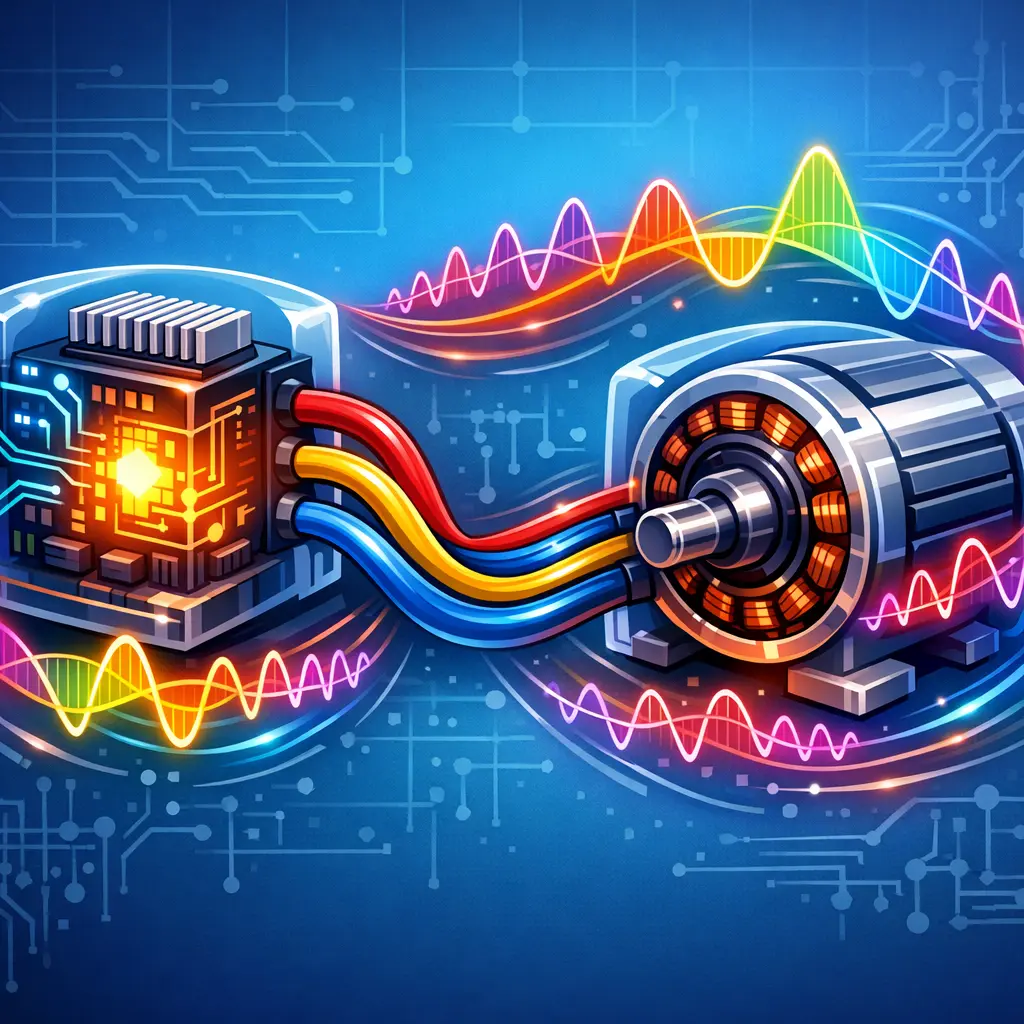
Inverter-motor integration involves connecting power electronic inverters to electric motors for efficient speed and torque control. This setup is common in telecom, signal processing, and power applications. However, inverters can introduce electrical harmonics—distorted waveforms—into the system. Harmonics can cause overheating, signal interference, reduced equipment lifespan, and communication errors. Effective integration requires harmonic mitigation techniques to ensure reliable operation of both motor and sensitive telecom or signal equipment.
Inverter-Motor Integration and Harmonics
Inverter-motor integration involves connecting power electronic inverters to electric motors for efficient speed and torque control. This setup is common in telecom, signal processing, and power applications. However, inverters can introduce electrical harmonics—distorted waveforms—into the system. Harmonics can cause overheating, signal interference, reduced equipment lifespan, and communication errors. Effective integration requires harmonic mitigation techniques to ensure reliable operation of both motor and sensitive telecom or signal equipment.
💡 Key Takeaways
- Explain how PWM-based inverters control motor speed and torque.
- Describe how switching harmonics are generated and their effects on efficiency, heat, noise, and bearing life.
- Introduce common harmonic mitigation techniques in inverter-motor systems (filters, cable routing, dv/dt suppression, switching frequency, proper motor/inverter pairing).
- Show how to measure and analyze harmonics (THD, spectrum analysis, measurement tools, and relevant standards).
❓ Frequently Asked Questions
What is inverter-motor integration?
Using an inverter (VFD) to control an AC motor by adjusting supply frequency and voltage, enabling electronic speed control, soft starts, and energy efficiency.
What are harmonics in electrical systems?
Harmonics are currents or voltages at integer multiples of the fundamental frequency that distort waveforms, often caused by nonlinear loads like inverters.
Why do inverters generate harmonics and what are their effects?
Inverters switch to synthesize a sine wave, creating harmonic content. Excess harmonics can cause heating, insulation stress, reduced efficiency, and EMI if not mitigated.
How can harmonic distortion be reduced in inverter-driven motors?
Choose properly rated drives, add line reactors or filters, use multi-pulse or active-front-end drives when needed, ensure proper grounding and shielding, and route cables to minimize EMI.