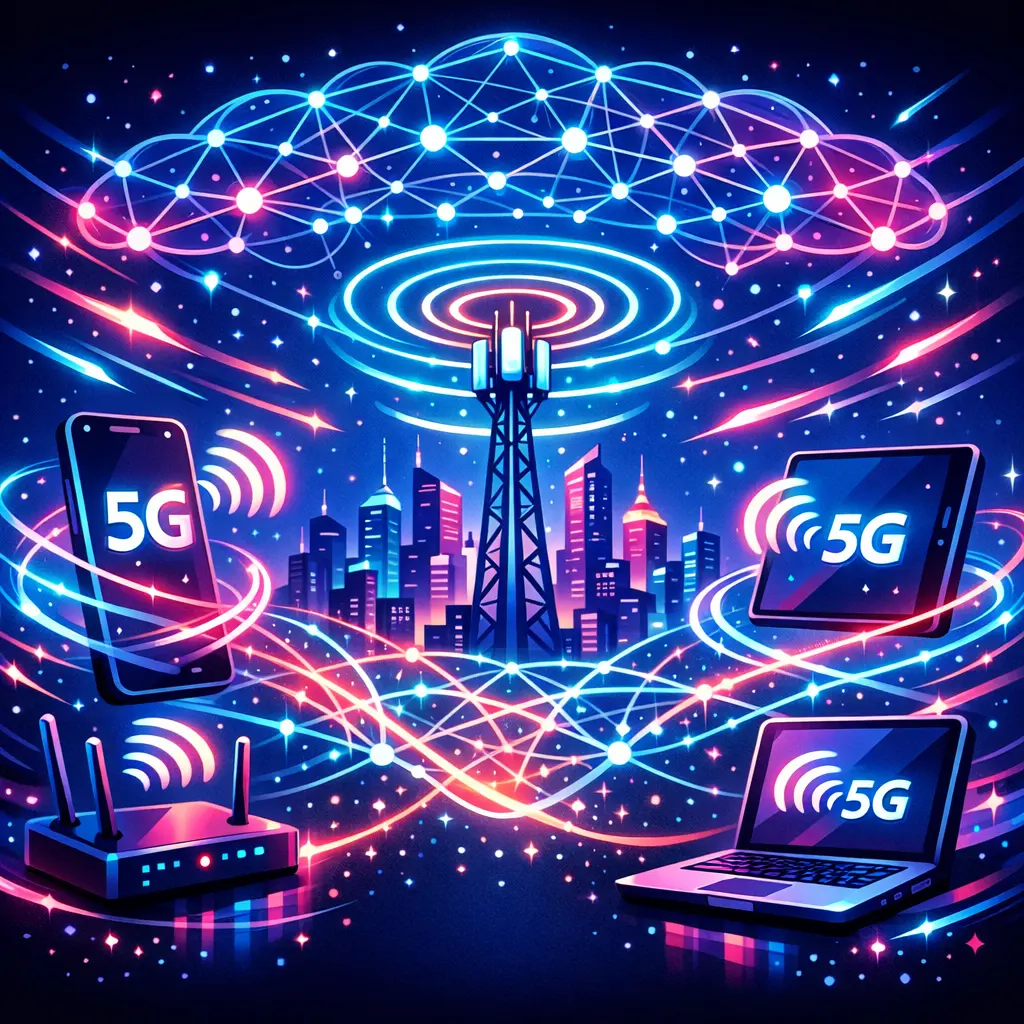
IoT connectivity options refer to the various methods and technologies used to link Internet of Things devices to networks and each other. This includes telecom solutions like cellular (3G, 4G, 5G), Wi-Fi, and LPWANs for data transmission, signal protocols such as Bluetooth or Zigbee for device communication, and power considerations like battery, wired, or energy harvesting to ensure continuous device operation. Each option impacts range, bandwidth, and energy efficiency.
IoT Connectivity Options
IoT connectivity options refer to the various methods and technologies used to link Internet of Things devices to networks and each other. This includes telecom solutions like cellular (3G, 4G, 5G), Wi-Fi, and LPWANs for data transmission, signal protocols such as Bluetooth or Zigbee for device communication, and power considerations like battery, wired, or energy harvesting to ensure continuous device operation. Each option impacts range, bandwidth, and energy efficiency.

💡 Key Takeaways
- Identify the main IoT connectivity options (Wi-Fi, Bluetooth/BLE, Zigbee, Z-Wave, LoRaWAN, NB-IoT, cellular) and their typical use cases.
- Compare connectivity options on power consumption, range, data rate, and cost to help pick the best fit.
- Understand how to select connectivity based on project factors like power availability, distance to gateway, coverage, and scalability.
- Recognize basic security and reliability considerations (encryption, authentication, updates, and network resilience) across options.
❓ Frequently Asked Questions
What is IoT connectivity and why is it important?
IoT connectivity enables devices to communicate with each other and with servers, affecting range, power use, data rate, and reliability.
What are the main wireless connectivity options for IoT?
Common options include Wi‑Fi, Bluetooth, Zigbee, Z‑Wave, cellular (NB‑IoT, LTE‑M), LoRaWAN, and satellite, each with different range, power needs, and coverage.
What is LPWAN and when should it be used?
Low-Power Wide-Area Network (LPWAN) provides long-range communication with low power, ideal for sensors that transmit small amounts of data infrequently.
How do NB-IoT and LTE-M differ?
NB‑IoT targets very low data rates and deep indoor coverage; LTE‑M offers higher data rates, lower latency, and better mobility, suitable for more capable devices.