Islamic Geometric & Calligraphic Arts refer to the intricate patterns and stylized script that define much of Islamic visual culture. Emerging from religious and cultural contexts that avoided figurative imagery, artists developed complex geometric designs and elegant Arabic calligraphy, often adorning architecture, manuscripts, and decorative objects. These arts reflect mathematical precision, spiritual symbolism, and artistic innovation, evolving through various historical periods and regions, and playing a central role in Islamic art history and aesthetic movements.
Islamic Geometric & Calligraphic Arts
Islamic Geometric & Calligraphic Arts refer to the intricate patterns and stylized script that define much of Islamic visual culture. Emerging from religious and cultural contexts that avoided figurative imagery, artists developed complex geometric designs and elegant Arabic calligraphy, often adorning architecture, manuscripts, and decorative objects. These arts reflect mathematical precision, spiritual symbolism, and artistic innovation, evolving through various historical periods and regions, and playing a central role in Islamic art history and aesthetic movements.
💡 Key Takeaways
- Understand the core principles of Islamic geometric design: symmetry, tessellation, and star patterns.
- Identify common Islamic calligraphy styles (Kufic, Naskh, Thuluth) and their visual features.
- Learn basic techniques to construct repeating geometric motifs using a compass and straightedge.
- Explore how geometry and script convey cultural and spiritual meaning in Islamic art.
❓ Frequently Asked Questions
What is Islamic geometric art?
A decorative style built from repeating geometric patterns, symmetry, and tessellations to express harmony and the infinite, commonly used in architecture and tile work.
What is Arabic calligraphy in Islamic art, and which scripts are common?
The art of writing Arabic letters with beauty and rhythm. Common scripts include Kufic (angular and early), Naskh (readable for texts), and Thuluth (large and elegant).
What is arabesque in Islamic art?
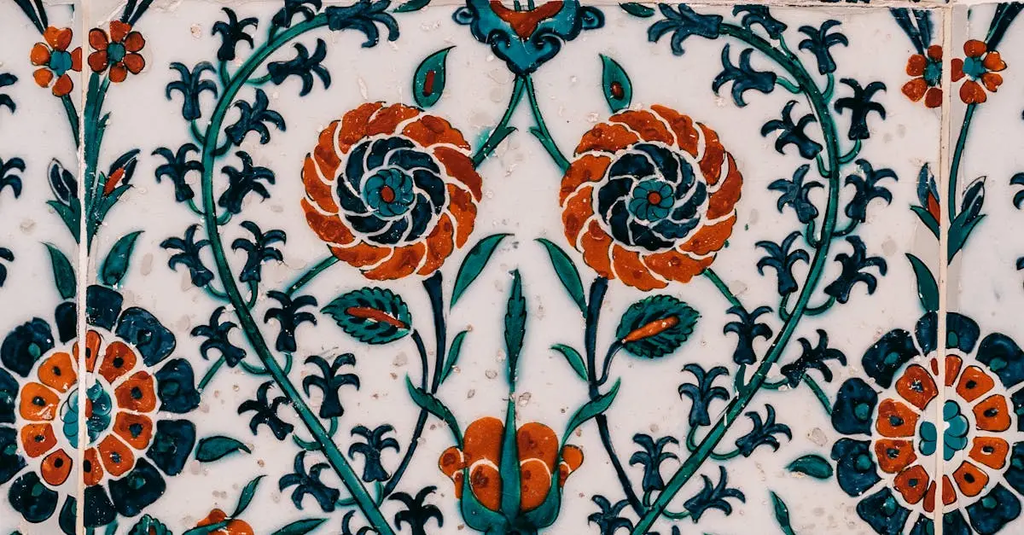
A decorative motif featuring flowing, vegetal curves that often blends with geometric patterns to create intricate, endless designs.
Do Islamic artworks avoid depicting living beings?
In many religious contexts, figurative imagery is discouraged; emphasis is on geometry, calligraphy, and abstract motifs, though exceptions exist in secular or regional works.