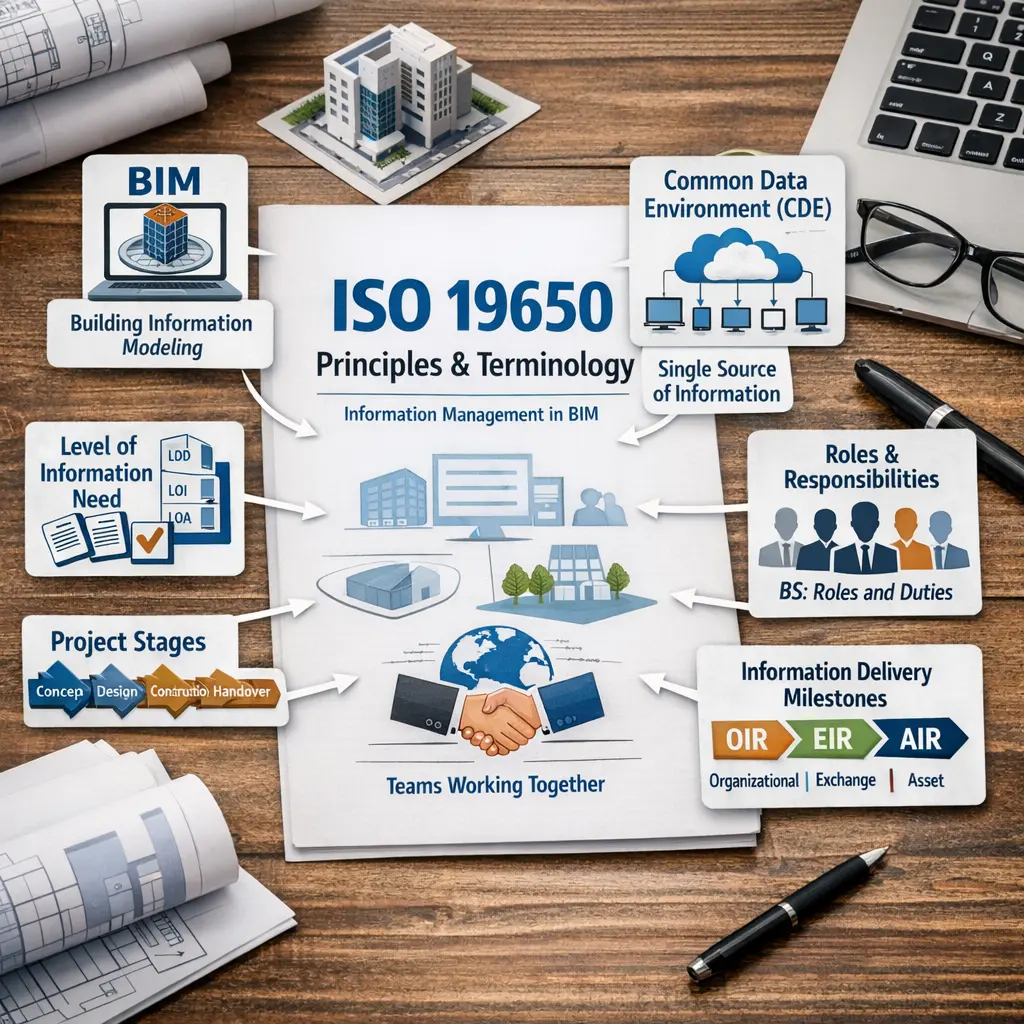
ISO 19650 Principles and Terminology refer to the foundational concepts and standardized language used in managing information over the whole lifecycle of a built asset using Building Information Modelling (BIM). It establishes a common framework for digital construction information, enabling effective collaboration, data exchange, and clarity among stakeholders. The principles guide processes such as information requirements, delivery, and management, ensuring consistency, efficiency, and improved project outcomes in the construction industry.
ISO 19650 Principles and Terminology
ISO 19650 Principles and Terminology refer to the foundational concepts and standardized language used in managing information over the whole lifecycle of a built asset using Building Information Modelling (BIM). It establishes a common framework for digital construction information, enabling effective collaboration, data exchange, and clarity among stakeholders. The principles guide processes such as information requirements, delivery, and management, ensuring consistency, efficiency, and improved project outcomes in the construction industry.
💡 Key Takeaways
- Understand the purpose of ISO 19650 for standardizing BIM information management across the project lifecycle.
- Learn key terms like Common Data Environment (CDE), Employer’s Information Requirements (EIR), Project Information Model (PIM), and Asset Information Model (AIM).
- Know how information is organized and exchanged through a CDE to support a single source of truth.
- Recognize the governance, roles, and processes needed to implement ISO 19650 in projects (information management responsibilities and workflows).
❓ Frequently Asked Questions
What is ISO 19650?
An international standard for managing information across the lifecycle of built assets using BIM, emphasizing collaboration and a Common Data Environment (CDE).
What is a Common Data Environment (CDE)?
A centralized, controlled repository for project information. It defines how data is stored, accessed, and exchanged to create a single source of truth.
What are Information Requirements (IRs) in ISO 19650?
Documents the information the project or asset needs, including content, format, quality, and timing. Employer’s Information Requirements (EIRs) specify the client’s information needs.
What is the difference between PIM and AIM?
PIM (Project Information Model) is used during design and construction; AIM (Asset Information Model) is used for operations and maintenance after handover.
What does Information Management involve in ISO 19650?
Governance of information through defined roles, processes, standards, naming conventions, version control, and validation to ensure accurate, timely data.