Isolation: optocouplers and digital isolators
💡 Key Takeaways
- Understand the purpose of electrical isolation and how optocouplers and digital isolators protect circuits from noise and voltage transients.
- Grasp how optocouplers transfer signals via light (LED to photodetector) and their typical speed, isolation voltage, and current transfer ratio considerations.
- Grasp how digital isolators use on-chip isolation barriers to achieve higher speeds, bidirectional signaling, and strong common-mode noise immunity.
- Learn the key selection criteria (isolation voltage, data rate, propagation delay, power, and safety standards) and when to choose an optocoupler versus a digital isolator in a design.
❓ Frequently Asked Questions
What is isolation, and why is it used with optocouplers and digital isolators?
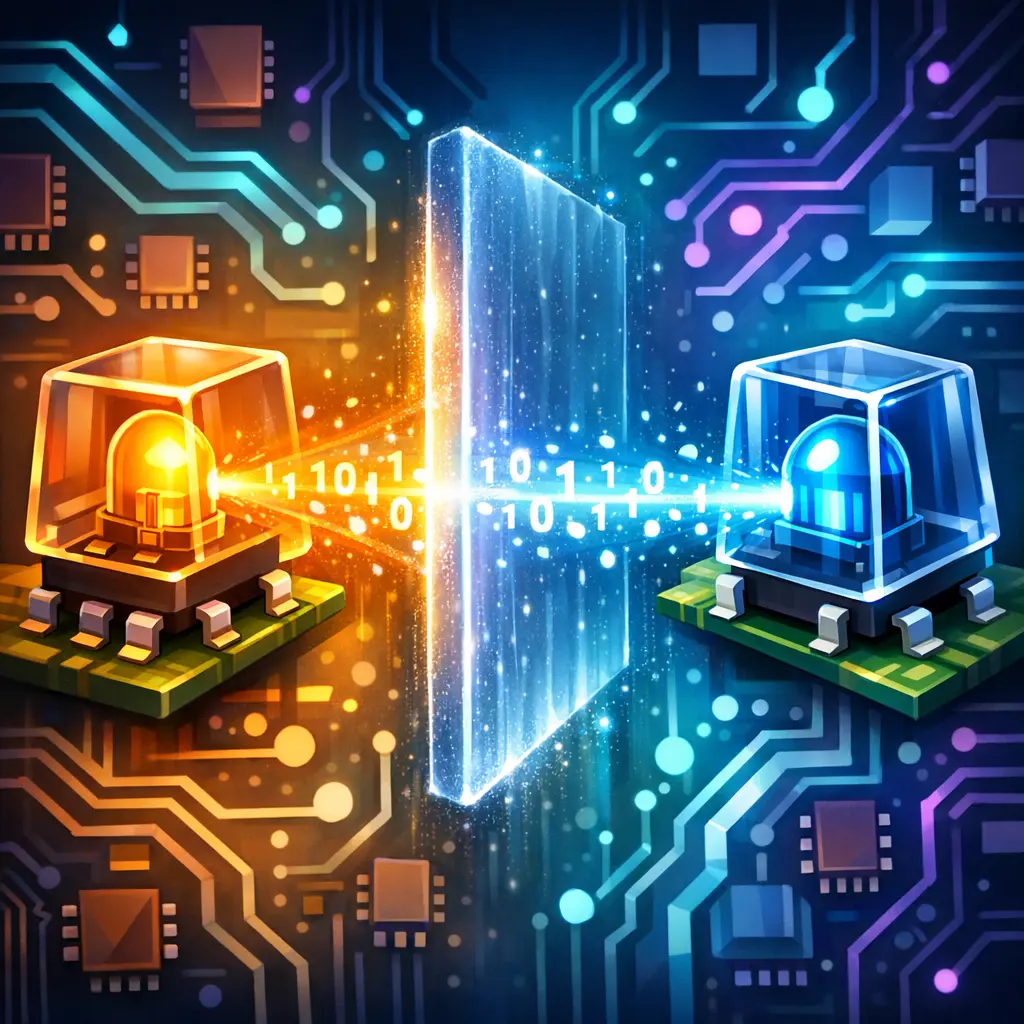
Isolation provides a barrier between two electrical circuits to prevent voltage spikes, noise, and ground differences from propagating, while still allowing signal transfer.
How does an optocoupler work?
An input LED is driven to emit light that is detected by a photosensitive element on the output side; the barrier prevents direct electrical connection between sides. The CTR (current transfer ratio) describes the output current relative to the input LED current and varies with temperature and aging.
What is a digital isolator, and how does it differ from an optocoupler?
A digital isolator uses an isolation barrier to transfer digital signals without LEDs or photodetectors. It typically offers higher speed, bidirectional signaling, and lower power, but requires power on both sides and has different latency and input/output characteristics.
What factors should you consider when choosing isolation devices?
Consider isolation voltage rating, data rate/propagation delay, directionality, channel count, power and supply needs, operating temperature, and long term reliability to match your application.