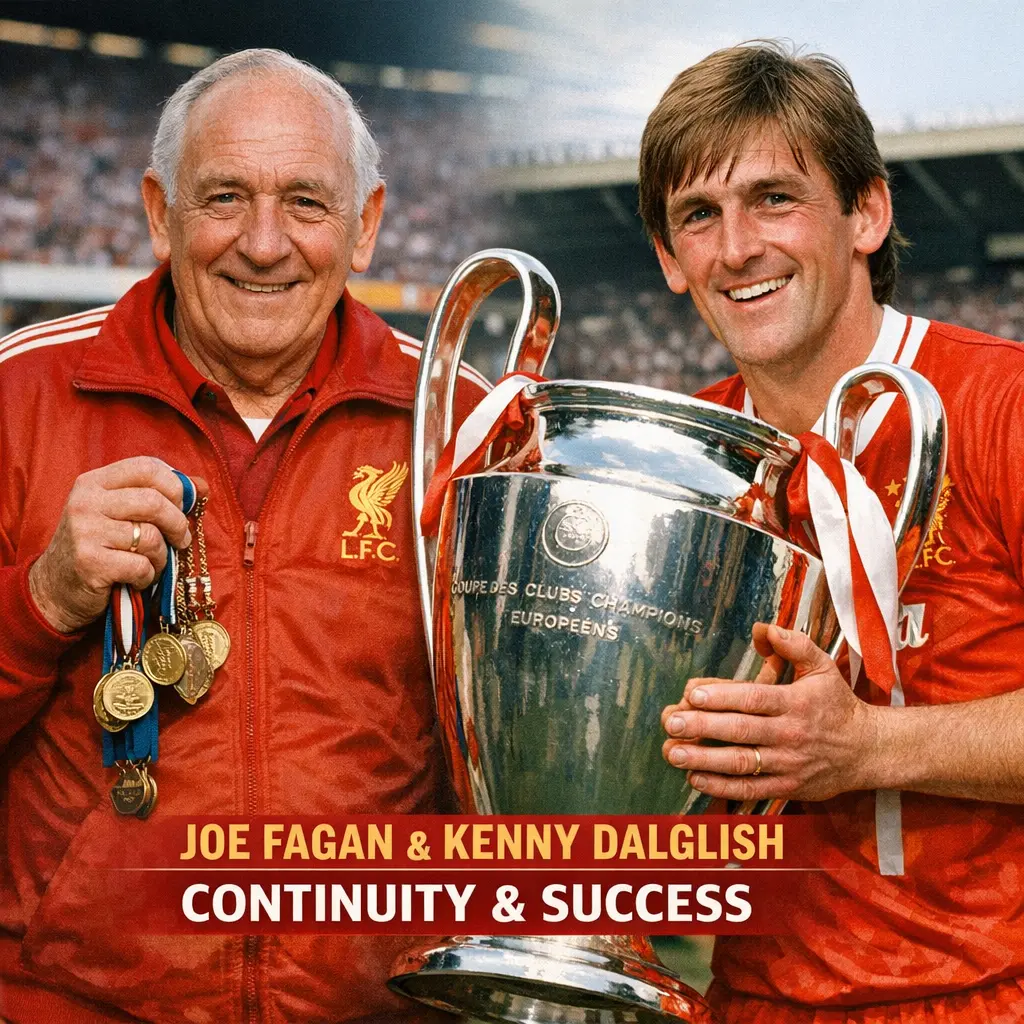
Joe Fagan and Kenny Dalglish symbolize continuity and success at Liverpool F.C. Fagan, succeeding Bob Paisley, maintained the club’s winning tradition, securing a historic treble in 1984. Dalglish, first as a star player and then as player-manager, continued this legacy, leading Liverpool to further league titles and FA Cup victories. Their leadership ensured Liverpool’s dominance in English football throughout the 1980s, embodying stability and excellence.
Joe Fagan and Kenny Dalglish: Continuity and Success
Joe Fagan and Kenny Dalglish symbolize continuity and success at Liverpool F.C. Fagan, succeeding Bob Paisley, maintained the club’s winning tradition, securing a historic treble in 1984. Dalglish, first as a star player and then as player-manager, continued this legacy, leading Liverpool to further league titles and FA Cup victories. Their leadership ensured Liverpool’s dominance in English football throughout the 1980s, embodying stability and excellence.
💡 Key Takeaways
- Understand how Joe Fagan preserved Liverpool's playing philosophy and staff after the Paisley era to ensure continuity.
- Learn how Kenny Dalglish's transition from player to manager influenced leadership, player relations, and results.
- Identify major trophies won during their tenures (league titles, cups, and European honours) and how they reinforced Liverpool's legacy.
- Recognize the elements of continuity—stable squad, recruitment, and club culture—that sustained success across their leadership.
❓ Frequently Asked Questions
Who were Joe Fagan and Kenny Dalglish in this context?
Joe Fagan was Liverpool's manager from 1983 to 1985, succeeding Bob Paisley, and Kenny Dalglish, a club legend as a player, became manager in 1985, continuing Liverpool's era of success.
What does continuity mean in this leadership transition?
Continuity means maintaining Liverpool's winning culture, playing style, and club values during the managerial switch to keep performance steady.
What were key achievements during their leadership?
Fagan led Liverpool to major honours, including the First Division title and the European Cup in the mid-1980s, and Dalglish sustained that success with further league and cup victories as manager.
How did Dalglish serve as a bridge between eras?
Dalglish was both a player and manager during the transition, preserving the club's identity while introducing new ideas and guiding younger players.