Judicial process refers to the series of steps and legal actions taken by courts to resolve disputes and administer justice. Trial procedure outlines the specific methods and rules followed during a trial, including the presentation of evidence, examination of witnesses, and arguments by both parties. Together, they ensure fairness, transparency, and adherence to the law, guiding a case from its initiation to the final judgment or verdict rendered by the court.
Judicial Process & Trial Procedure
Judicial process refers to the series of steps and legal actions taken by courts to resolve disputes and administer justice. Trial procedure outlines the specific methods and rules followed during a trial, including the presentation of evidence, examination of witnesses, and arguments by both parties. Together, they ensure fairness, transparency, and adherence to the law, guiding a case from its initiation to the final judgment or verdict rendered by the court.
💡 Key Takeaways
- Understand the overall flow of the judicial process from filing a case to judgment.
- Identify the main stages of trial procedure, including opening statements, evidence presentation, witness examination, and closing arguments.
- Explain basic evidentiary rules and how they determine what information can be used in court.
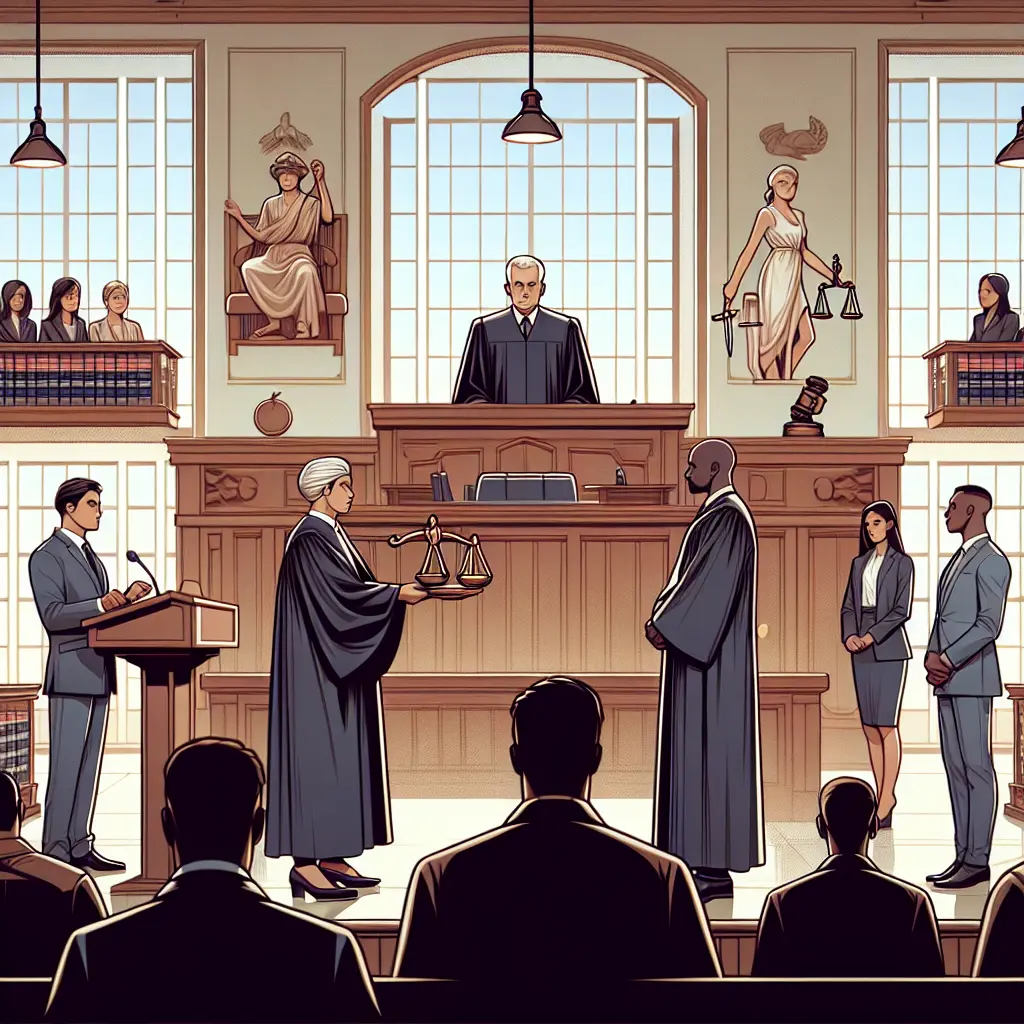
- Describe the roles of judges, prosecutors, and defense attorneys and how they interact during a trial.
❓ Frequently Asked Questions
What is the judicial process?
The sequence of steps courts take to resolve disputes, from filing a case to judgment, including pleadings, discovery, hearings, trial, and potential appeals.
What is trial procedure?
The specific methods and rules used during a trial, such as opening statements, presentation of evidence, examination and cross-examination of witnesses, and closing arguments, with the judge ensuring compliance.
What makes evidence admissible in court?
Evidence must be relevant and reliable under the rules of evidence; it can be documents, testimony, or physical items, but some items may be excluded (e.g., hearsay, prejudice).
What roles do parties and judges play in a trial?
Parties present their claims, objections, and evidence; the judge oversees proceedings, rules on objections, applies the law, and instructs the jury where applicable.
What is the burden and standard of proof?
The burden rests on the party asserting a claim; the standard varies—beyond a reasonable doubt in criminal cases, and a preponderance of the evidence (or other civil standard) in civil cases.