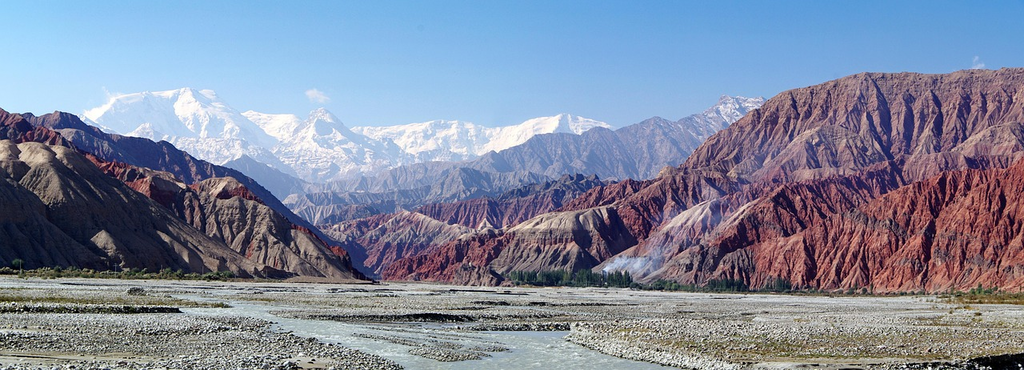
The Karakoram Highway, often called the "Eighth Wonder of the World," is a remarkable road connecting Pakistan and China through the Himalayas and Karakoram mountain ranges. Stretching over 1,300 kilometers, it is one of the highest paved international roads globally. The highway offers breathtaking views of towering peaks, glaciers, and deep valleys, serving as a vital trade route and symbolizing engineering ingenuity amid some of the world’s most challenging landscapes.
Karakoram Highway
The Karakoram Highway, often called the "Eighth Wonder of the World," is a remarkable road connecting Pakistan and China through the Himalayas and Karakoram mountain ranges. Stretching over 1,300 kilometers, it is one of the highest paved international roads globally. The highway offers breathtaking views of towering peaks, glaciers, and deep valleys, serving as a vital trade route and symbolizing engineering ingenuity amid some of the world’s most challenging landscapes.
💡 Key Takeaways
- Identify where the Karakoram Highway is and its role as the high‑altitude link between Pakistan and China.
- Understand the engineering feats and challenges of building and maintaining a road through the Karakoram mountains.
- Identify key route segments and landmarks along the highway, such as Hassan Abdal, Gilgit, Skardu, and the Khunjerab Pass.
- Recognize the historical and economic significance of the highway for trade, tourism, and regional connectivity.
❓ Frequently Asked Questions
What is the Karakoram Highway (KKH)?
The Karakoram Highway is a major international road linking Pakistan and China through the Karakoram mountain range. It runs from the Pakistani border near Gilgit-Baltistan to Kashgar in China's Xinjiang, and is renowned for its dramatic scenery and engineering.
What is Khunjerab Pass and why is it important on the KKH?
Khunjerab Pass is the high mountain border crossing on the KKH, at about 4,693 meters (15,393 feet) elevation, connecting Pakistan and China and serving as the gateway between the two countries.
How long is the Karakoram Highway and what makes it notable?
The highway runs roughly 1,300 kilometers (about 800 miles). It is one of the highest paved international roads, offering spectacular mountain scenery and challenging driving conditions.
When was the KKH built and what is its significance?
Construction began in 1959, and the road was opened to traffic in 1979. It symbolizes cross-border cooperation between Pakistan and China and has boosted trade and tourism.