Lab-grown foods, created through cellular agriculture, raise ethical questions about animal welfare, environmental sustainability, and human health. Culturally, their acceptance varies; some view them as innovative solutions, while others see them as unnatural or incompatible with traditional food practices. Religiously, lab-grown meat prompts debates about dietary laws and spiritual purity. Societal impacts include shifts in agriculture, food security, and global food systems, challenging established norms and prompting reflection on our relationship with food.
Lab-grown Foods, Ethics & Culture
Lab-grown foods, created through cellular agriculture, raise ethical questions about animal welfare, environmental sustainability, and human health. Culturally, their acceptance varies; some view them as innovative solutions, while others see them as unnatural or incompatible with traditional food practices. Religiously, lab-grown meat prompts debates about dietary laws and spiritual purity. Societal impacts include shifts in agriculture, food security, and global food systems, challenging established norms and prompting reflection on our relationship with food.
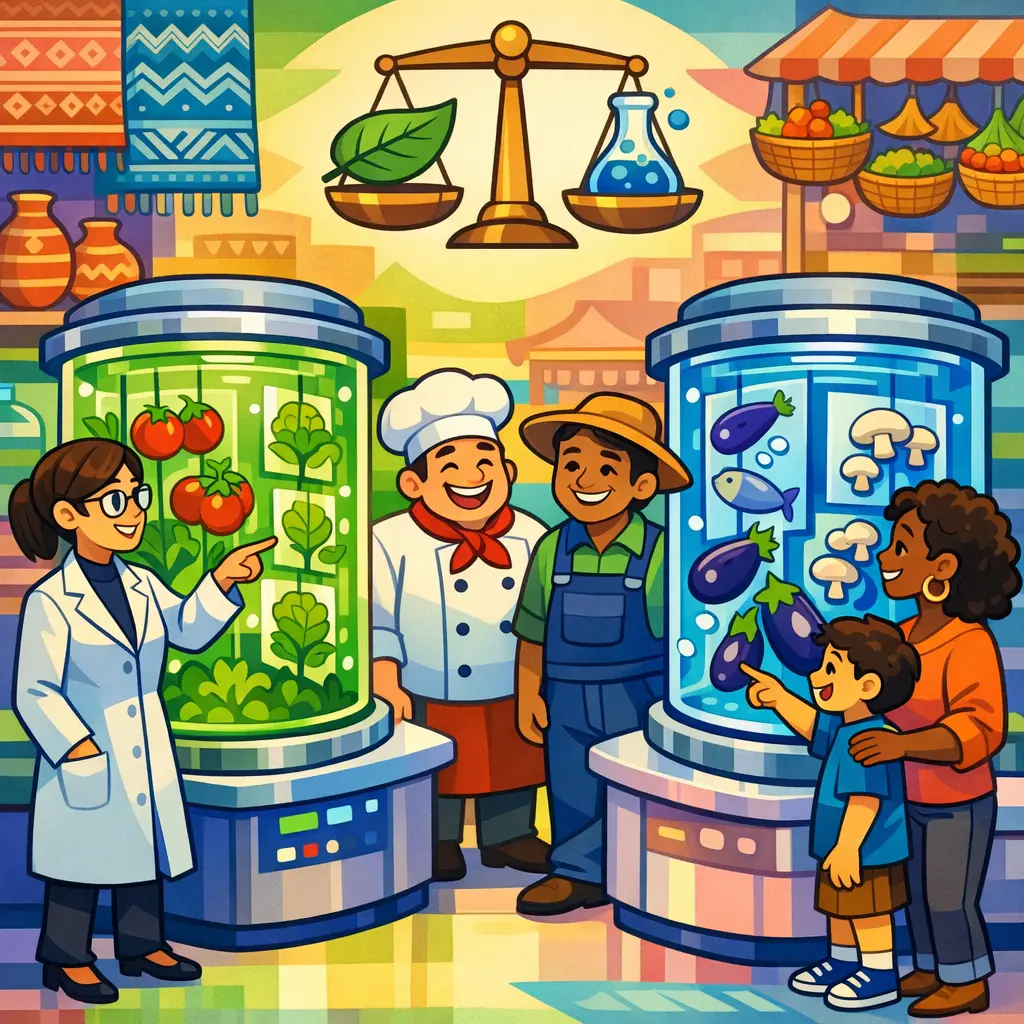
💡 Key Takeaways
- Explain how lab-grown foods address animal welfare and animal exploitation concerns.
- Evaluate environmental sustainability aspects of cellular agriculture versus conventional farming.
- Identify health, safety, and nutritional considerations related to lab-grown foods.
- Discuss how culture, religion, and societal norms influence acceptance and perceived compatibility with traditional foods.
❓ Frequently Asked Questions
What are lab-grown foods and how are they made?
Lab-grown foods, or cellular agriculture products, come from animal cells or microbes grown in controlled environments. Meat, dairy, and eggs can be produced by cultivating cells on scaffolds or through fermentation, without raising or slaughtering animals.
What are the main ethical and environmental considerations?
Ethically, they can reduce animal suffering. Environmentally, they may lower land and water use and emissions, but often require energy and specialized infrastructure; concerns include long-term impacts and access.
How do lab-grown foods intersect culture and religion?
Cultural acceptance varies—from viewing them as innovative to seeing them as unnatural. Religious perspectives differ by tradition and may involve halal/kosher certification and adherence to dietary laws.
Are lab-grown foods safe and nutritionally comparable to conventional foods?
Regulators evaluate safety before market. Nutritional profiles can be matched or enhanced, but long-term health effects and allergen risks are still studied.