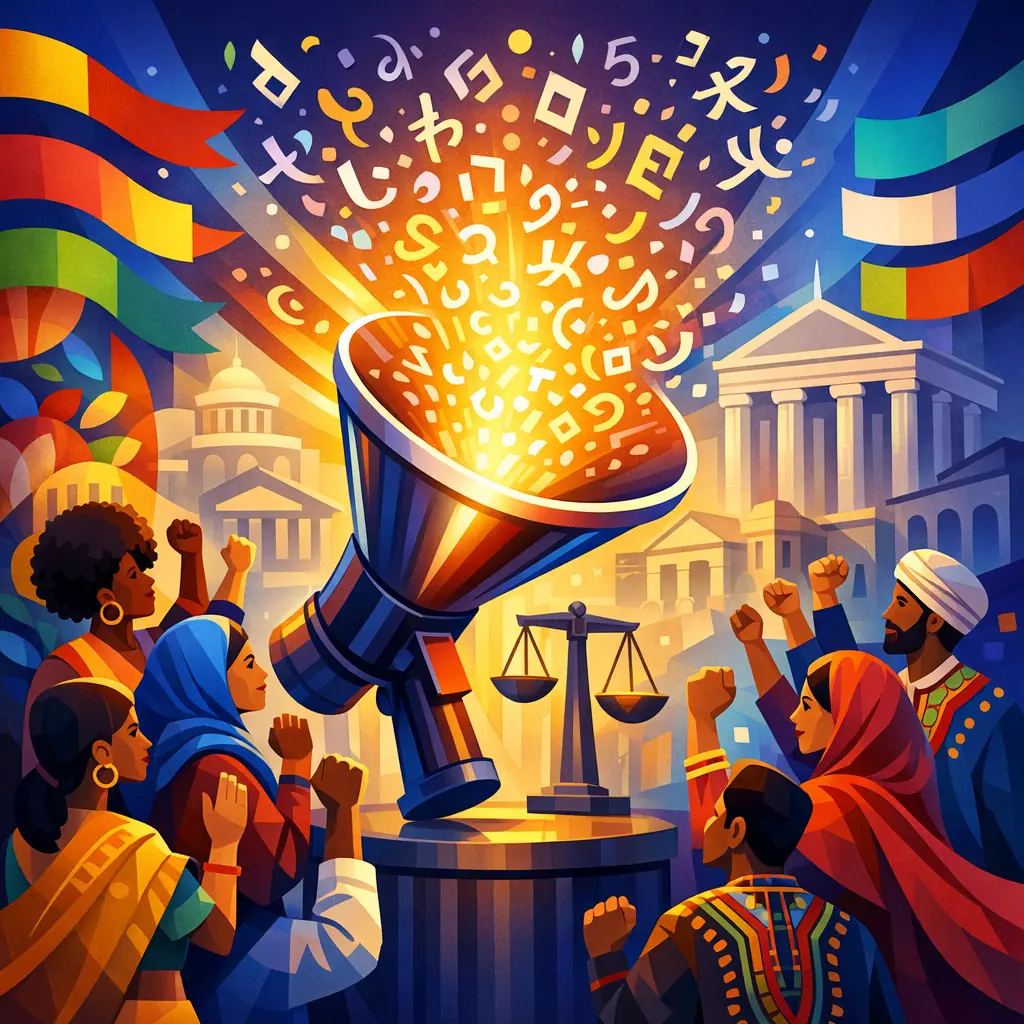
The phrase explores how language shapes and reflects power dynamics and identity within cultural, religious, and societal contexts. It highlights how language can be used to assert dominance, marginalize groups, or foster inclusion. Identity politics refers to the ways individuals and groups use aspects of identity—such as culture and religion—to advocate for rights and recognition, often challenging existing power structures and influencing social interactions and policies.
Language, Power & Identity Politics
The phrase explores how language shapes and reflects power dynamics and identity within cultural, religious, and societal contexts. It highlights how language can be used to assert dominance, marginalize groups, or foster inclusion. Identity politics refers to the ways individuals and groups use aspects of identity—such as culture and religion—to advocate for rights and recognition, often challenging existing power structures and influencing social interactions and policies.
💡 Key Takeaways
- Understand how language enables or constrains power in politics and public life.
- See how identity politics uses language to build belonging and influence policy.
- Identify discourses that exclude or marginalize groups (labels, stigmatization, code-switching).
- Build skills to critically analyze political rhetoric and media through a language-power-identity lens.
❓ Frequently Asked Questions
What is identity politics?
A political framework that centers the experiences, needs, and rights of specific social groups (e.g., race, gender, sexuality) to address inequality and seek representation.
How can language influence power in politics?
By framing issues, shaping what counts as credible or legitimate, and controlling who gets to speak; dominant terms and narratives can privilege some groups and marginalize others.
What is sociolinguistics and why is it relevant here?
The study of how language varies with social factors (class, gender, ethnicity) and how those varieties express identity and influence power in society.
What is inclusive language and why does it matter in identity politics?
Language that avoids stereotypes and excludes, using respectful terms for groups; it signals recognition, fosters participation, and can affect policy support.