The phrase "Law, Blasphemy & Freedom of Religion (Culture, Religion & Society)" explores the intersection of legal frameworks, religious sensitivities, and individual rights. It examines how blasphemy laws impact freedom of religion, often reflecting cultural and societal values. This interplay shapes public discourse, affects minority rights, and influences social harmony or conflict, highlighting the complex relationship between legal systems, religious beliefs, and cultural norms within diverse societies.
Law, Blasphemy & Freedom of Religion
The phrase "Law, Blasphemy & Freedom of Religion (Culture, Religion & Society)" explores the intersection of legal frameworks, religious sensitivities, and individual rights. It examines how blasphemy laws impact freedom of religion, often reflecting cultural and societal values. This interplay shapes public discourse, affects minority rights, and influences social harmony or conflict, highlighting the complex relationship between legal systems, religious beliefs, and cultural norms within diverse societies.
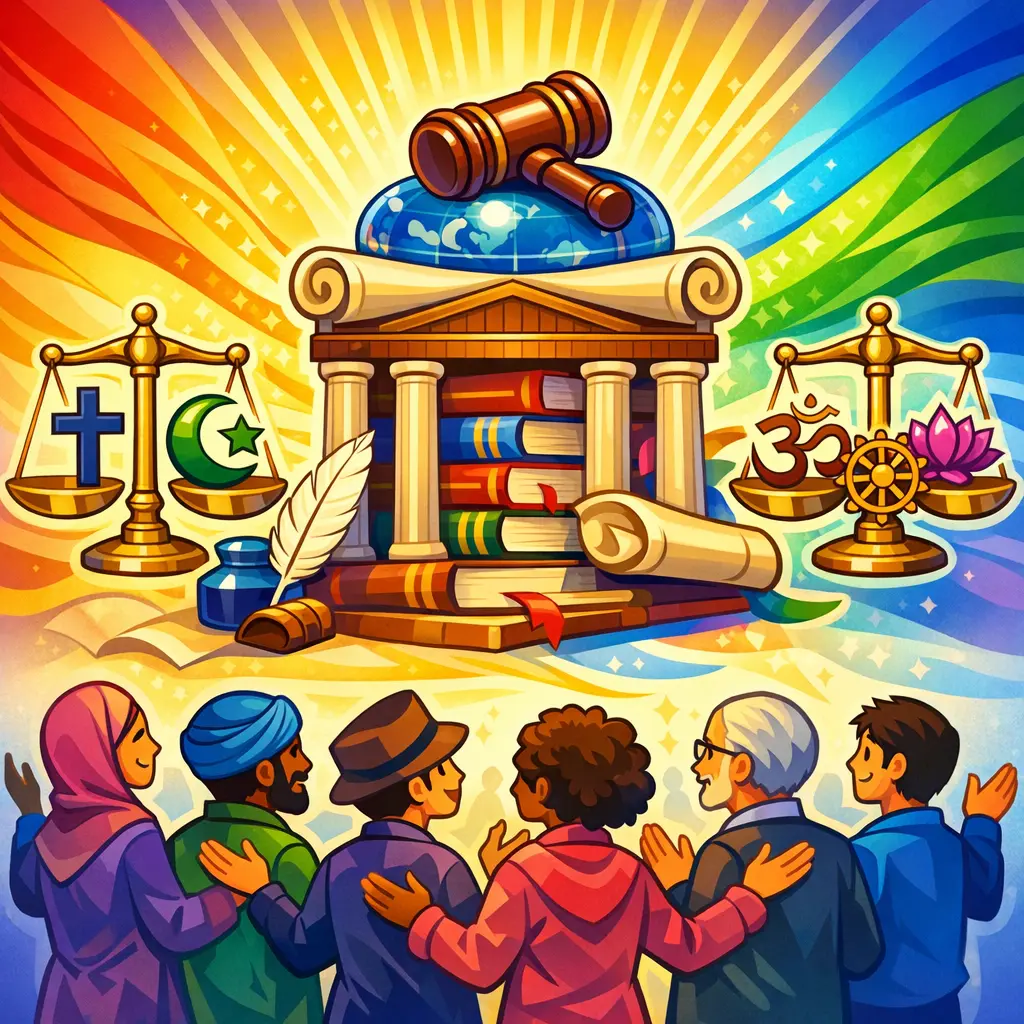
💡 Key Takeaways
- Learn what constitutes blasphemy and how laws vary across jurisdictions
- Understand the balance between freedom of religion and other rights like freedom of expression and public order
- Explore landmark court decisions and international standards governing blasphemy and religious freedom
- Identify common misconceptions about blasphemy laws and how they impact religious minorities
❓ Frequently Asked Questions
What is blasphemy, and how is it treated in law?
Blasphemy refers to acts or speech that show disrespect for religion or sacred beliefs. Legally, some countries criminalize blasphemy with penalties, while others protect free expression and only restrict incitement, hate speech, or harm to others.
What does freedom of religion protect?
Freedom of religion protects the right to practice, teach, and change one’s faith, or to hold no religion, without coercion by the state. It also covers religious expression in private and public life within lawful limits.
How are freedom of religion and freedom of expression balanced in law?
Most legal systems allow religious practice but may restrict it when it harms others, public safety, or equality rights. Expressions involving religion can be limited if they incite violence or discrimination.
What is the difference between the establishment of religion and free exercise?
Establishment of religion is when the state endorses a religion. Free exercise protects individuals’ rights to follow their religion. Modern laws usually favor state neutrality and protect personal religious practice without endorsement.