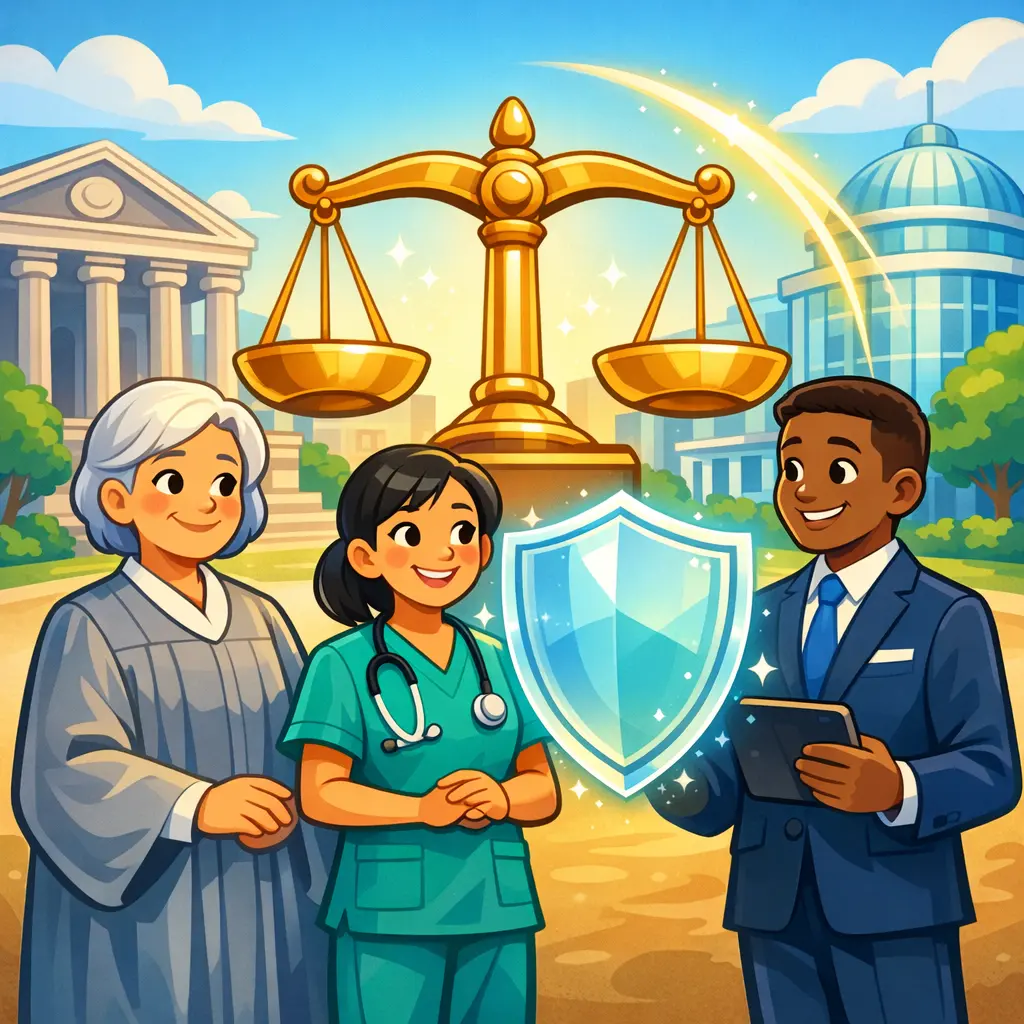
Legal professions and roles encompass careers dedicated to interpreting, applying, and upholding the law within society. This includes lawyers, judges, paralegals, and legal scholars, as well as government officials and public servants who create, enforce, or administer laws and policies. These roles are essential for ensuring justice, protecting rights, and maintaining order, often requiring extensive education, ethical responsibility, and a commitment to public service and the legal system.
Legal Professions & Roles+50
Legal professions and roles encompass careers dedicated to interpreting, applying, and upholding the law within society. This includes lawyers, judges, paralegals, and legal scholars, as well as government officials and public servants who create, enforce, or administer laws and policies. These roles are essential for ensuring justice, protecting rights, and maintaining order, often requiring extensive education, ethical responsibility, and a commitment to public service and the legal system.
💡 Key Takeaways
- Identify major legal professions and their core responsibilities.
- Compare typical career paths: private practice, public sector, and in-house roles.
- Understand education, licensing, and credentials required for lawyers and related roles.
- Explain how cases move through the legal system and how professionals interact in court and advisory settings.
❓ Frequently Asked Questions
What is the difference between a lawyer, attorney, solicitor, and barrister?
In the US, 'lawyer' or 'attorney' are common terms for someone licensed to practice law. In some countries (like the UK), a 'solicitor' handles most legal matters outside court, while a 'barrister' represents clients in court. Roles vary by jurisdiction.
What does a judge do?
A judge presides over court proceedings, interprets laws, rules on motions, and makes decisions or verdicts in cases.
What is a paralegal and what can they do?
A paralegal assists lawyers with research, document preparation, and case management, but cannot practice law or provide legal advice independently.
What is a prosecutor and what is a defense attorney?
A prosecutor represents the government to charge and prosecute criminal cases, while a defense attorney represents the accused and protects their rights throughout the process.
What are mediation and arbitration?
Mediation is a voluntary process where a neutral mediator helps parties reach a settlement. Arbitration is a more formal process where an arbitrator renders a binding decision after hearing both sides.