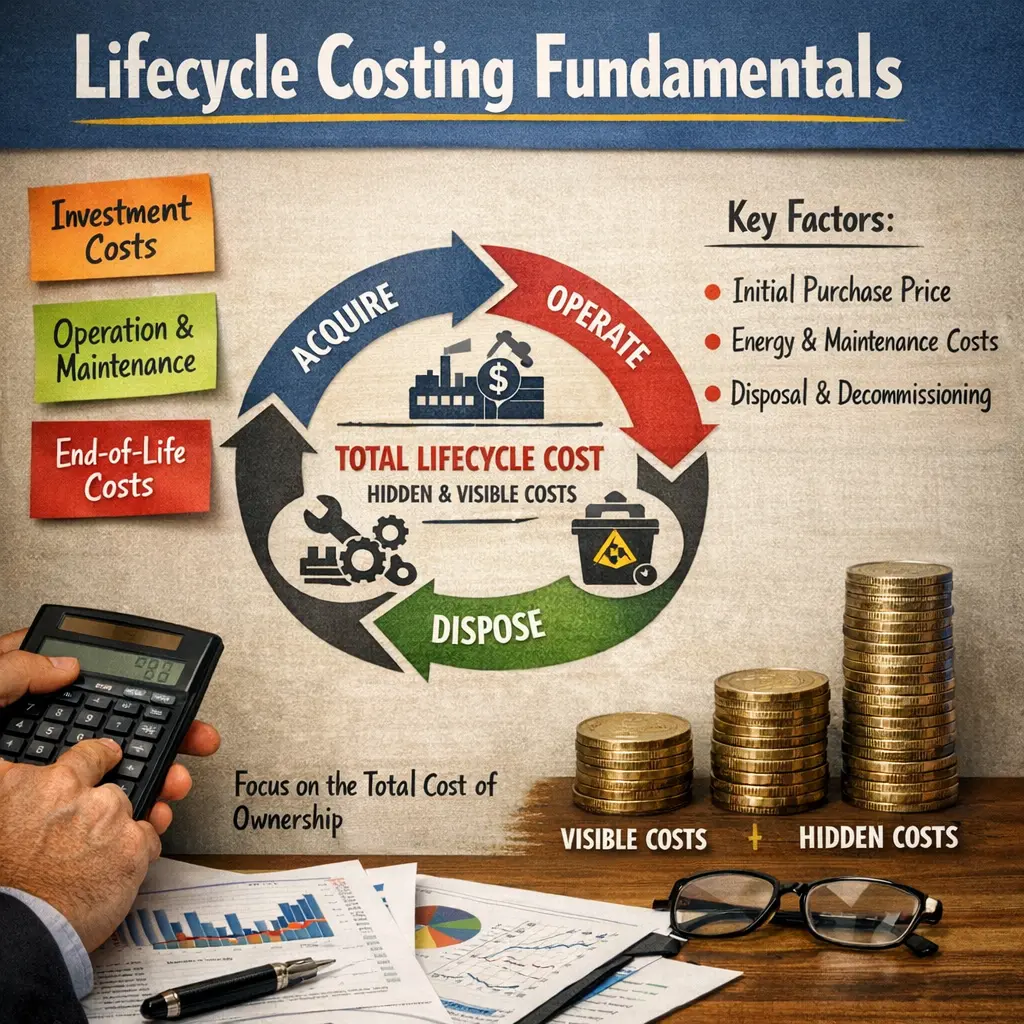
Lifecycle Costing Fundamentals involve analyzing the total cost of ownership for an asset or project over its entire lifespan. This financial management approach considers all expenses, including acquisition, operation, maintenance, and disposal, to provide a comprehensive view of long-term costs. By integrating lifecycle costing into business practices, organizations can make informed investment decisions, optimize resource allocation, and improve sustainability by identifying cost-saving opportunities throughout an asset’s life.
Lifecycle Costing Fundamentals
Lifecycle Costing Fundamentals involve analyzing the total cost of ownership for an asset or project over its entire lifespan. This financial management approach considers all expenses, including acquisition, operation, maintenance, and disposal, to provide a comprehensive view of long-term costs. By integrating lifecycle costing into business practices, organizations can make informed investment decisions, optimize resource allocation, and improve sustainability by identifying cost-saving opportunities throughout an asset’s life.
💡 Key Takeaways
- Understand the definition of lifecycle costing and why it matters for total cost of ownership.
- Identify and categorize all cost components across a product or project lifecycle (acquisition, operation, maintenance, downtime, disposal).
- Learn how to estimate and compare costs over time, including the time value of money where applicable (discounting).
- Apply lifecycle costing to make informed buy/lease/replace decisions and improve long-term budgeting.
❓ Frequently Asked Questions
What is lifecycle costing?
A technique for estimating the total cost of owning and operating an asset over its entire life, from purchase to disposal, including purchase, operating, maintenance, and end-of-life costs.
Which costs are included in lifecycle costing?
Acquisition, operating expenses, maintenance and repairs, energy, downtime, financing, taxes, disposal, and any salvage or residual value at end of life.
How is the time value of money handled in lifecycle costing?
Future costs are discounted to their present value using a chosen discount rate, and then summed to yield the lifecycle cost (often via net present value calculations).
How does lifecycle costing differ from first-cost analysis?
First-cost analysis looks only at the upfront price, while lifecycle costing accounts for all costs across the asset’s life to reveal true long-term cost differences.