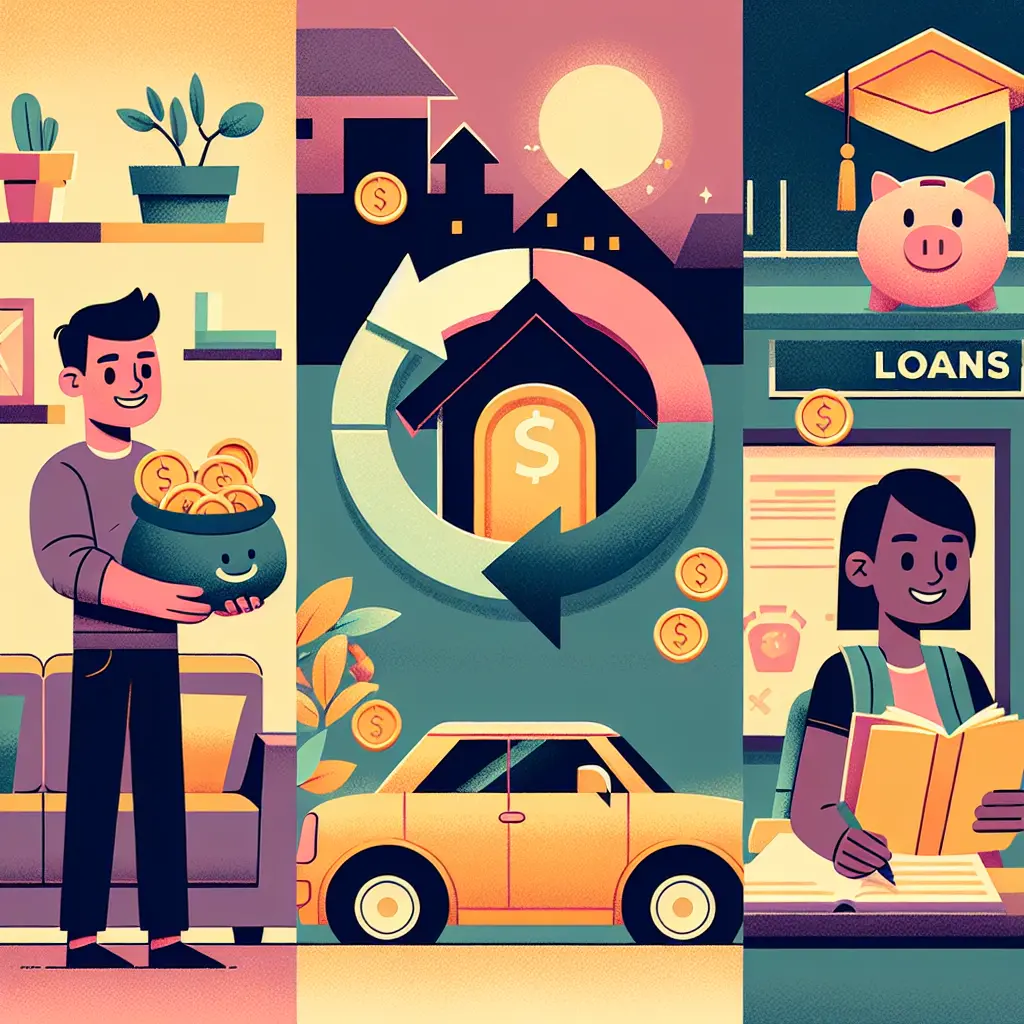
Loans are borrowed sums of money that must be repaid with interest. Personal loans are unsecured and used for various needs like debt consolidation or emergencies. Car loans are specifically for purchasing vehicles, usually secured by the car itself. Student loans help cover education costs, often offering lower interest rates and flexible repayment options. Each loan type has unique terms, eligibility requirements, and repayment structures tailored to the borrower’s purpose.
Loans explained: personal, car, and student
Loans are borrowed sums of money that must be repaid with interest. Personal loans are unsecured and used for various needs like debt consolidation or emergencies. Car loans are specifically for purchasing vehicles, usually secured by the car itself. Student loans help cover education costs, often offering lower interest rates and flexible repayment options. Each loan type has unique terms, eligibility requirements, and repayment structures tailored to the borrower’s purpose.
💡 Key Takeaways
- Loans are borrowed sums of money that must be repaid with interest.
- Personal loans are unsecured and can be used for things like debt consolidation or emergencies.
- Car loans are for purchasing a vehicle and are usually secured by the vehicle itself.
- Student loans help cover education costs and have terms and repayment options tailored for students.
❓ Frequently Asked Questions
What is a loan?
A loan is money borrowed from a lender that must be repaid, usually with interest, over an agreed period.
What is a personal loan and when might you use it?
A personal loan is an unsecured loan for everyday needs (like debt consolidation or emergencies) and doesn't require collateral. Terms and rates depend on your finances.
How does a car loan work and what does it mean that it's secured by the car?
A car loan finances a vehicle and uses the car as collateral. If you miss payments, the lender can repossess the car.
What is a student loan and what costs does it cover?
A student loan helps pay education costs such as tuition, books, and living expenses; repayment often begins after school, with terms that can vary.
What is interest and how does it affect total repayment?
Interest is the cost of borrowing. It adds to the amount you repay over the loan term, increasing the total you pay.