Local government powers and services refer to the authority and responsibilities granted to municipal or regional governing bodies. These include enacting local laws, collecting taxes, managing public services such as police, fire, education, sanitation, and infrastructure. Local governments address community needs, enforce regulations, and ensure public welfare within their jurisdictions. Their powers are defined by national or state constitutions and statutes, enabling them to respond effectively to local issues and citizen concerns.
Local Government Powers & Services
Local government powers and services refer to the authority and responsibilities granted to municipal or regional governing bodies. These include enacting local laws, collecting taxes, managing public services such as police, fire, education, sanitation, and infrastructure. Local governments address community needs, enforce regulations, and ensure public welfare within their jurisdictions. Their powers are defined by national or state constitutions and statutes, enabling them to respond effectively to local issues and citizen concerns.
💡 Key Takeaways
- Identify the main powers local governments typically hold, such as public safety, local roads, housing, and land-use planning.
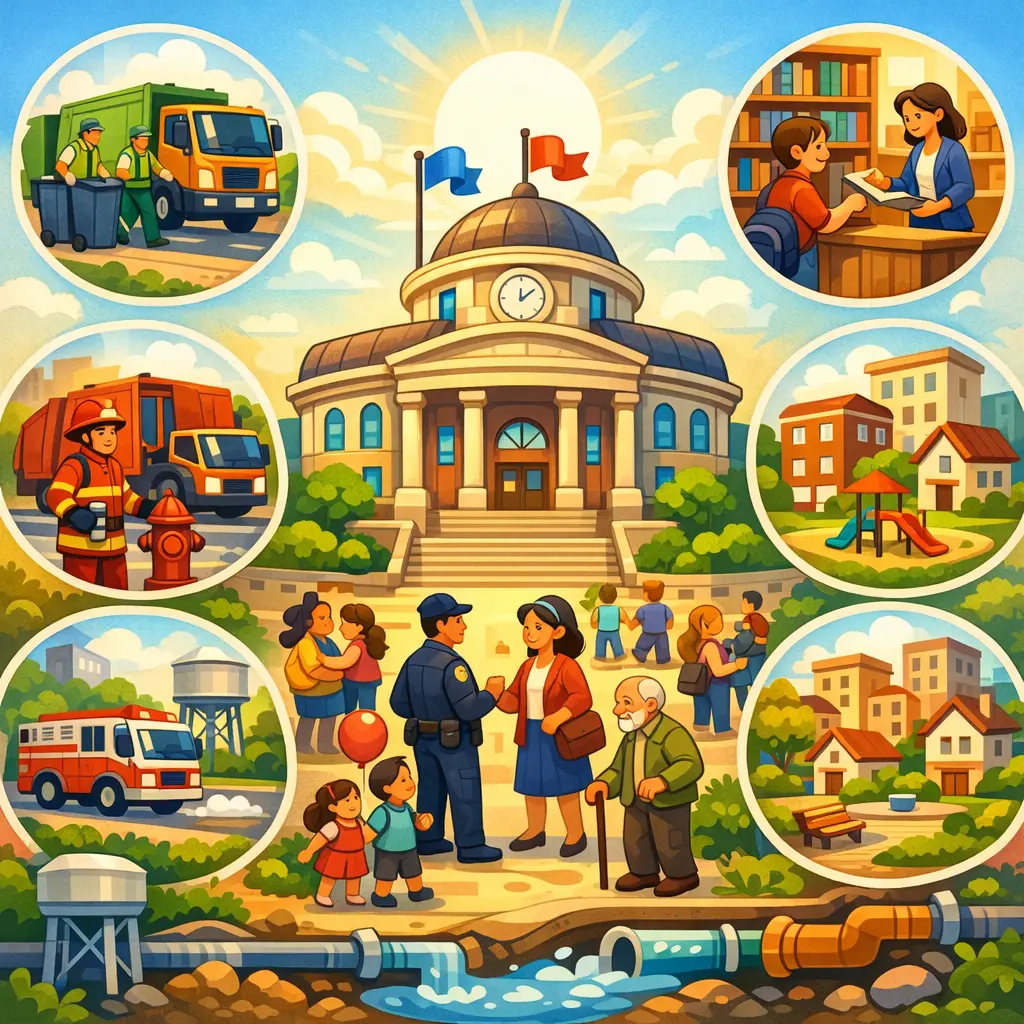
- Describe how local services are organized and delivered, including policing, fire protection, waste management, water, parks, libraries, and planning permits.
- Explain how local governments are funded and how budgeting decisions affect service levels (property taxes, fees, and government grants).
- Learn how residents can participate in local governance and how decisions are made through council meetings, public submissions, elections, and stakeholder engagement.
❓ Frequently Asked Questions
What is local government and what does it do?
Local government governs a specific area (cities, towns, counties) and provides services, enforces laws, and plans for community needs such as safety, roads, housing, and the environment.
What powers do local governments typically have?
They regulate land use (zoning), issue permits, operate police and fire services, maintain roads and utilities, collect local taxes or fees, and manage local elections and health codes.
How are local government services funded?
Funding comes from property taxes, user fees (permits and utilities), grants from higher levels of government, fines, and sometimes sales taxes or special assessments.
What are common forms of local government leadership?
Common forms include mayor-council and council-manager systems; elected officials set policy while professional staff implement programs and run departments like police, public works, and planning.
What is zoning and why is it important?
Zoning divides land into districts for specific uses (residential, commercial, industrial) to guide growth, protect health and safety, and minimize conflicts between different land uses.