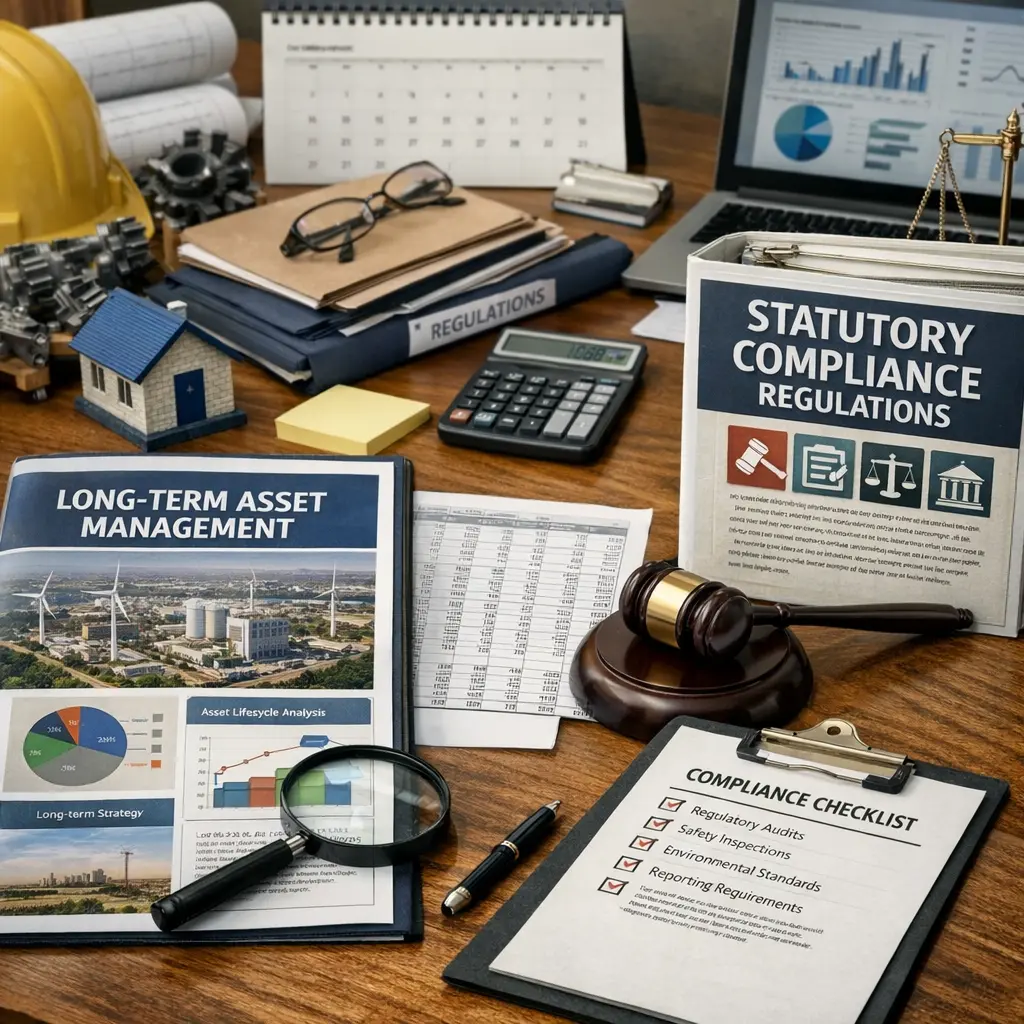
Long-term asset management and statutory compliance regimes refer to systematic processes for maintaining, monitoring, and optimizing an organization’s assets over their lifecycle while ensuring adherence to relevant legal and regulatory requirements. This involves implementing policies and procedures to safeguard assets, maximize their value, and minimize risks, all while complying with statutory laws, industry standards, and reporting obligations to avoid penalties and support sustainable operations.
Long-term asset management and statutory compliance regimes
Long-term asset management and statutory compliance regimes refer to systematic processes for maintaining, monitoring, and optimizing an organization’s assets over their lifecycle while ensuring adherence to relevant legal and regulatory requirements. This involves implementing policies and procedures to safeguard assets, maximize their value, and minimize risks, all while complying with statutory laws, industry standards, and reporting obligations to avoid penalties and support sustainable operations.
💡 Key Takeaways
- Understand the asset lifecycle from acquisition to disposal and its impact on long-term planning.
- Identify key statutory compliance regimes affecting asset records, reporting, and taxation.
- Learn how depreciation, impairment, and asset valuation influence financial statements and tax treatment.
- Implement governance, internal controls, and audit trails for compliant asset management.
❓ Frequently Asked Questions
What is long-term asset management?
The systematic planning and control of an organization's fixed assets—such as buildings, machinery, and vehicles—throughout their life cycle to maximize value, reliability, and cost efficiency.
What are statutory compliance regimes?
The mandatory laws, regulations, and standards that govern how an organization operates, reports, and maintains assets, covering areas like accounting, tax, safety, and environmental compliance.
How do asset management and compliance regimes interact?
Asset data and maintenance activities support compliance by ensuring accurate records, proper depreciation, timely inspections, and auditable trails; poor data or skipped maintenance can lead to non-compliance.
What are key components of a long-term asset management plan?
An asset register, life-cycle planning, preventive maintenance schedules, renewal or replacement strategies, budgeting, risk assessment, and internal controls to support compliance.
What is the role of depreciation in compliance and asset value?
Depreciation allocates asset cost over its useful life for financial reporting; the method must align with applicable accounting standards and tax rules, ensuring accurate valuation and disclosures.