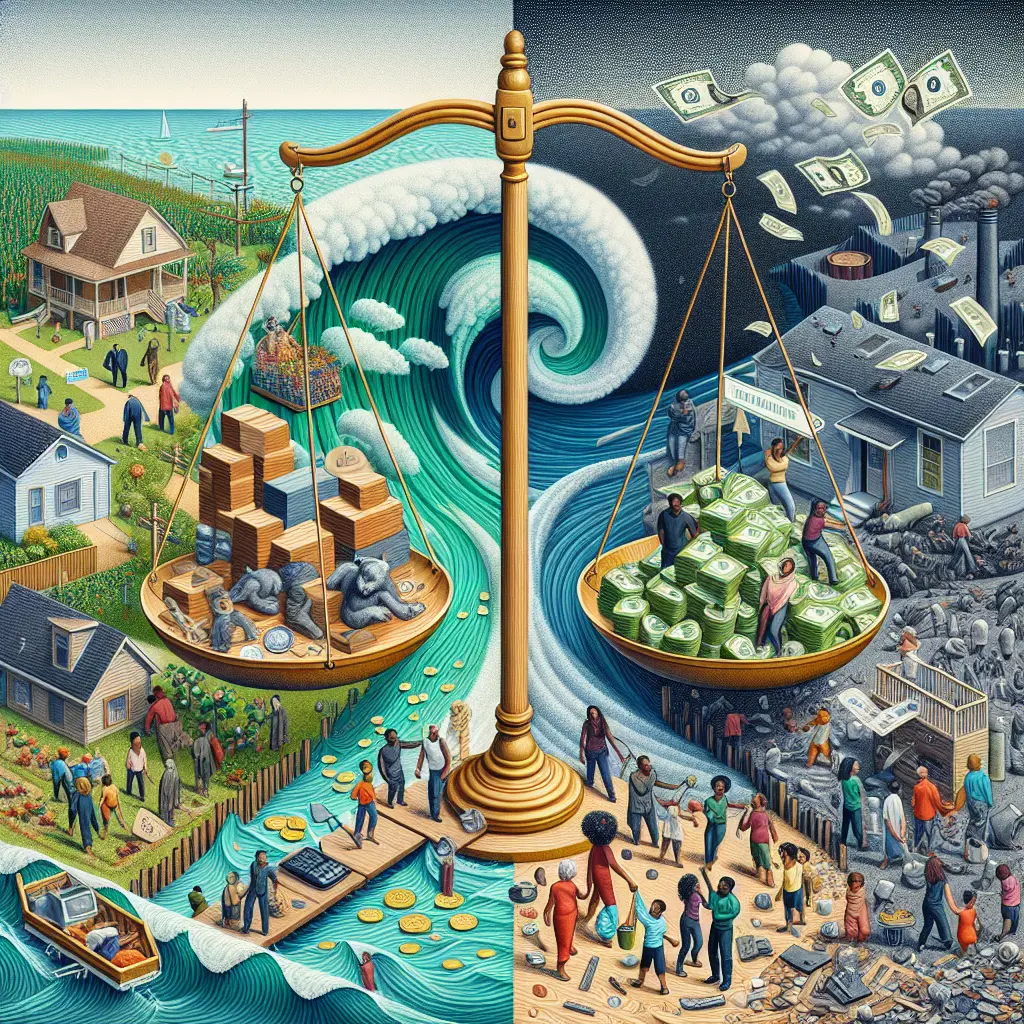
"Loss and Damage: Economics and Justice" refers to the financial and ethical dimensions of climate change impacts. Economically, it addresses the costs incurred by vulnerable countries due to irreversible climate-related losses, such as destroyed infrastructure and lost livelihoods. From a justice perspective, it highlights the responsibility of wealthier, high-emission nations to support those suffering most, ensuring fairness and equity in international climate policies and compensation mechanisms.
Loss and Damage: Economics and Justice
"Loss and Damage: Economics and Justice" refers to the financial and ethical dimensions of climate change impacts. Economically, it addresses the costs incurred by vulnerable countries due to irreversible climate-related losses, such as destroyed infrastructure and lost livelihoods. From a justice perspective, it highlights the responsibility of wealthier, high-emission nations to support those suffering most, ensuring fairness and equity in international climate policies and compensation mechanisms.
💡 Key Takeaways
- Define loss and damage in climate discourse and how it differs from adaptation and resilience.
- Identify irreversible losses—such as destroyed infrastructure and ruined livelihoods—and the economic costs for vulnerable countries.
- Explore climate justice: who bears the costs, who is responsible for funding, and equity considerations for affected communities.
- Understand policy options and financing mechanisms for loss and damage (funds, insurance, liability debates, and compensation).
- Review measurement and governance challenges in quantifying losses and coordinating international responses.
❓ Frequently Asked Questions
What is loss and damage in the context of climate change?
Loss and damage refers to the financial and ethical costs from climate-related impacts that cannot be fully avoided or reversed, such as destroyed infrastructure, lost livelihoods, and displacement, especially in vulnerable communities.
How do economics and justice connect in loss and damage?
Economics studies who pays and how much, while justice asks who bears the risk and whether remedies are fair and accessible for vulnerable populations, including questions of responsibility for emissions and funding.
What mechanisms exist to address loss and damage?
Mechanisms include international funds, grants, concessional loans, disaster risk insurance, and the Warsaw International Mechanism for Loss and Damage under the UN Climate Framework.
What counts as an irreversible loss, and why is it hard to address?
Irreversible losses include permanently destroyed lands, vanished ecosystems, and lost livelihoods or cultural heritage. They are hard to address because they cannot be fully restored to their previous state.
How is loss and damage different from adaptation?
Adaptation aims to prevent or reduce harms, while loss and damage covers harms that remain after adaptation or are irreversible, such as displacement and long-term economic disruption.