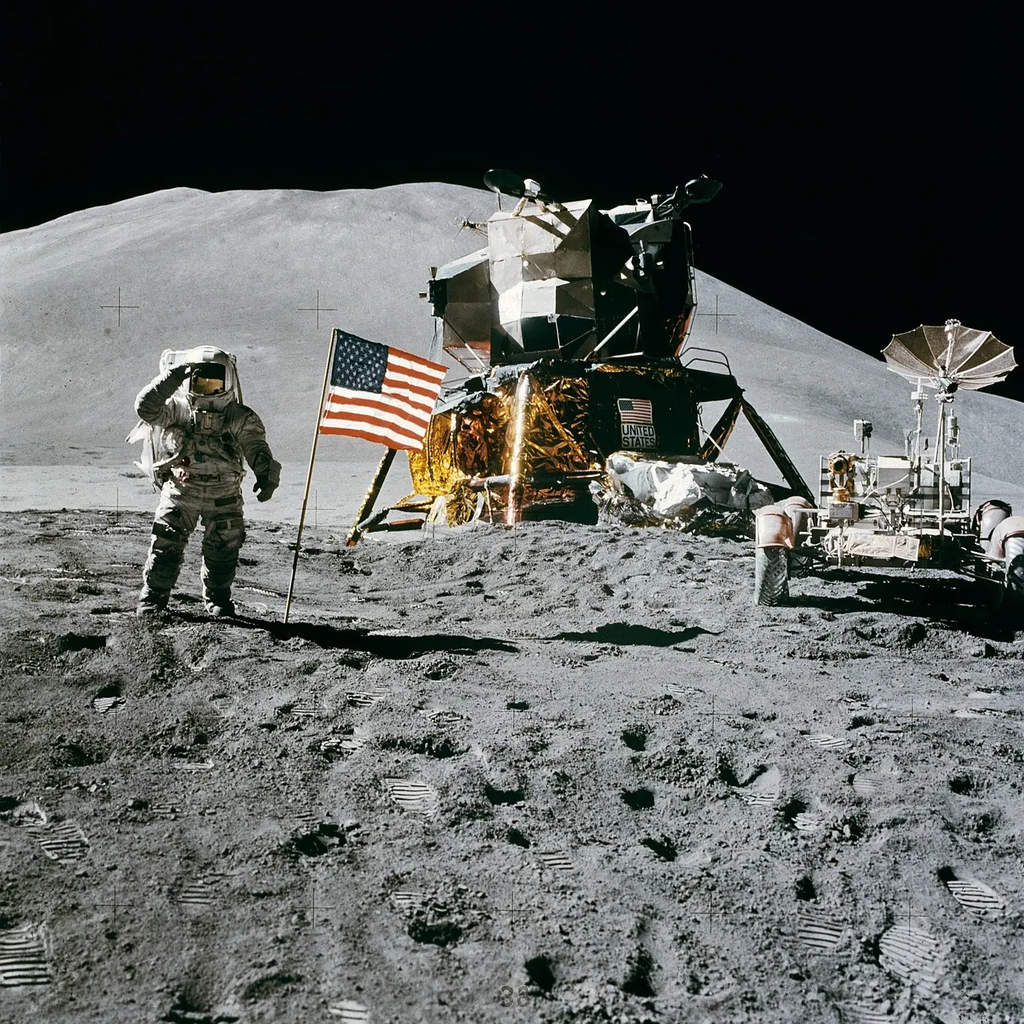
Lunar Rover Missions refer to space exploration projects involving vehicles designed to travel across the Moon's surface. These missions, conducted by agencies like NASA and the Soviet space program, have enabled astronauts and robotic rovers to explore lunar terrain, collect samples, and conduct scientific experiments. Lunar rovers have expanded our understanding of the Moon's geology, environment, and potential resources, playing a crucial role in advancing space exploration and preparing for future human settlement beyond Earth.
Lunar Rover Missions
Lunar Rover Missions refer to space exploration projects involving vehicles designed to travel across the Moon's surface. These missions, conducted by agencies like NASA and the Soviet space program, have enabled astronauts and robotic rovers to explore lunar terrain, collect samples, and conduct scientific experiments. Lunar rovers have expanded our understanding of the Moon's geology, environment, and potential resources, playing a crucial role in advancing space exploration and preparing for future human settlement beyond Earth.
💡 Key Takeaways
- Understand how lunar rovers extended astronauts' exploration range on the Moon.
- Identify the main differences between the Apollo Lunar Roving Vehicle (LRV) and robotic lunar rovers like Lunokhod.
- Learn how lunar rovers are powered, navigate, and traverse Moon terrain.
- Explore how rovers enabled broader scientific sampling and discovery on lunar missions.
- Recognize the engineering challenges and innovations of operating vehicles in the Moon's harsh environment.
❓ Frequently Asked Questions
What is a lunar rover and why are they used on the Moon?
A lunar rover is a mobile robot designed to drive across the Moon’s surface, carrying scientific instruments to study a larger area than a stationary lander site.
Which missions have sent lunar rovers to the Moon and what did they achieve?
Missions include the Soviet Lunokhod rovers (Lunokhod 1 and Lunokhod 2), NASA’s Apollo Lunar Roving Vehicles (on Apollo 15–17), and China’s Yutu rovers (Chang’e 3 and Chang’e 4 with Yutu-2). They demonstrated mobile exploration and expanded the surface study area.
How are lunar rovers powered and how do they handle the Moon’s day-night cycle?
Rovers are powered by solar panels charging onboard batteries, allowing operation during the lunar day. The long lunar night (about 14 Earth days) requires energy management and thermal considerations to survive.
How do lunar rovers communicate with Earth and navigate on the Moon?
Rovers communicate via radio links, either directly to Earth or through a lunar relay orbiter. They navigate with onboard cameras and sensors and can be teleoperated or semi-autonomous to reach science targets.