Managing diastasis recti involves assessing the separation of abdominal muscles, commonly occurring after pregnancy. Early rehabilitation focuses on gentle core-strengthening exercises, proper posture, and breathing techniques to promote healing. Assessment includes measuring the gap between abdominal muscles and evaluating core function. Early intervention helps prevent complications such as lower back pain and pelvic instability, supporting overall recovery. Education on safe movements and gradual progression of exercises is essential for optimal post-pregnancy care.
Managing diastasis recti: assessment and early rehab
Managing diastasis recti involves assessing the separation of abdominal muscles, commonly occurring after pregnancy. Early rehabilitation focuses on gentle core-strengthening exercises, proper posture, and breathing techniques to promote healing. Assessment includes measuring the gap between abdominal muscles and evaluating core function. Early intervention helps prevent complications such as lower back pain and pelvic instability, supporting overall recovery. Education on safe movements and gradual progression of exercises is essential for optimal post-pregnancy care.
💡 Key Takeaways
- Define diastasis recti and common causes (e.g., pregnancy/postpartum).
- Learn a safe at-home assessment for abdominal separation and when to seek professional input.
- Start early rehab with diaphragmatic breathing, deep core engagement (transverse abdominis), and pelvic floor coordination.
- Avoid high-risk moves in early rehab and follow a gradual, progressive exercise plan.
❓ Frequently Asked Questions
What is diastasis recti and how is it assessed?
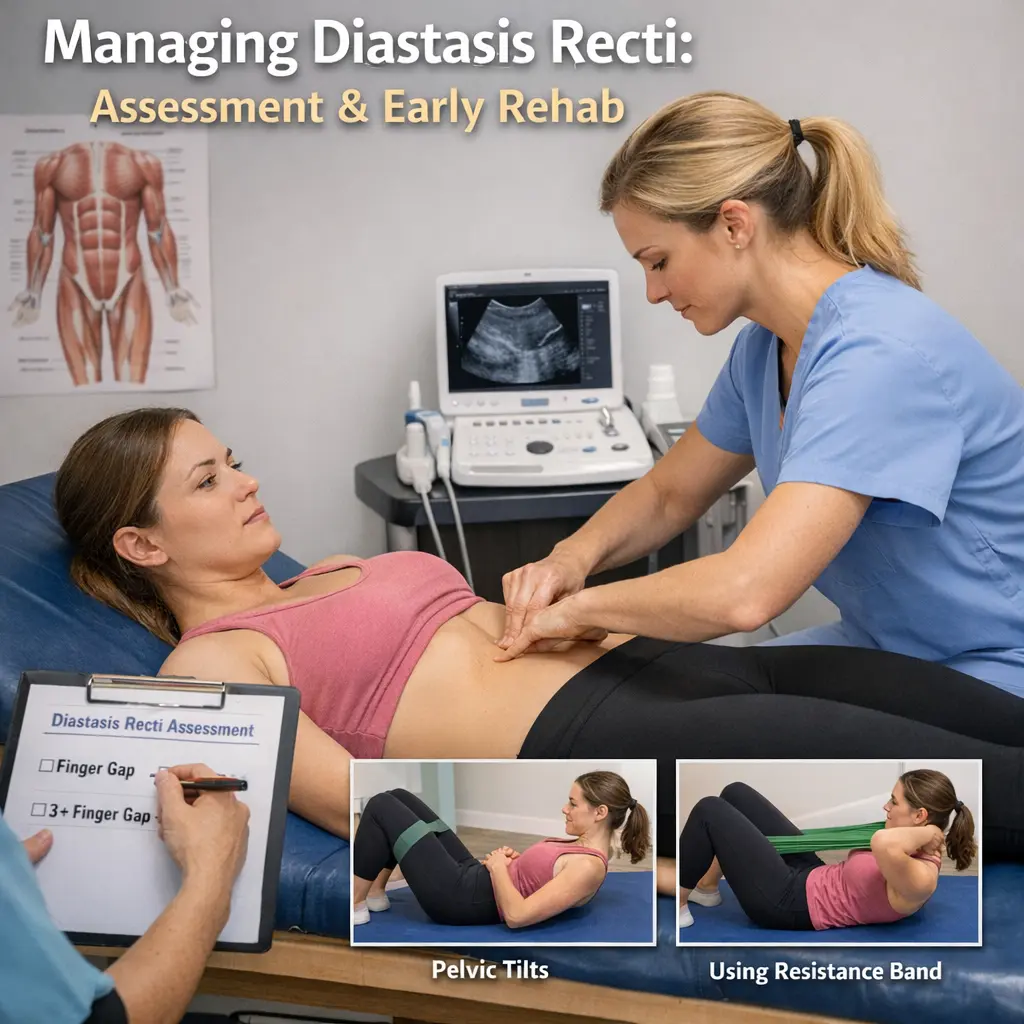
Diastasis recti is the separation of the two sides of the rectus abdominis along the linea alba. Assessment is typically done by palpating the midline while lying on your back and performing a gentle head‑lift or other simple test; gaps are measured in finger widths at the umbilicus. A gap wider than about two finger widths often indicates diastasis; a clinician should confirm.
What are the goals of early rehab for diastasis recti?
Goals include promoting deep core stability (transverse abdominis) and pelvic floor function, improving breathing mechanics, and preventing worsening of the separation, while avoiding activities that increase abdominal pressure.
Which exercises are safe in the early rehab stage?
Safe options focus on deep core and pelvic floor activation: diaphragmatic breathing with abdominal bracing, pelvic tilts, heel slides, and modified dead bugs with a neutral spine. Avoid crunches, sit-ups, or movements that cause abdominal doming.
When should I seek professional help?
Consult a physical therapist or healthcare provider if the gap remains wide after several weeks of proper exercise, you notice a bulge with activity, persistent pain, or pelvic floor symptoms, or you’re unsure about techniques.