The phrase refers to the analytical examination of maps and navigational materials, emphasizing careful interpretation (close reading) of their details. It involves evaluating the origins, reliability, and context of these sources (source analysis) and using information derived from them as supporting proof (evidence) in research or argumentation. This approach is essential for understanding how maps and navigation tools convey information, reflect perspectives, and support historical or geographic claims.
Maps & Navigation: Close Reading, Source Analysis & Evidence
The phrase refers to the analytical examination of maps and navigational materials, emphasizing careful interpretation (close reading) of their details. It involves evaluating the origins, reliability, and context of these sources (source analysis) and using information derived from them as supporting proof (evidence) in research or argumentation. This approach is essential for understanding how maps and navigation tools convey information, reflect perspectives, and support historical or geographic claims.
💡 Key Takeaways
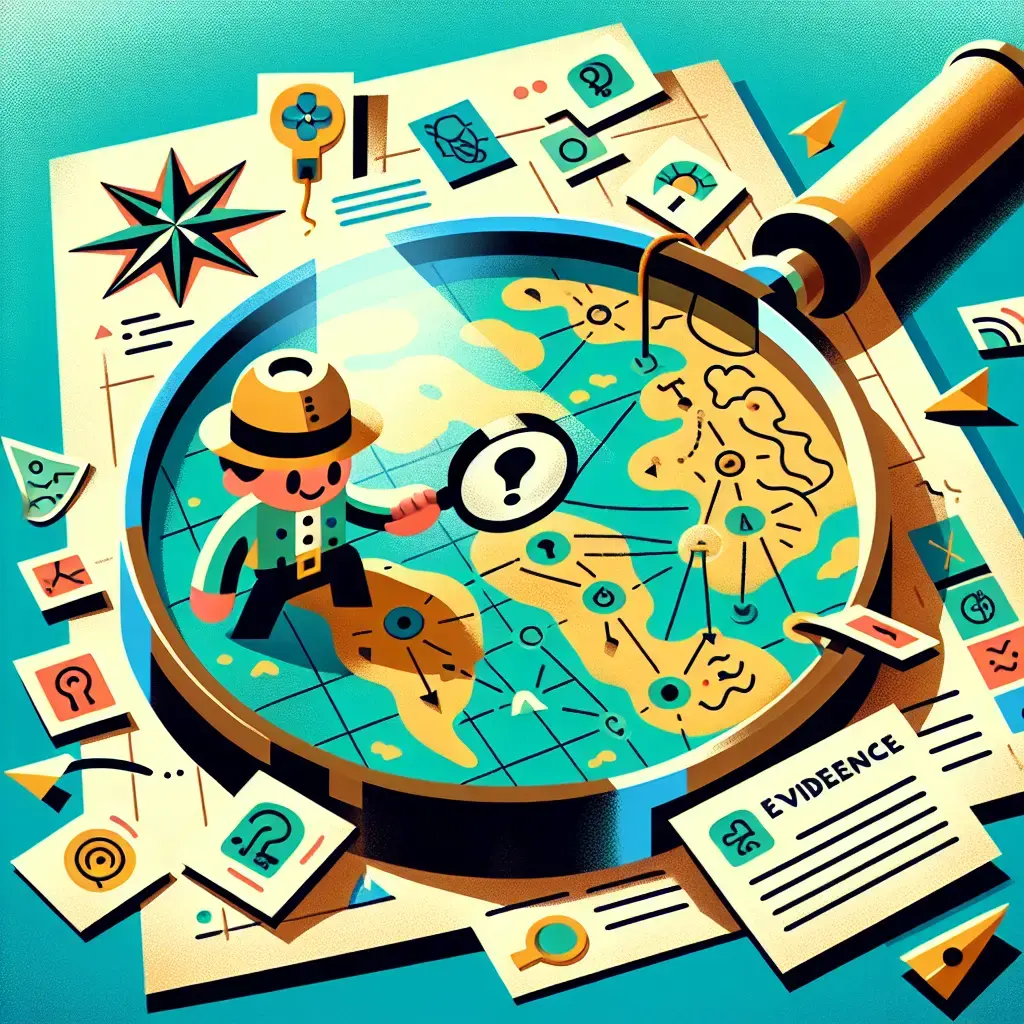
- Perform close reading of maps and navigational materials by interpreting symbols, scale, legends, projections, and annotations.
- Analyze a map's origin, date, purpose, and audience to evaluate reliability and potential biases.
- Consider the historical and geographic context to understand how cartographic conventions shape what a map shows and omits.
- Use map-derived details as evidence in historical or geographic arguments, and corroborate findings with other sources.
❓ Frequently Asked Questions
What is close reading of maps and navigational sources?
A careful, detail-focused examination of map features (date, author, purpose, audience) and symbols, legends, scale, and projection to interpret what the map reveals about knowledge, biases, and context at the time.
How do you evaluate the origins, reliability, and context of map sources?
Check who created the map and when, its provenance and intended audience, and how it was produced. Compare with other sources, and consider biases, purpose, and limitations of the cartographic method.
What kinds of evidence can maps provide in world history and geography?
Information about routes, distances, political boundaries, place names, explored areas, resource distributions, and environmental features. They also show what is known or unknown at a given time and how knowledge changed.
How can map-derived information be used as supporting evidence in an argument?
Cite specific map details (locations, routes, dates) to support a claim, cross-check with other sources, and discuss limitations or uncertainties to avoid over-interpretation.
What map features should you examine to interpret a navigational source?
Title, date, author/publisher, scale, projection, legend, compass rose, symbols, color coding, marginal notes, and any inset or annotation—these reveal how the map represents space and purpose.