"Maps & Navigation: Famous Examples & Identification" refers to the study and recognition of well-known maps and navigational tools throughout history. This includes examining iconic maps like the Mercator projection, ancient world maps, or instruments such as the compass and sextant. It involves understanding how these examples contributed to exploration, travel, and geographic knowledge, as well as learning to identify their unique features and historical significance in the context of navigation.
Maps & Navigation: Famous Examples & Identification
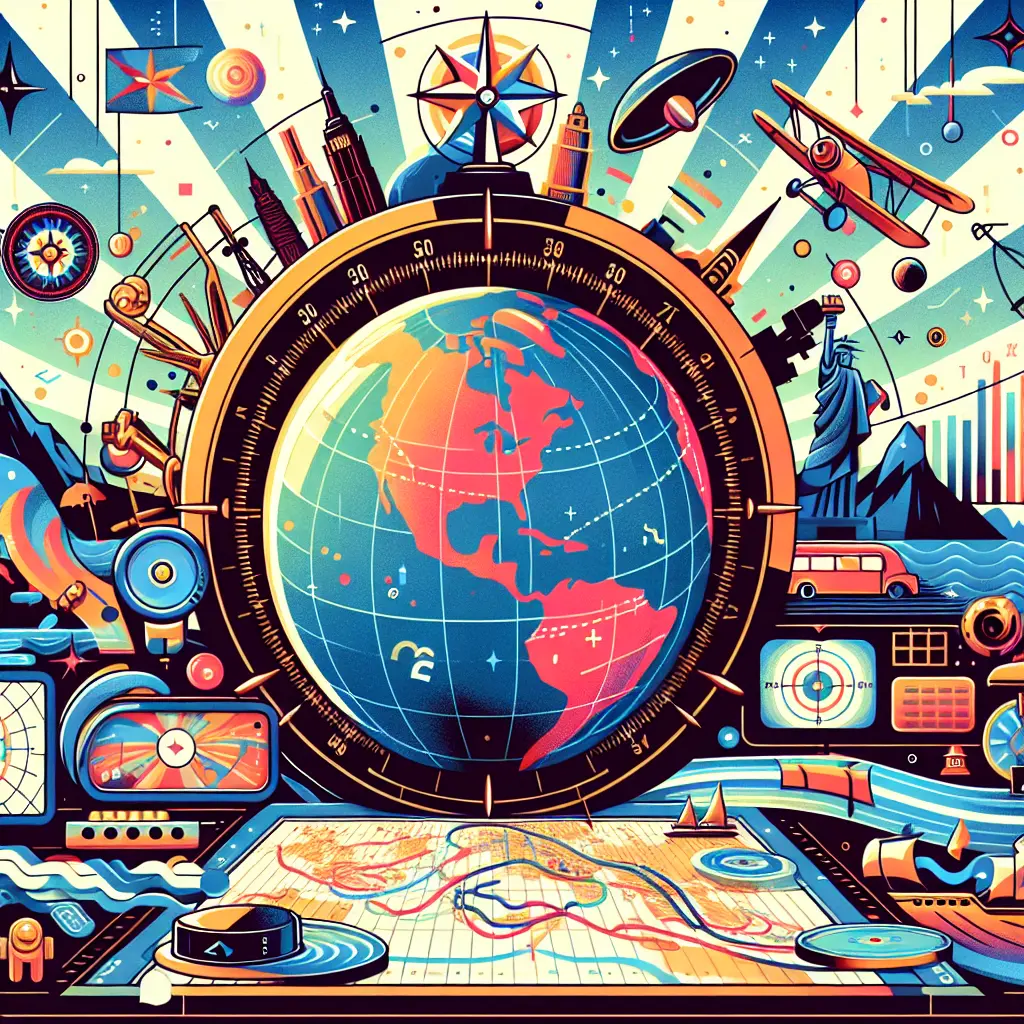
"Maps & Navigation: Famous Examples & Identification" refers to the study and recognition of well-known maps and navigational tools throughout history. This includes examining iconic maps like the Mercator projection, ancient world maps, or instruments such as the compass and sextant. It involves understanding how these examples contributed to exploration, travel, and geographic knowledge, as well as learning to identify their unique features and historical significance in the context of navigation.
💡 Key Takeaways
- Recognize iconic historical maps and navigational tools (e.g., Mercator projection, ancient world maps, portolan charts) and instruments like the compass and sextant.
- Explain how map projections affect distance, direction, and the portrayal of the world for navigation.
- Identify key navigational instruments (compass, astrolabe, sextant) and how they supported exploration and chartmaking.
- Understand how maps influenced exploration, trade routes, and cultural exchange across civilizations.
❓ Frequently Asked Questions
What is the Mercator projection and why is it significant for navigation?
A cylindrical map projection by Gerardus Mercator (1569) that preserves angles, making it easy to plot courses at sea; it distorts size near the poles.
What is an ancient world map, and can you name a famous example?
An early map showing the known world from antiquity; famous examples include the Babylonian World Map (Imago Mundi) and Ptolemy’s world map.
What is a compass and how does it help navigators?
A magnetized needle indicating magnetic north, guiding travelers to maintain a desired direction.
What is a sextant and how is it used?
An instrument that measures the angle between a celestial object and the horizon to determine latitude or position at sea.
Why do map projections differ and what is a key trade-off of the Mercator projection?
Projections differ in how they balance distortions of area, shape, distance, and direction when flattening a sphere; Mercator preserves angles (direction) but enlarges landmasses near the poles.