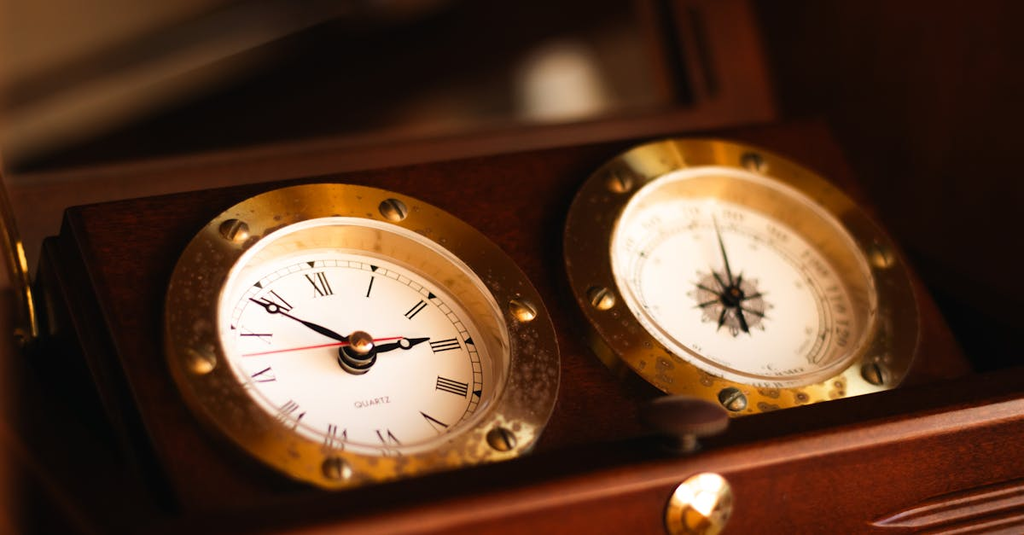
Marine chronometers are precise timekeeping instruments essential for maritime navigation. Unlike ordinary clocks, they are specifically designed to maintain accurate time despite temperature changes, humidity, and motion at sea. By providing a reliable reference for Greenwich Mean Time, marine chronometers enable sailors to determine longitude, ensuring safe and accurate oceanic travel. Historically, they were daily essentials for ship captains and navigators, often safeguarded with special keys for winding and setting.
Marine Chronometers
Marine chronometers are precise timekeeping instruments essential for maritime navigation. Unlike ordinary clocks, they are specifically designed to maintain accurate time despite temperature changes, humidity, and motion at sea. By providing a reliable reference for Greenwich Mean Time, marine chronometers enable sailors to determine longitude, ensuring safe and accurate oceanic travel. Historically, they were daily essentials for ship captains and navigators, often safeguarded with special keys for winding and setting.
💡 Key Takeaways
- Understand how marine chronometers enable longitude determination by comparing local time with Greenwich Mean Time
- Learn why traditional clocks failed at sea and how marine chronometers counteract motion and temperature effects
- Identify the key components of a marine chronometer (escapement, balance wheel, isolation/temperature compensation) and their roles in accuracy
- Appreciate the historical milestones in marine chronometry (John Harrison and the H4) and their impact on navigation
❓ Frequently Asked Questions
What is a marine chronometer?
A high‑precision clock designed for sea use that stays accurate at sea and is set to a reference time (usually Greenwich) to aid navigation.
How does a marine chronometer help determine longitude?
By comparing the chronometer's reference time with local solar time (from the sun). The time difference in hours × 15° gives your longitude (east or west).
What features keep a marine chronometer accurate on a ship?
Temperature compensation, a gimbaled mounting to stay level, and a precise escapement designed for motion and changing conditions.
Who developed marine chronometers and why were they important?
In response to the need to determine longitude at sea, inventors like John Harrison produced a series of chronometers (H1–H4). H4 demonstrated practical, accurate timekeeping at sea, enabling reliable navigation.